 Pin It
 The radio was playing something scratchy and old when I finally nailed this dish. I'd burned through half a block of Pecorino trying to figure out why the cheese kept seizing into grainy clumps instead of melting into silk. Then my neighbor leaned over the fence and said her nonna always added the cheese off the heat. That one sentence saved everything.
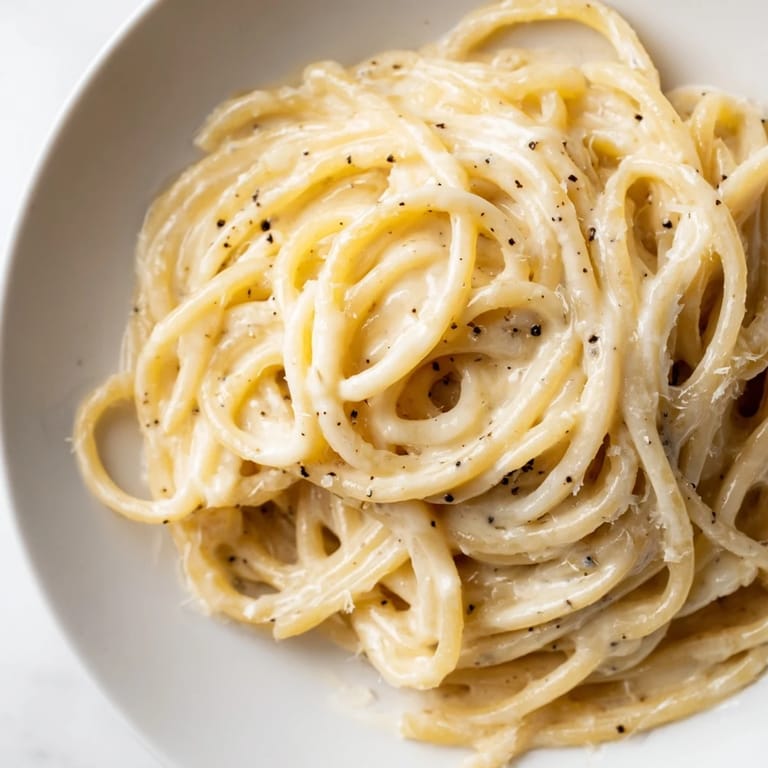
I made this for my sister after she moved into her first apartment with nothing but a single pot and a dream. We sat on her kitchen floor with mismatched bowls, twirling spaghetti and laughing about how something this simple could feel like a celebration. She still texts me every time she makes it, usually with a photo of her pepper-speckled plate and a single heart emoji.
Ingredients
- Spaghetti: The long strands grab onto the creamy sauce better than shorter shapes, and cooking it just to al dente means it finishes perfectly in the skillet.
- Pecorino Romano cheese: This salty, sharp sheep's milk cheese is the soul of the dish, but it must be freshly grated or it won't melt smoothly.
- Freshly cracked black pepper: Toasting it wakes up the oils and turns simple pepper into something almost floral and warm.
- Salt: The pasta water should taste like the sea, and that salinity seasons everything from the inside out.
Tired of Takeout? 🥡
Get 10 meals you can make faster than delivery arrives. Seriously.
One email. No spam. Unsubscribe anytime.
Instructions
- Boil the pasta:
- Bring a large pot of salted water to a rolling boil and drop in the spaghetti, stirring occasionally. Before you drain it, scoop out a full cup of that starchy, cloudy water because it's the secret to a silky sauce.
- Toast the pepper:
- While the pasta bubbles away, add the black pepper to a dry skillet over low heat and let it sizzle for a minute or two until you can smell it across the kitchen. This step makes all the difference.
- Build the base:
- Pour about half a cup of the hot pasta water into the skillet with the toasted pepper and let it simmer gently. The water will pick up all that peppery flavor.
- Toss the spaghetti:
- Drain the pasta and immediately add it to the skillet, tossing it around so every strand gets coated in the peppery liquid. Work quickly while everything is still steaming hot.
- Add the cheese:
- Pull the skillet off the heat and start sprinkling in the Pecorino, tossing constantly and adding splashes of reserved pasta water to keep everything moving. The cheese should melt into a glossy, creamy coating without any clumps.
- Serve:
- Plate it up right away and shower each bowl with extra cheese and a few more cracks of pepper. This dish waits for no one.
 Pin It
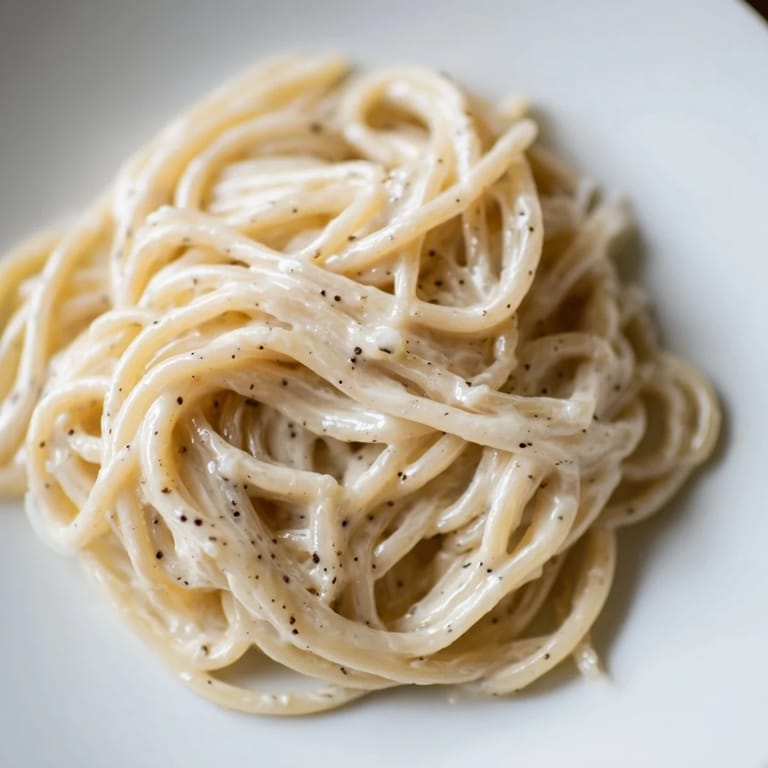
 One night I served this to a friend who'd just come back from Rome, and I watched her face as she took the first bite. She closed her eyes and nodded slowly, then told me it tasted exactly like the tiny restaurant near the Pantheon where she ate it three nights in a row. That's when I realized this dish didn't need anything extra, it was already perfect.
Choosing Your Cheese
Pecorino Romano is sharper and saltier than Parmesan, with a distinct tang that defines true cacio e pepe. I learned to buy it in a wedge and grate it myself right before cooking because the pre-grated stuff often contains anti-caking agents that prevent it from melting smoothly. If you can only find Parmigiano Reggiano, it will work in a pinch, but the flavor will be milder and slightly sweeter.
Getting the Sauce Right
The first few times I made this, I ended up with clumpy cheese water instead of a creamy sauce, and I almost gave up. Then I watched an Italian chef explain that the magic happens when you create an emulsion by tossing the pasta constantly while adding the cheese off the heat. The starch in the pasta water acts like glue, binding the cheese and water into a velvety coating that clings to every strand.
Serving and Pairing
This dish is best eaten the moment it leaves the pan, straight from the skillet if you're feeling casual. I like to serve it in warm bowls with a crisp white wine like Vermentino, which cuts through the richness without overpowering the pepper. Sometimes I'll set out a small dish of extra grated Pecorino and a pepper mill so everyone can adjust their own portions.
- Warm your serving bowls in a low oven so the pasta stays hot longer.
- If you have leftovers, reheat gently with a splash of water or milk to bring the sauce back to life.
- A simple arugula salad with lemon juice is the perfect sharp, bitter contrast.
 Pin It
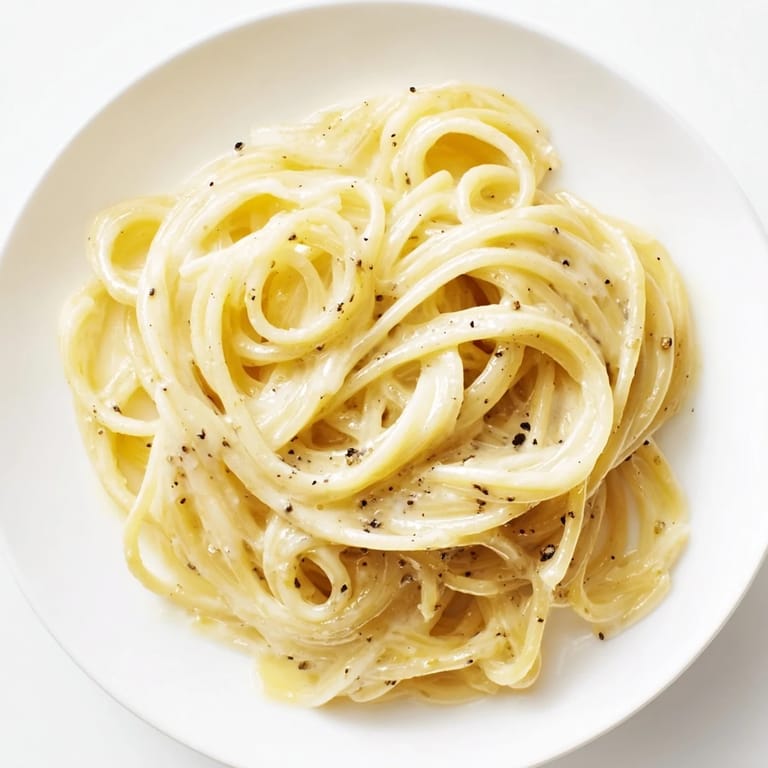
 Now when I make cacio e pepe, I don't even think about the steps anymore, my hands just know. It's become the thing I cook when I want to feel capable and calm, and every time, it reminds me that the best meals don't need to be complicated.
Recipe Questions & Answers
- → What type of cheese works best for Cacio e Pepe?
Freshly grated Pecorino Romano is essential for authentic flavor. Avoid pre-grated cheese as it contains anti-caking agents that prevent proper melting. Parmigiano Reggiano can substitute for a milder taste, though it changes the traditional profile.
- → Why is reserved pasta water important?
Pasta water contains starch that emulsifies with the cheese and fat, creating a creamy sauce without cream. It also helps achieve the proper consistency and prevents the cheese from clumping when added to the hot pasta.
- → How do I prevent the cheese from clumping?
Work quickly but methodically when adding cheese. Toss and stir vigorously while gradually sprinkling it in small amounts. Keeping the heat low and using enough starchy pasta water prevents lumps and ensures silky texture.
- → Can I make this ahead or reheat it?
Cacio e Pepe is best served immediately after preparation. Reheating can break the emulsion. For best results, prepare just before serving and have all ingredients ready and at hand.
- → What's the significance of toasting the black pepper?
Toasting pepper for 1-2 minutes releases its essential oils and aromatic compounds, deepening the flavor profile. This step is crucial for developing the characteristic peppery taste that defines the dish.
- → Is this dish suitable for dietary restrictions?
This dish is vegetarian and naturally gluten-free if using gluten-free pasta. It contains milk (Pecorino Romano cheese). Always verify cheese labels for vegetarian suitability and check for any allergen concerns with your ingredients.