 Pin It
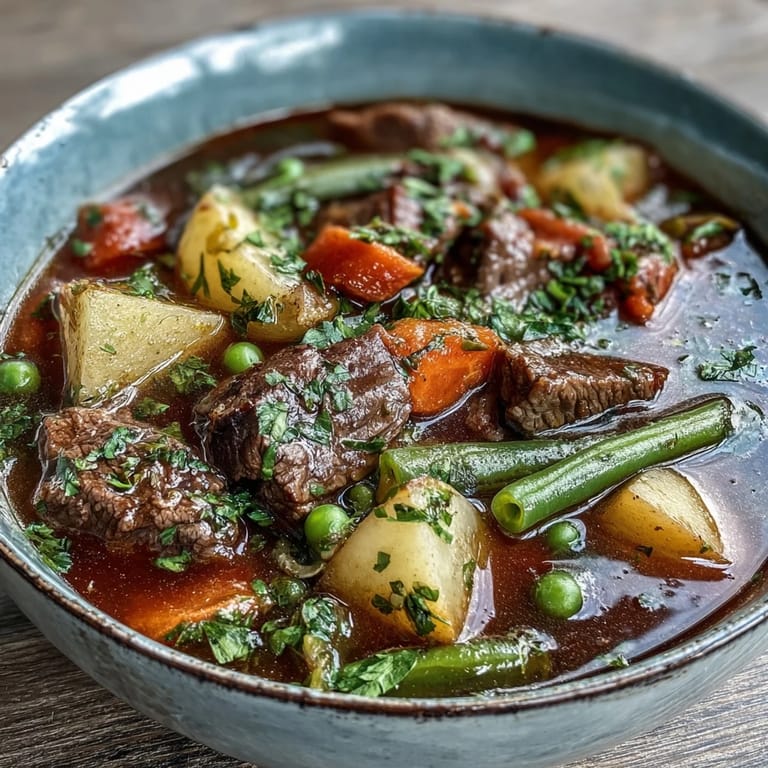
 My sister called on a particularly gray afternoon, complaining that her kitchen felt cold and uninviting, and somehow I knew exactly what she needed. That same evening, I stood over a pot of simmering beef and vegetable soup, watching the broth deepen to amber as the meat surrendered to heat and time. The kitchen filled with that unmistakable savory warmth that makes a house feel like home again. There's something almost meditative about letting a pot bubble away while you know comfort is being built, layer by layer. She showed up with red cheeks and cold hands, and by her second bowl, the whole day seemed to soften.
I made this for a potluck during one of those transitions between seasons when nobody quite knows what to wear, and it was the first dish to empty. A coworker I barely knew asked for the recipe, and that small moment of being asked reminded me why I cook—it's never really about the food alone. It's about the permission you give someone to feel taken care of, even in a crowded room.
Ingredients
- Beef chuck, cut into 1-inch cubes (1.5 lbs): This cut has just enough marbling to become silky under long, slow cooking without falling apart into stringy bits.
- Olive oil (2 tbsp): Use it to get that brown crust on the beef—don't rush this step or you'll miss the flavor it creates.
- Onion, diced (1 large): It disappears into the broth, sweetening everything it touches as it cooks down.
- Garlic, minced (3 cloves): Add it after the softer vegetables so it doesn't burn and turn bitter on you.
- Carrots, sliced (3 medium): They hold their shape beautifully and add natural sweetness that balances the savory broth.
- Celery stalks, sliced (2): This is the quiet backbone of the whole soup—it won't announce itself, but you'll notice if it's missing.
- Potatoes, peeled and diced (2 medium): They thicken the soup slightly as they break down, giving it body without any cream needed.
- Parsnip, peeled and diced (1, optional): If you use it, you get an earthy sweetness that makes people ask what that subtle flavor is.
- Green beans, trimmed and cut into 1-inch pieces (1 cup): These stay bright green and add a gentle pop of texture near the end.
- Frozen peas (1 cup): Don't thaw them—they cook through in minutes and taste fresher that way.
- Diced tomatoes with juice (1 can, 14.5 oz): The acidity wakes up the broth and keeps everything tasting alive rather than dull.
- Beef broth (8 cups): Quality matters here since it's the foundation—taste it before you buy if you can.
- Bay leaves (2): Remove them before serving, but let them whisper their flavor throughout the cooking time.
- Dried thyme (1 tsp): It pairs with beef like they were made for each other.
- Dried oregano (1 tsp): This adds warmth and a hint of earthiness that rounds out the herbs.
- Black pepper (½ tsp): Freshly cracked is best, but ground works fine.
- Salt (1 tsp, more to taste): Start conservative and taste as you go—you can always add more but you can't take it out.
- Fresh parsley, chopped (2 tbsp): This is your finishing touch, bright and green against the dark broth.
Tired of Takeout? 🥡
Get 10 meals you can make faster than delivery arrives. Seriously.
One email. No spam. Unsubscribe anytime.
Instructions
- Brown the beef first:
- Heat olive oil in your pot until it shimmers, then add beef in batches so it has room to brown rather than steam. You'll know it's ready when it has a deep golden crust on all sides, which takes about five to seven minutes—listen for that satisfying sizzle.
- Sauté your aromatic vegetables:
- Once the beef is out, add onions, carrots, and celery to the same pot without washing it first because all those browned bits are liquid gold. Let them soften for five minutes, then add the garlic for just one more minute so it stays fragrant without burning.
- Build the soup:
- Return the beef to the pot and stir in potatoes, parsnip if you're using it, green beans, tomatoes with their juice, broth, and all your herbs and seasonings. This is where the magic gets ready to happen—everything comes together in one moment.
- Simmer low and slow:
- Bring it to a boil, then drop the heat down low, cover it, and let it bubble gently for an hour and fifteen minutes. The kitchen will smell like comfort, and the beef will become so tender it practically dissolves on your tongue.
- Finish with the peas:
- Add the frozen peas uncovered and let them cook for another ten to fifteen minutes until all the vegetables are soft and the soup has darkened slightly. Taste it now and adjust the salt—this is the moment it becomes exactly what you want it to be.
- Remove bay leaves and serve:
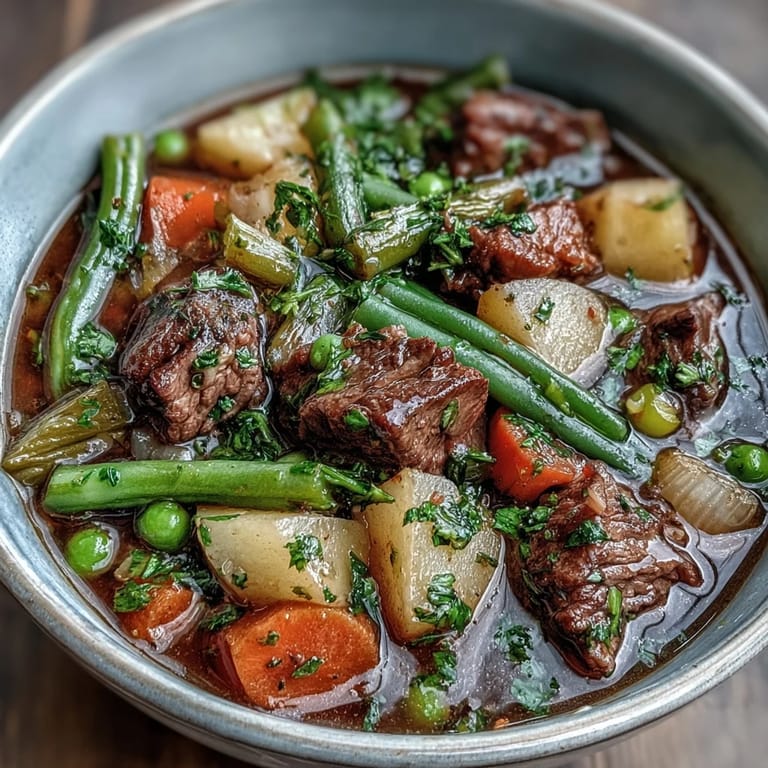
- Fish out those bay leaves so nobody bites into one, then ladle the soup into bowls and shower it with fresh parsley. The brightness of that parsley against the dark, warming broth is the last gift of flavor.
 Pin It
 The best part of making this soup happens the next morning when you reheat a bowl and realize it tastes like an entirely different—better—version of itself. That's when you understand why soup has been feeding people for centuries.
The Slow Cooking Advantage
There's something almost meditative about a pot that simmers quietly for hours, transforming tough cuts of meat into something tender without any effort on your part. You're not standing at the stove stirring constantly or monitoring a high temperature—you're just letting time and gentle heat do the work. This is cooking that rewards patience, and the result tastes like it was made with care rather than convenience.
How to Customize This Soup
The beauty of this soup is that it's flexible enough to meet whatever you have in your kitchen or whatever you're craving that day. Root vegetables like sweet potatoes, turnips, or parsnips can swap in for regular potatoes, and the soup will taste subtly different each time. Some people add a splash of Worcestershire sauce or smoked paprika for extra depth, and I've never met a version that wasn't welcome.
Storage and Serving Suggestions
This soup keeps beautifully in the refrigerator for up to four days, and it freezes well too if you want to make a double batch and save some for later. A bowl of this soup with crusty bread feels complete in the way meals should feel—like someone made sure you'd be satisfied. Serve it steaming hot, and don't skip the parsley garnish because that little bit of brightness makes all the difference.
- Reheat soup gently on the stove rather than blasting it in the microwave, which helps keep the vegetables from getting mushy.
- If the soup thickens too much when refrigerated, just thin it with a splash of broth when you reheat it.
- Always remove the bay leaves before serving, and do a quick taste test to adjust salt before anyone eats it.
 Pin It
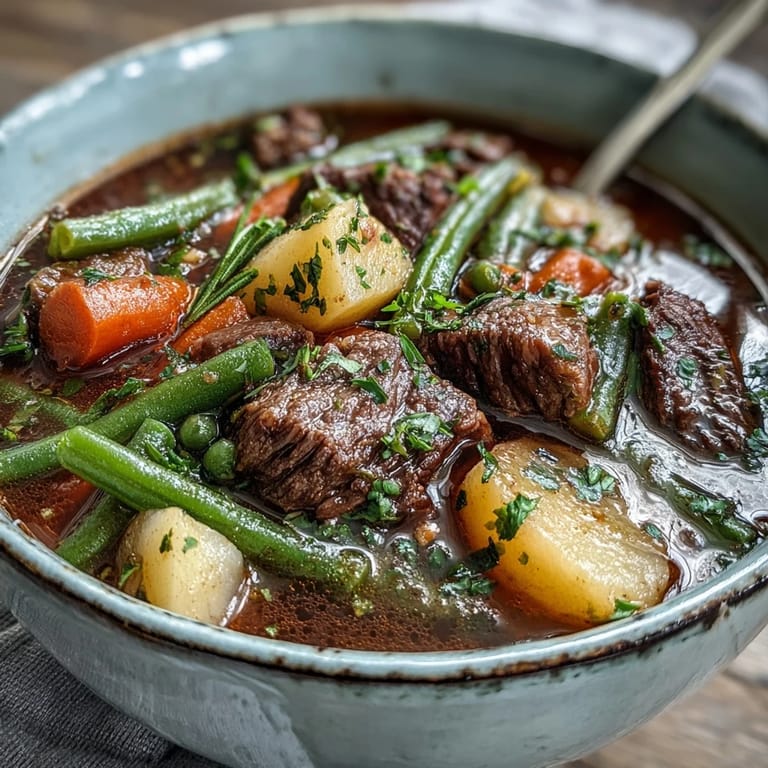
 This soup is the kind that reminds you why home cooking matters, and why sometimes the simplest dishes are the ones people remember longest. Make it on a day when you need the kitchen to feel warm, or make it for someone who needs to know they're cared for.
Recipe Questions & Answers
- → How long does it take to make?
The total time is 2 hours 10 minutes, including 25 minutes of prep and 1 hour 45 minutes of cooking. The long simmer ensures tender beef and flavorful broth.
- → Can I freeze leftovers?
Yes, this freezes well for up to 3 months. Cool completely before transferring to airtight containers. Thaw overnight in the refrigerator before reheating.
- → What cut of beef works best?
Beef chuck is ideal because it becomes tender during long cooking. You can also use stew meat, round, or brisket. Cut into 1-inch cubes for even cooking.
- → Can I make this in a slow cooker?
Absolutely. Brown the beef first, then add all ingredients to your slow cooker. Cook on low for 7-8 hours or high for 4-5 hours until beef is tender.
- → What vegetables can I substitute?
Try turnips, rutabaga, or sweet potatoes instead of regular potatoes. Swap green beans for corn or add leeks. Frozen vegetables work well too.
- → How do I store leftovers?
Refrigerate in airtight containers for up to 4 days. The flavors develop overnight, making it even better the next day. Reheat gently on the stovetop.