 Pin It
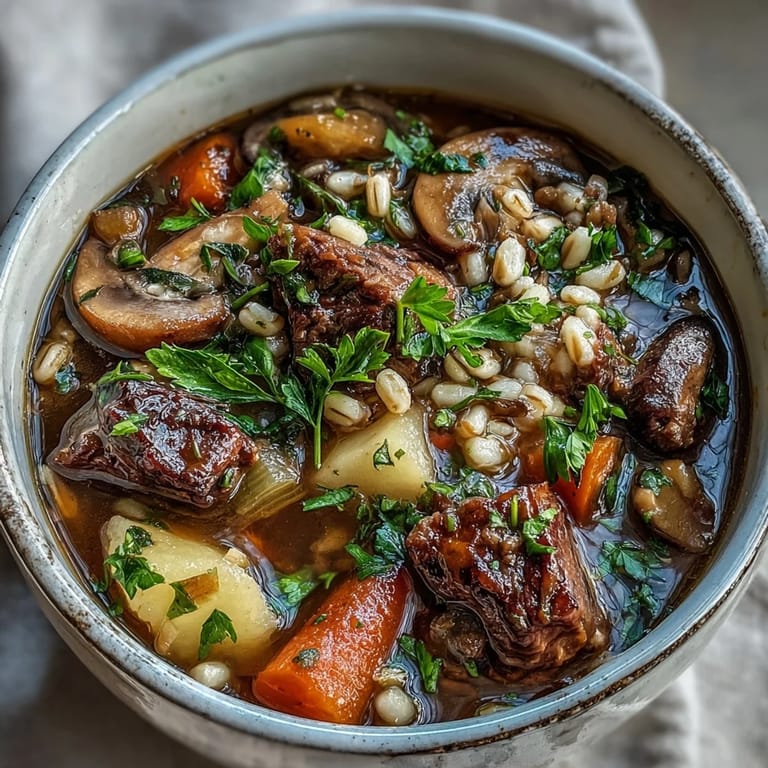
 There's something about the sound of beef sizzling in a hot pot that signals comfort is on the way. My neighbor stopped by one October afternoon while I was testing this soup, and the aroma alone had her lingering at the kitchen doorway for twenty minutes. She'd grown up on her grandmother's beef and barley soup, and watching her taste this version—the tender chunks of meat, the nutty barley, those earthy mushrooms—she smiled like she'd traveled back in time. That's when I knew this recipe had something real.
I made this for my partner on a day when everything felt a bit heavy, and watching him eat two full bowls without saying much—just content, focused on the food—reminded me why I love cooking. Soups like this don't need conversation. They just need to exist in your bowl, warm and patient.
Ingredients
- Beef stew meat (500 g): Choose pieces with a little marbling; they'll break down beautifully during the long simmer and create a richer broth.
- Pearl barley (100 g): Rinse it first under cold water to remove excess starch, which keeps the soup from becoming gummy.
- Onion, carrots, celery: This aromatic base is your flavor foundation; don't skip the step of softening them properly.
- Cremini or white mushrooms (250 g): Slice them thickly so they hold their shape and don't disappear into the broth.
- Garlic (2 cloves): Mince it fine and add it just before the browned beef returns to the pot so it doesn't burn.
- Potato (1 medium): Cut into cubes about the same size as your beef; they'll soften at roughly the same pace.
- Diced tomatoes (1 can, 400 g): Use canned tomatoes; the acidity adds depth that fresh tomatoes sometimes miss in long-simmered soups.
- Beef broth (1.5 L): Quality matters here—this is the backbone of your soup, so use broth you'd actually enjoy drinking.
- Bay leaf, thyme, parsley: These dried herbs are humble but essential; they create a savory backbone without overpowering anything else.
- Olive oil (2 tbsp): Use a good-quality oil for browning; cheaper oils can smoke and taste acrid.
- Salt and pepper: Taste as you go near the end; the broth may already have salt, so season gently.
Tired of Takeout? 🥡
Get 10 meals you can make faster than delivery arrives. Seriously.
One email. No spam. Unsubscribe anytime.
Instructions
- Brown the beef with confidence:
- Heat the oil until it shimmers, then add the beef cubes in a single layer—don't overcrowd the pot. Let them sit untouched for about two minutes per side so they develop a golden crust. This takes patience, but it's where the deep, savory flavor begins.
- Build your flavor base:
- Once the beef is out, the pot is hot and seasoned. Add the onion, carrots, and celery right into those caramelized bits, and let them soften until the onion turns translucent. You're coaxing out their sweetness and picking up all the flavor stuck to the bottom of the pot.
- Welcome the mushrooms:
- Stir in the sliced mushrooms and give them a few minutes to release their moisture. They'll shrink slightly and deepen in color, and that's perfect.
- Add garlic and aromatics:
- Mince the garlic fine and add it now—let it perfume the pot for just about a minute. Any longer and it'll taste bitter instead of fragrant.
- Bring everything together:
- Return the browned beef to the pot, then add the potatoes, tomatoes with their juices, barley, broth, bay leaf, thyme, and parsley. Stir everything until the barley settles and the broth looks even. This is your moment to catch anything you've missed.
- Simmer low and slow:
- Bring the soup to a boil so you know it's hot all the way through, then immediately lower the heat to the gentlest simmer you can manage. Cover it and let time do the work for about an hour, stirring occasionally so nothing sticks to the bottom.
- Check for doneness:
- After an hour, taste a piece of barley and beef. The barley should be tender but not falling apart, and the beef should shred easily with your spoon. If either needs more time, simmer uncovered for another 15–20 minutes to let the soup reduce and thicken slightly.
- Season and finish:
- Remove the bay leaf and taste the soup. Add salt and pepper gradually, remembering that the broth was already seasoned. Serve hot, and if you have fresh parsley on hand, a small handful scattered on top brightens the whole bowl.
 Pin It
 The first time I made this soup, I served it to friends on a rainy evening, and we sat around the table longer than we normally would, just talking and eating. There's something about a bowl of soup that slows people down and makes them want to linger.
Why Barley Matters
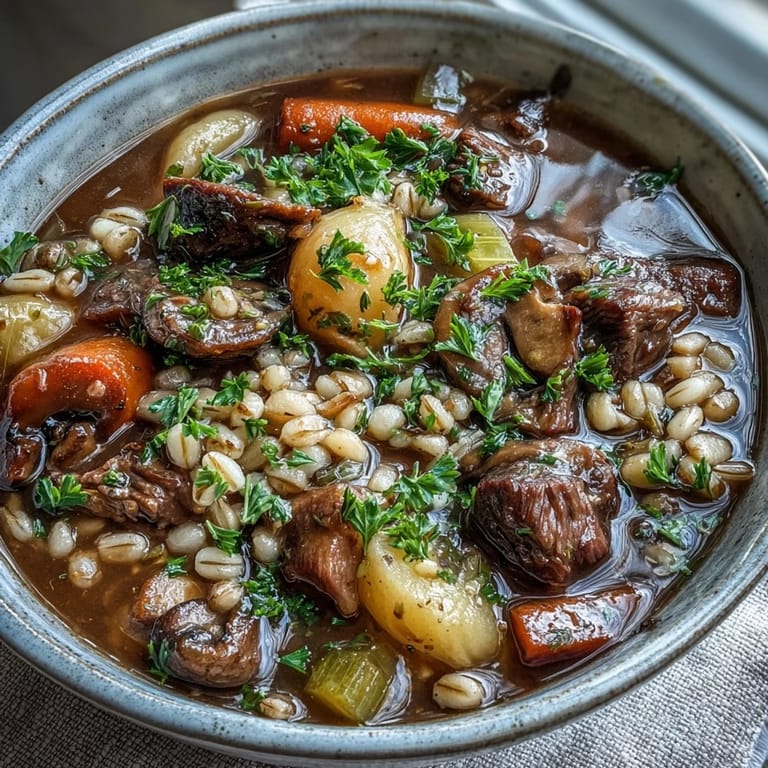
Barley is the unsung hero of this soup. It's chewy, slightly nutty, and absorbs the broth without dissolving into mush like rice sometimes does. I used to make this with just vegetables and beef, and it was fine, but adding barley gave it weight and character. Each spoonful becomes a small meal instead of just flavor and liquid.
Variations Worth Trying
This soup is forgiving and welcomes additions. I've made it with a splash of red wine after browning the beef, which adds a subtle richness that makes people ask what you did differently. I've also swapped the beef broth for chicken or vegetable broth on nights when I wanted something lighter. On a whim, I once added chopped kale in the last five minutes, and the earthiness of the greens played beautifully with the mushrooms.
Making It Your Own
The beauty of a soup like this is that it's sturdy enough to handle your preferences. If you love tomatoes, use a full can instead of holding back. If mushrooms aren't your thing, add more carrots or celery instead. The structure stays solid; the personality is yours. One last thought: make more than you think you need—this soup freezes beautifully and tastes even better three days later when all the flavors have had time to know each other.
- Freeze portions in individual containers so you can grab a bowl on mornings when you need comfort fast.
- If the soup thickens too much over time, add more broth or water when reheating.
- Fresh parsley on top makes it feel intentional, not just leftover.
 Pin It
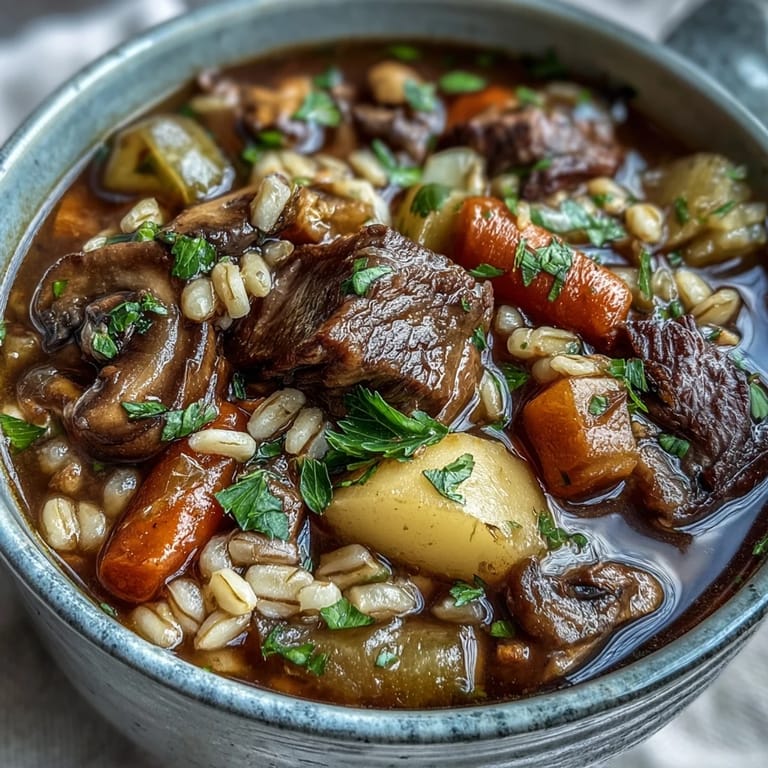
 This soup has a way of becoming a regular in your rotation once you've made it once. It's the kind of dish that reminds you why people have gathered around tables to eat together for thousands of years.
Recipe Questions & Answers
- → Can I make this soup in a slow cooker?
Yes, brown the beef first in a skillet, then transfer everything to your slow cooker. Cook on low for 7-8 hours or high for 4-5 hours until the beef and barley are tender. Add the barley during the last 2-3 hours to prevent it from becoming too mushy.
- → Is this soup freezer-friendly?
Absolutely. Let the soup cool completely before transferring to airtight containers or freezer bags. It will keep well for up to 3 months in the freezer. Note that the barley will continue to soften slightly upon reheating, which may create a thicker consistency.
- → Can I use quick-cooking barley instead of pearl barley?
You can substitute quick barley, but reduce the cooking time significantly. Add it during the last 15-20 minutes of simmering and follow package instructions, as quick barley requires much less time to become tender than pearl barley.
- → What cuts of beef work best for this soup?
Chuck roast, round steak, or pre-cut stew meat are ideal choices. These cuts have enough marbling and connective tissue to become tender and flavorful during long simmering. Avoid lean cuts like sirloin as they may become tough and dry.
- → Can I make this gluten-free?
Yes, simply replace the pearl barley with an equal amount of rinsed quinoa, brown rice, or sorghum. Adjust cooking time accordingly—quinoa needs about 15 minutes, while brown rice typically requires 45-50 minutes to become tender.
- → How do I store and reheat leftovers?
Refrigerate in an airtight container for up to 4 days. The barley will absorb more liquid as it sits, so you may need to add extra broth or water when reheating. Warm gently on the stovetop over medium heat, stirring occasionally.