 Pin It
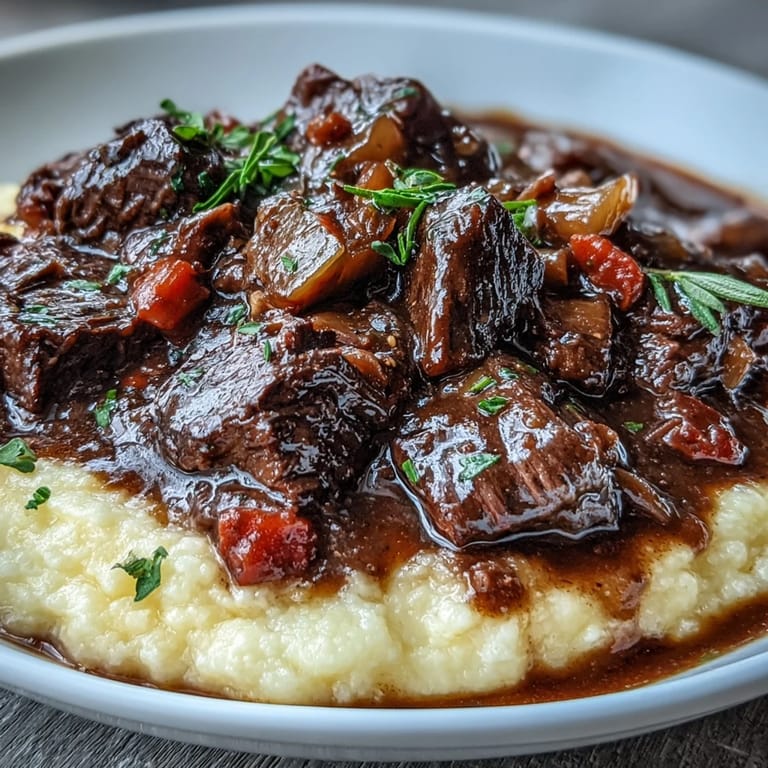
 The first snowfall always makes me crave something slow and serious. Last winter, I opened a bottle of sloe gin my neighbor had made two autumns prior, and it sat on the counter glowing like a garnet while I trimmed venison into rough cubes. The kitchen smelled like cold air and something wild. I didn't follow a plan that night, just let the gin reduce into the pan and watched it turn everything glossy and dark.
I made this for a small dinner party once, and everyone went quiet after the first bite. Someone said it tasted like the woods in December. Another friend scraped her bowl clean and asked if there was more polenta. I realized then that this wasn't just dinner, it was the kind of meal people remember when they think about your table.
Ingredients
- 800 g venison shoulder or stewing venison, cut into 3 cm cubes: Use shoulder or neck for the best texture, it breaks down beautifully and stays moist during the long braise.
- 2 tbsp olive oil: Just enough to get a good sear without making the pan too heavy.
- 1 large onion, finely chopped: The base of every good stew, it melts into sweetness as it cooks.
- 2 carrots, sliced: They add a slight earthiness and help thicken the sauce naturally.
- 2 celery stalks, diced: Often overlooked, but celery brings a quiet herbal note that balances the richness.
- 2 garlic cloves, minced: Don't skip this, it blooms in the tomato paste and fills the kitchen with warmth.
- 2 tbsp tomato paste: Concentrated and slightly sweet, it deepens the color and flavor of the sauce.
- 150 ml sloe gin: The star here, it brings berry sweetness and a faint almond note from the stones.
- 400 ml beef or game stock: Use the best you can find, homemade if possible, it makes all the difference.
- 1 tbsp redcurrant jelly: A classic British trick, it adds gloss and a gentle tartness that cuts through the fat.
- 2 bay leaves: They release a soft, woody aroma that ties everything together.
- 2 sprigs fresh thyme: Fresh is best, the leaves fall off as it simmers and perfume the whole pot.
- 1 tsp juniper berries, lightly crushed: They echo the gin and add a piney, festive quality.
- Salt and freshly ground black pepper, to taste: Season in layers, taste as you go.
- 750 ml whole milk: Whole milk makes the polenta creamy and rich, don't use skim.
- 250 ml water: Thins the milk just enough so the polenta doesn't seize up.
- 150 g polenta: Quick-cooking works fine, but traditional polenta has a better texture if you have the time.
- 40 g unsalted butter: Stir it in at the end for a silky finish.
- 50 g grated Parmesan cheese: Adds a salty, nutty depth that makes the polenta irresistible.
Tired of Takeout? 🥡
Get 10 meals you can make faster than delivery arrives. Seriously.
One email. No spam. Unsubscribe anytime.
Instructions
- Brown the Venison:
- Heat the olive oil in a heavy casserole over medium-high heat until it shimmers. Add the venison in batches, giving each piece room to sear without crowding, and let them develop a deep brown crust before turning.
- Soften the Vegetables:
- In the same pan, add the onion, carrots, and celery, scraping up any browned bits from the bottom. Cook for 5 to 7 minutes until they soften and begin to smell sweet.
- Build the Base:
- Stir in the garlic and tomato paste, cooking for another minute until the paste darkens slightly. This step is quick but important, it brings out the sweetness and removes any raw taste.
- Deglaze with Sloe Gin:
- Return the venison to the pan and pour in the sloe gin. Let it bubble and reduce for about 2 minutes, the alcohol will cook off and leave behind a gorgeous fruity depth.
- Simmer the Stew:
- Add the stock, redcurrant jelly, bay leaves, thyme, and juniper berries, then season with salt and pepper. Bring everything to a gentle simmer, cover, and cook on low heat for 2 hours, stirring occasionally until the venison is fork-tender.
- Start the Polenta:
- About 20 minutes before serving, heat the milk and water in a saucepan until just simmering. Gradually whisk in the polenta in a steady stream to avoid lumps.
- Cook Until Creamy:
- Keep stirring over low heat for 5 to 10 minutes, or according to the packet instructions, until the polenta thickens and pulls away from the sides. Stir in the butter and Parmesan, then season with salt.
- Finish and Serve:
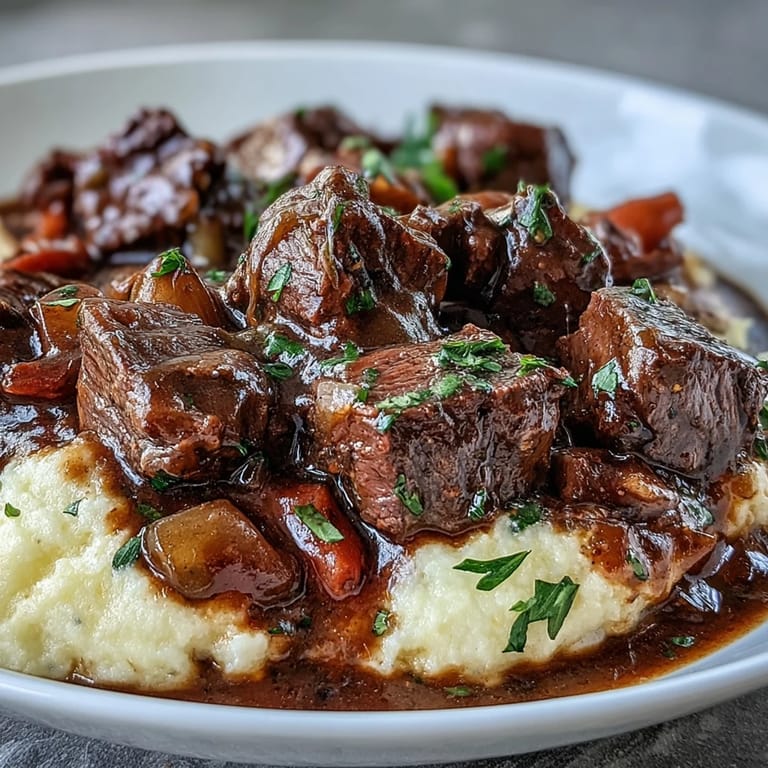
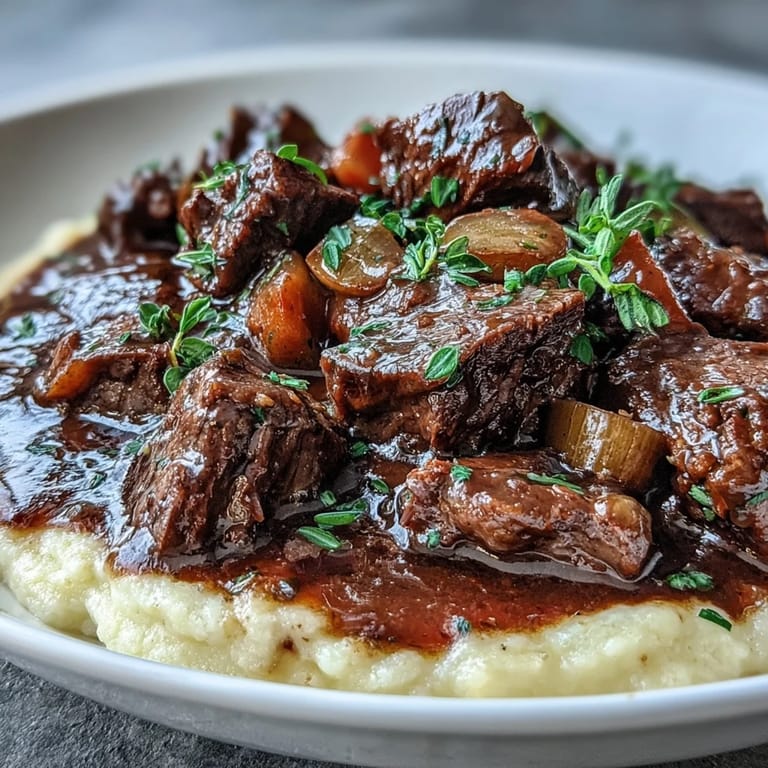
- Remove the bay leaves and thyme sprigs from the stew. Spoon the creamy polenta into wide bowls and ladle the venison stew over the top, making sure each serving gets plenty of sauce.
 Pin It
 One evening, I served this to my father, who grew up hunting in the highlands. He didn't say much at first, just ate slowly and nodded. Then he asked for the recipe, which he'd never done before. That's when I knew this dish had become something worth passing on.
Choosing Your Venison
Shoulder and neck are the best cuts for slow cooking because they have enough fat and connective tissue to stay moist and tender. Avoid lean cuts like loin, they'll dry out and turn grainy. If you can, buy from a game dealer or farm that dry-ages their meat, the flavor is incomparably rich. I once used frozen supermarket venison and it worked fine, but fresh made the sauce taste like the forest itself.
About Sloe Gin
Sloe gin is not the same as regular gin, it's a liqueur made by steeping sloe berries in gin with sugar. The berries give it a deep red color and a sweet, slightly tart flavor with almond undertones from the stones. If you can't find it, substitute with a good port or a berry liqueur like cassis. I tried it once with regular gin and a spoonful of jam, it wasn't the same but it still worked in a pinch.
Serving and Storing
This stew tastes even better the next day once the flavors have had time to settle and deepen. Store it in the fridge for up to three days, or freeze it in portions for up to three months. Reheat gently on the stove, adding a splash of stock if it's thickened too much. The polenta, however, is best made fresh, though you can reheat leftovers with a little milk and butter if needed.
- Garnish with fresh parsley or a sprig of thyme for a pop of color.
- Pair with a robust red wine like Shiraz, Malbec, or Cabernet Sauvignon.
- Serve with crusty bread on the side if you want to mop up every last drop of sauce.
 Pin It
 This is the kind of meal that turns a cold night into something cozy and memorable. Make it when you have time to let it simmer, pour yourself a glass of wine, and enjoy the slow magic of it all.
Recipe Questions & Answers
- → Can I substitute the venison with another meat?
Yes, beef chuck or lamb shoulder work well as alternatives. Adjust cooking time as needed until the meat is tender.
- → What can I use instead of sloe gin?
Port, berry liqueur, or a combination of red wine with a splash of blackcurrant liqueur make excellent substitutes for sloe gin.
- → Can I make this ahead of time?
Absolutely. The stew actually improves when made a day ahead. Reheat gently and prepare fresh polenta just before serving.
- → How do I know when the venison is cooked properly?
The venison should be fork-tender and easily pull apart after 2 hours of gentle simmering. If still tough, continue cooking for 20-30 minutes more.
- → Can I use instant polenta?
Yes, quick-cooking polenta works perfectly and saves time. Follow the package instructions but add butter and Parmesan for extra creaminess.
- → Is this dish gluten-free?
Yes, when using gluten-free stock and checking that all other ingredients are certified gluten-free. Polenta is naturally gluten-free.