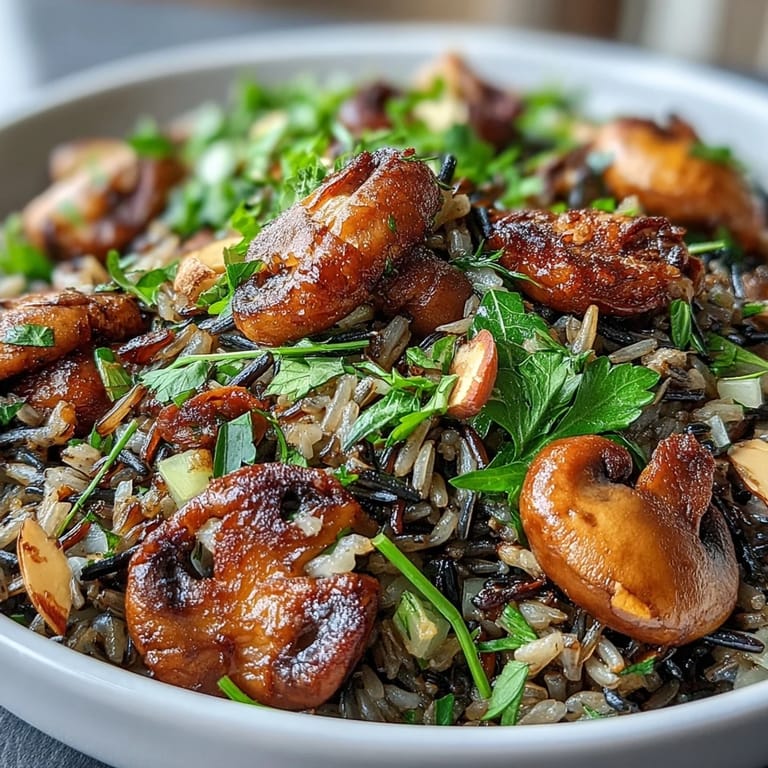
 Pin It
 Wild rice has this peculiar texture that took me years to appreciate—it pops between your teeth like tiny kernels of nutty surprise. One autumn, a friend brought a bag of it to my kitchen and challenged me to make something beyond the standard holiday stuffing, so I started sautéing mushrooms on a whim and discovered how perfectly they balance wild rice's earthiness. The whole dish came together in under an hour, filling my kitchen with a smell so warm and savory that my partner kept wandering in to ask when dinner would be ready, even though it was only lunch. That's when I knew I'd found something worth making again and again.
I made this for a potluck once where everyone else brought casseroles and complicated sides, and somehow this simple pilaf disappeared first. A coworker asked for the recipe on the spot, saying it tasted like something from a restaurant but didn't feel fancy or pretentious—just honest and good. That moment stuck with me because it proved that restraint and quality ingredients can outshine fussiness every single time.
Ingredients
- Wild rice: Rinsing it removes dust and any debris, and it's the foundation here—look for grains that are intact and dark, not broken or pale.
- Vegetable broth: Low-sodium matters because you'll taste the rice and mushrooms better; if you use full-sodium broth, the whole dish tips toward saltiness.
- Olive oil: Use something you'd actually taste, not the cheapest bottle—it carries flavor into the vegetables.
- Cremini or button mushrooms: Cremini have more depth, but button mushrooms work beautifully too and are usually more forgiving for beginners.
- Fresh thyme: The dried version works, but fresh thyme leaves have a brightness that dried loses; sprinkle them in at the end if you want to taste their subtle complexity.
- Bay leaf: This is a silent partner—it adds depth without announcing itself, so don't skip it even if it seems small.
- Fresh parsley and almonds: These are your finishing touches that lift the whole dish from earthy to elegant without changing what's underneath.
Tired of Takeout? 🥡
Get 10 meals you can make faster than delivery arrives. Seriously.
One email. No spam. Unsubscribe anytime.
Instructions
- Start the wild rice:
- Bring your broth and water to a boil, add the rinsed wild rice, then drop the heat down and cover it—you'll hear it gently bubbling under the lid. The whole thing takes about 40 to 45 minutes and you can leave it mostly alone while you handle the vegetables.
- Build the flavor base:
- Heat your olive oil and add the onion, celery, and carrot together, letting them soften and sweeten for about 5 to 6 minutes. This is when your kitchen starts smelling like something real is happening, so pay attention to the sound and aroma.
- Bring in the mushrooms:
- Once the vegetables are soft, add your garlic and mushrooms and let them cook without stirring too much—they need space to brown and release their liquid. You'll see them go from raw and pale to deeply golden, which takes about 6 to 8 minutes and smells incredible.
- Season and finish the vegetables:
- Add your thyme and bay leaf, season with salt and pepper, cook for one more minute, then fish out that bay leaf. Taste what you have before moving forward so you know if you need more seasoning.
- Combine everything:
- Gently fold the cooked wild rice into the mushroom mixture—use a wooden spoon and be kind to the rice so it doesn't turn to mush. Taste again and adjust your salt and pepper because this is your final chance to get it right.
- Serve with grace:
- Transfer to a serving dish, scatter fresh parsley over the top, and add those almonds if you're using them. Serve it warm and watch how people respond to something so simple that tastes so complete.
 Pin It
 I served this at a small dinner party once where someone mentioned they'd recently gone vegetarian and seemed nervous about eating at my house. Watching their face light up when they tasted this pilaf—realizing they weren't missing anything, that vegetarian food could be this satisfying—made the whole meal feel like more than just dinner. It became a moment where food actually meant something.
Why This Becomes a Go-To
After you've made this a few times, it stops feeling like a recipe and starts feeling like a habit in the best way. You'll find yourself buying mushrooms and wild rice on autopilot, knowing exactly how to turn them into something that tastes intentional and nourishing without pretense. The technique is forgiving enough that even if your timing is slightly off or you add an extra pinch of salt, the dish still lands beautifully.
The Thing About Wild Rice
Wild rice isn't actually rice—it's a seed from an aquatic grass, which explains why it has such a different personality than regular grains. It holds its shape and texture even when fully cooked, which means you get these little bursts of nuttiness with every bite instead of a uniform mush. Once you understand that about it, you start respecting it more and cooking it with intention rather than just following the time on the package.
Making It Your Own
This pilaf is a canvas that won't fight back if you want to add your own touches. Some people stir in toasted walnuts instead of almonds, others add a splash of white wine when the mushrooms hit the pan, and I've seen someone make it with fresh rosemary instead of thyme. The core stays solid but the edges are flexible, which is how a recipe should be if it's going to stick around in your kitchen long enough to matter.
- If you want richness, stir in a tablespoon of butter at the very end right before serving.
- A squeeze of fresh lemon juice over the top brightens everything without making it taste acidic.
- This reheats beautifully, so make extra and eat it cold the next day straight from the fridge if you're in a rush.
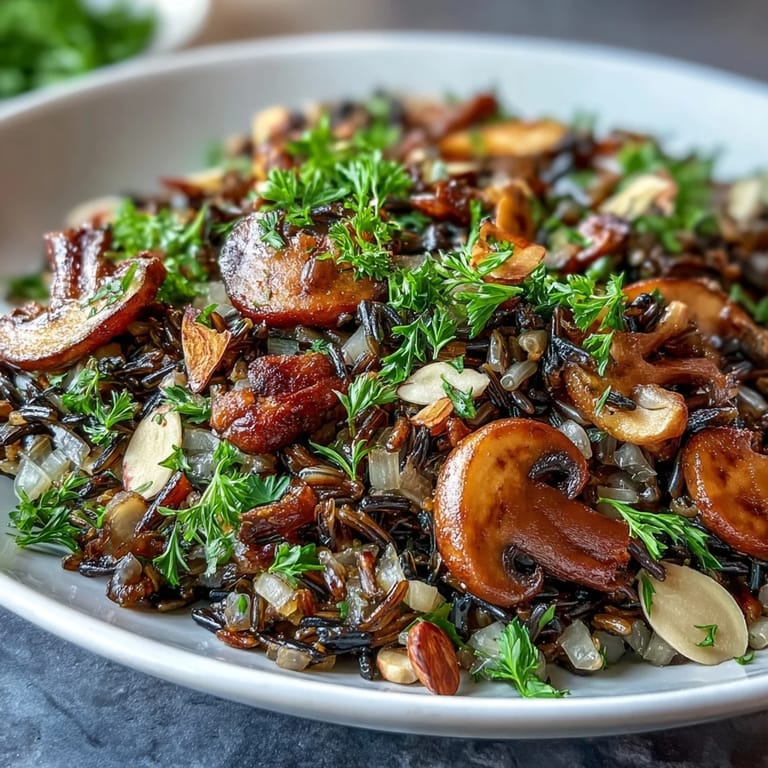 Pin It
 This pilaf has become my answer to the question of what to bring or make when I want something that feels special but not stressful. It's the kind of food that makes people feel cared for without making you spend all day in the kitchen.
Recipe Questions & Answers
- → What makes wild rice different from regular rice?
Wild rice is actually a semi-aquatic grass rather than true rice. It has a nutty flavor, chewy texture, and longer grains that hold their shape well during cooking. It's also higher in protein and fiber than white rice.
- → Can I prepare this pilaf ahead of time?
Yes, you can make the components up to 2 days ahead. Store the cooked rice and sautéed vegetables separately in the refrigerator. Combine and reheat gently with a splash of broth or water before serving.
- → What mushrooms work best for this dish?
Cremini mushrooms offer excellent flavor and texture, but button mushrooms work well too. For more variety, try adding shiitake for depth or oyster mushrooms for a delicate taste. Mix different types for complex flavor.
- → How do I know when wild rice is fully cooked?
Wild rice is done when the grains are tender but still slightly chewy, and some of the grains have split open revealing their white interior. This typically takes 40-45 minutes. Taste test a few grains to ensure they're cooked through.
- → Can I make this pilaf vegan?
Absolutely. This pilaf is naturally dairy-free and can be made entirely vegan by ensuring your vegetable broth is plant-based. Simply omit the optional almonds or choose them without honey coating.
- → What can I serve with wild rice pilaf?
This pilaf pairs wonderfully with roasted chicken, turkey, or pork tenderloin. For a vegetarian meal, serve alongside roasted winter vegetables or a fresh green salad with vinaigrette to balance the earthy flavors.