 Pin It
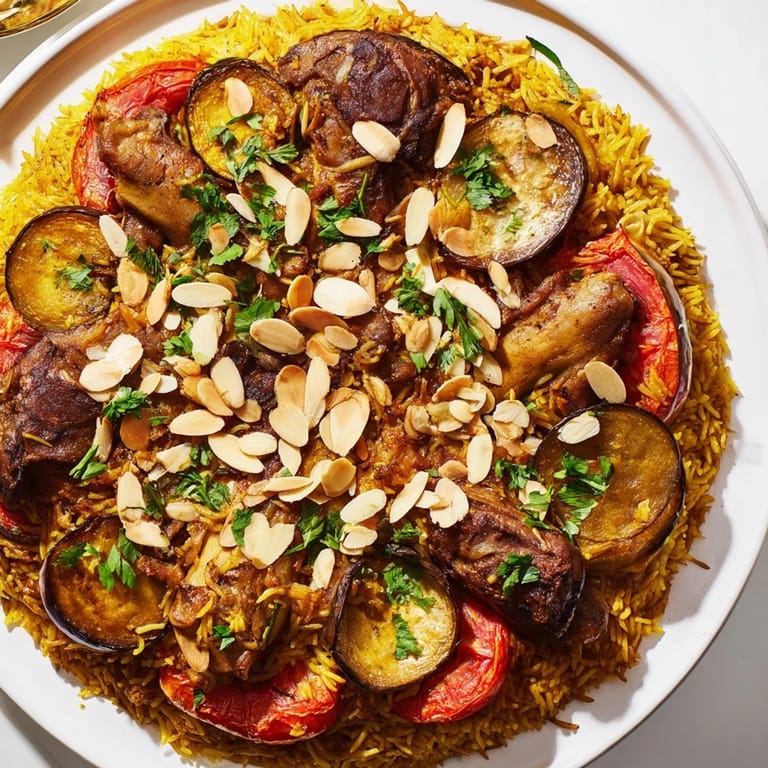
 The first time I watched Maqluba being flipped, I held my breath. My grandmother stood over a massive pot with quiet confidence, placed a platter on top, and in one swift motion turned the entire thing upside down—revealing this stunning golden dome of rice studded with caramelized vegetables and tender meat. It felt like magic, but it's really just the magic of layering, patience, and understanding how flavors deepen when they cook together undisturbed.
I made this for my cousin's birthday once, and she kept asking why it tasted different from her mother's version. The answer came down to one thing: patience. She'd rushed hers, covering the pot too early before the rice could drink in those precious spiced broths. When you let each layer cook undisturbed, the rice at the bottom gets slightly crispy and golden—that's the part everyone fights over.
Ingredients
- Bone-in lamb shanks or chicken pieces (900 g / 2 lbs): The bone adds depth and richness; it's tempting to use boneless cuts for speed, but these bones are where the flavor lives.
- Ground black pepper, allspice, and cinnamon (1 tsp + 1 tsp + 1/2 tsp): This spice trio is the backbone—don't skip the cinnamon, even a pinch changes everything.
- Long-grain basmati rice (2 cups): Rinsing it until the water runs clear is not optional; it removes starch and keeps each grain separate.
- Eggplants and potatoes (2 medium each): Roasting them first prevents them from absorbing all the broth and becoming mushy before the rice cooks.
- Tomatoes and onions: The tomatoes go on the very bottom, where their acidity cuts through richness and their juices start the flavor foundation.
- Turmeric, cumin, and salt (1/2 tsp each): These go into the broth, not directly on the rice, so the spices distribute evenly throughout.
- Slivered almonds or pine nuts: Toast them yourself—store-bought toasted versions fade, and fresh-toasted nuts bring a crucial crunch and warmth to the finish.
- Chicken or beef broth (3–4 cups): Quality matters here; weak broth means weak rice.
Tired of Takeout? 🥡
Get 10 meals you can make faster than delivery arrives. Seriously.
One email. No spam. Unsubscribe anytime.
Instructions
- Prepare the rice the right way:
- Rinse your rice under cold water, rubbing it gently between your palms with each rinse until the water runs completely clear—this takes patience but pays off in texture. Soak it for 30 minutes, then drain completely so no excess water dilutes your broth later.
- Season and sear the meat:
- Pat your lamb or chicken dry, then dust it generously with black pepper, allspice, cinnamon, and salt. The spices need contact with the meat, so don't be shy. Sear it hard in a hot pot until the surface is deeply golden—this takes about 8 minutes total, turning every couple of minutes.
- Build the broth base:
- After removing the meat, soften onion slices in the same pot where the meat browned, scraping up all those flavorful bits. Pour in your broth, return the meat, and let it simmer gently for 30–40 minutes until the meat is nearly tender but still has a bit of resistance.
- Roast the vegetables while meat cooks:
- Brush your eggplant and potato slices lightly with oil and spread them on baking sheets—don't crowd them. Roast at 200°C (400°F) for 20–25 minutes until they're golden at the edges and tender inside, stirring halfway through so they cook evenly.
- Layer with intention:
- In your heavy-bottomed pot, start with tomato slices covering the entire bottom—they're your flavor foundation. Add potatoes next, then eggplant, then your cooked meat and onions. Top everything with your drained rice, pressing gently so it settles without crushing the layers below.
- Season the broth for the rice:
- Stir turmeric, cumin, and salt into your reserved meat broth, then pour it over the rice until it just covers the top—about 3 to 4 cups. The rice will absorb this liquid and take on all those warm, earthy flavors.
- The lid trick:
- Seal the pot with a plate and lid:
- Place a plate or heatproof lid smaller than the pot directly on top of the rice—this keeps the layers compact as they cook. Then cover the whole pot with its lid, creating a tight seal.
- Cook low and undisturbed:
- Bring everything to a gentle simmer over medium heat, then immediately turn it down to low. Don't lift the lid, don't stir—just let it cook for 35–40 minutes until the rice is tender and all liquid is absorbed. You might hear a gentle crackling sound from the bottom; that's the start of the golden crust forming.
- Rest before the flip:
- Turn off the heat and let the pot sit covered for 15 minutes. This resting time is when the layers set slightly, making the flip less likely to fall apart.
- The grand flip:
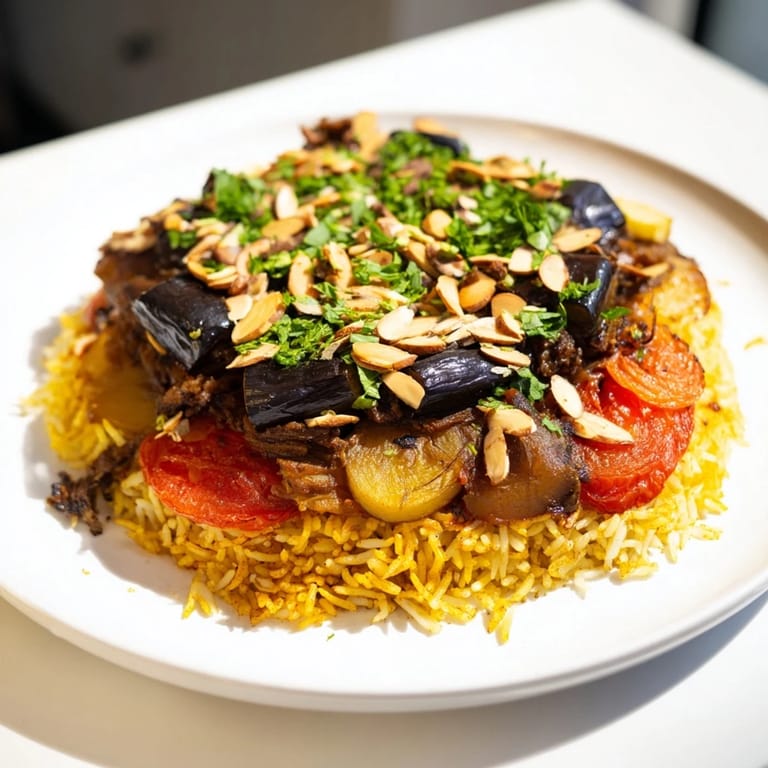
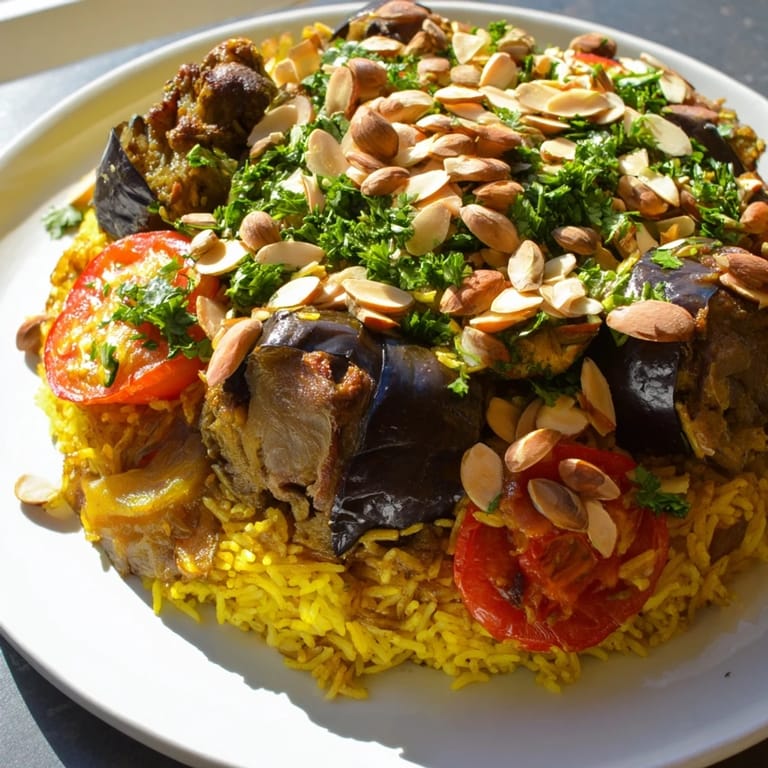
- Place a large serving platter over the pot opening, then in one confident motion, flip the whole thing. Lift the pot away carefully to reveal that golden dome of rice with vegetables and meat embedded throughout.
- Finish and serve:
- Scatter your toasted nuts and fresh parsley over the top, and bring it to the table while it's still warm. Serve alongside yogurt or a fresh salad for brightness.
 Pin It
 I made a mistake once and peeked at the rice after 20 minutes because I got impatient. The bottom layer hadn't even started to cook through, and I'd let out half the steam. I learned then that Maqluba demands trust—you have to believe the process is working even when you can't see it.
The Art of the Layer
Every layer in Maqluba serves a purpose, and understanding that changes how you approach the dish. The tomatoes on the bottom don't just add flavor; their slight acidity cuts through the richness of meat and oil, and their juices begin dissolving into the broth. The potatoes and eggplant, roasted beforehand, hold their shape because they're already cooked when they hit the pot. The meat sits in the middle where it stays tender and infuses everything around it with its essence. The rice on top soaks up all these flavors as it cooks, becoming fragrant and slightly golden where it touches the edges of the pot.
Choosing Your Meat
Lamb shanks are traditional and worth seeking out—they have that deep, slightly gamey flavor that makes Maqluba memorable. But chicken thighs work beautifully too, especially boneless ones if you're short on time. The key is choosing cuts with enough fat to stay moist through cooking; lean breast meat will dry out. If you use chicken, reduce the simmering time to just 25–30 minutes since it cooks faster than lamb.
Vegetables and Variations
While eggplant and potatoes are classic, this dish adapts to what's in your kitchen or what you're craving. Cauliflower florets create a lighter, slightly nuttier version. Zucchini works if you salt and drain it first to prevent it from releasing too much water. Carrots add sweetness and crunch. The only rule is to roast harder vegetables beforehand so they're tender by the time the rice finishes cooking, and to arrange everything in a way that feels balanced to you.
- If using cauliflower, roast it cut-side down for deeper caramelization.
- Zucchini slices should be salted 15 minutes ahead and patted dry to remove excess moisture.
- Don't skip the tomatoes on the bottom—they're the acid that brightens everything else.
 Pin It
 Maqluba isn't just food—it's a small ceremony at the table, the moment when everyone leans in to watch the reveal. Make this dish for people you want to impress, or for yourself on a day when you need to remember that good things take patience and trust.
Recipe Questions & Answers
- → What types of meat work best for Maqluba?
Bone-in lamb shanks or chicken pieces work well as they add depth and richness. Boneless chicken thighs can be used for quicker preparation.
- → How should the vegetables be prepared?
Eggplants and potatoes are sliced into rounds, brushed with oil, and roasted until golden and tender to bring out their flavor and texture.
- → What spices are essential in this dish?
The dish uses ground black pepper, allspice, cinnamon, turmeric, and cumin for a warm, aromatic profile.
- → Can I substitute any vegetables?
Yes, cauliflower florets can replace eggplant for a different texture and taste while maintaining the layered effect.
- → How is the Maqluba cooked to keep its layers intact?
Layers are assembled in a heavy-bottomed pot, covered with a heatproof lid and plate to compact the layers, then simmered undisturbed to fully cook the rice and meld flavors.
- → What garnishes complement this dish?
Toasted slivered almonds or pine nuts and chopped fresh parsley add crunch and freshness to the final presentation.