 Pin It
 The first time I made fesenjan, I was standing in my kitchen on a gray November afternoon, the pomegranate molasses bottle sitting heavy in my hand like something precious. My friend Maryam had finally written down her family recipe, and I kept reading it over and over, wondering how something so simple—walnuts, pomegranate, meat—could taste like luxury. When that deep burgundy sauce came together and the whole kitchen filled with the smell of cinnamon and tangy fruit, I understood why her grandmother had made this for every celebration. It was the kind of dish that made you believe cooking could be an act of love.
I made this for a dinner party last winter, and I remember my neighbor Sarah taking that first bite and going completely quiet for a moment. She looked up and said, 'This tastes like somewhere I've never been,' which I think is the highest compliment food can get. The table stayed quiet for a few seconds, just the sound of forks and the gentle clink of glasses, and I felt this small rush of joy knowing I'd created something that transported people.
Ingredients
- Boneless chicken thighs or duck (700g / 1.5 lbs), cut into large pieces: Thighs stay tender and juicy through the long simmer, while duck brings an authentic richness; I learned the hard way that breast meat gets dry, so thighs are your friend here.
- Salt and black pepper (1/2 tsp each): Don't skip seasoning the meat first—this step sounds small but it builds the foundation of flavor everything else rests on.
- Vegetable oil (2 tbsp): Any neutral oil works, but I use avocado oil because it handles the heat without fussing.
- Large onion, finely chopped (1): One properly golden onion brings sweetness that balances all the tang later; rushing this step shows in the final taste.
- Walnuts, finely ground (250g / 2 cups): Grind them yourself if you can—pre-ground walnuts sometimes taste dusty, and freshly ground ones bring a buttery richness that makes the sauce silky.
- Pomegranate molasses (500 ml / 2 cups): This is the backbone of the whole dish, that deep sour-sweet note that makes people ask what the secret ingredient is.
- Water (500 ml / 2 cups): Use filtered water if your tap water is heavily chlorinated; you'll taste the difference in the final sauce.
- Sugar (2 tbsp, adjust to taste): Start with less and taste as you go—the molasses already brings sweetness, and you're aiming for balance, not a dessert.
- Ground cinnamon, turmeric, and cardamom (1/2 tsp, 1/4 tsp, 1/4 tsp optional): These spices work together like a quiet conversation, each one adding a whisper of warmth that you feel more than taste.
- Pomegranate seeds and fresh parsley for garnish (optional): The seeds add a final bright moment and a little burst of tartness; parsley keeps everything from feeling too heavy.
Tired of Takeout? 🥡
Get 10 meals you can make faster than delivery arrives. Seriously.
One email. No spam. Unsubscribe anytime.
Instructions
- Season and prepare:
- Pat your meat dry and season generously with salt and pepper on both sides. This takes thirty seconds and changes everything about how the meat browns.
- Build the base:
- Heat your oil over medium heat until it shimmers, then add the chopped onion and let it slowly turn golden—this takes about 8 to 10 minutes, and yes, it's worth the time. You're developing a sweet foundation that the rest of the dish will balance against.
- Brown the meat:
- Add your meat pieces to the pot in a single layer and resist the urge to move them around for the first minute or two. Let them get a proper golden crust on each side, about 5 to 7 minutes total. This step locks in flavor and gives the stew body.
- Toast the walnuts:
- Stir in your ground walnuts and cook for 2 to 3 minutes, stirring often so they don't catch and burn. You want them to smell warm and nutty, not bitter.
- Build the sauce:
- Add the pomegranate molasses, water, sugar, cinnamon, turmeric, and cardamom all at once, stirring well to combine everything. The mixture should look like thick, dark wine.
- Simmer gently:
- Bring everything to a gentle boil, then turn the heat down low, cover the pot, and let it simmer for 1 hour. Stir it a few times, but not constantly—you're letting the flavors marry quietly.
- Reduce and thicken:
- Uncover the pot and simmer for another 30 minutes, stirring more frequently now. You're watching for two things: the sauce to thicken enough that it coats the back of a spoon, and a thin layer of walnut oil to rise to the top, which is actually beautiful and means you've done it right. Taste as you go and adjust the sugar or molasses to your preference.
- Finish and serve:
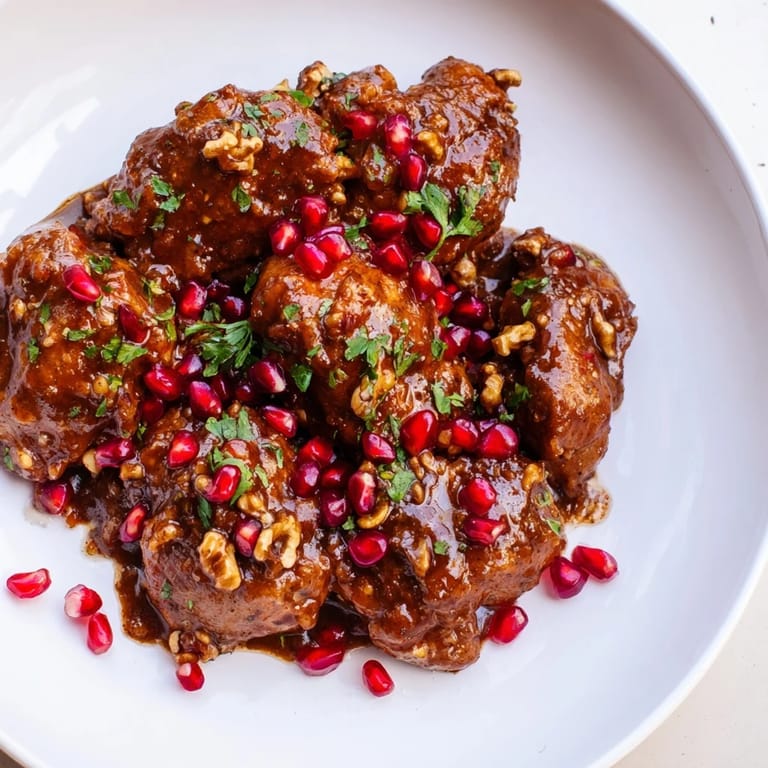
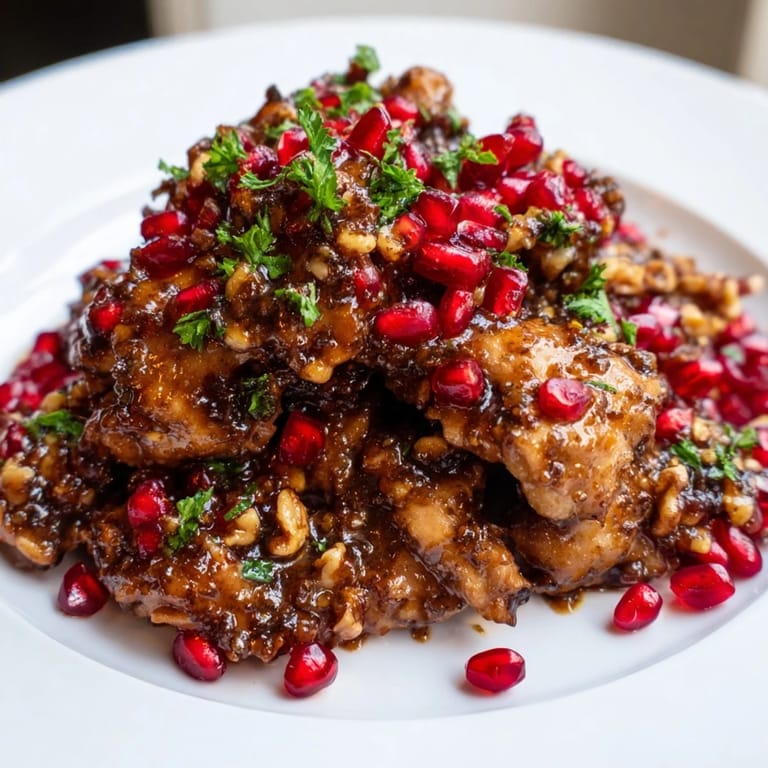
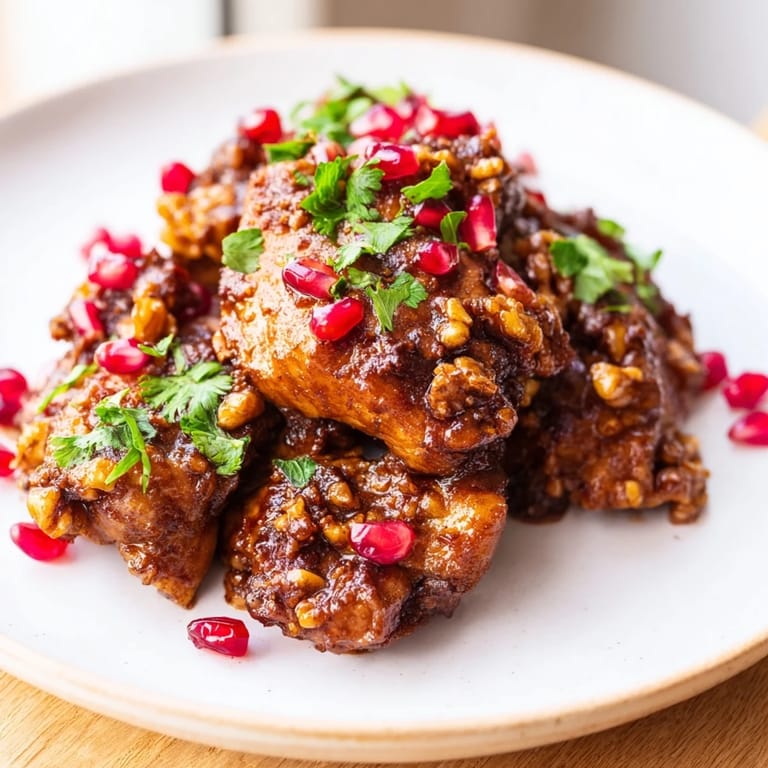
- The stew is ready when the meat is fork-tender and the sauce clings to it like silk. Serve it hot in shallow bowls over steamed basmati rice, with a scattering of pomegranate seeds and fresh parsley if you have them.
 Pin It
 What I didn't expect when I started making this dish regularly was how it became a meal for marking moments. A friend got a new job: fesenjan. My sister was going through something hard: fesenjan. There's something about a stew that simmers for almost two hours that says 'I'm taking time for you,' without needing any words at all.
The Magic of Pomegranate
Pomegranate molasses is the ingredient that stops people mid-conversation. It's not the molasses you bake with—it's reduced pomegranate juice that's been cooked down until it's dark and glossy and intensely tart. I spent years thinking pomegranate molasses sounded fancy and intimidating, but it's actually just a shortcut for flavor that would take hours to build any other way. The first time I tasted it straight from the spoon, I understood why it appears in Persian and Middle Eastern cooking like a secret password. It brings a brightness to meat that other acids (like lemon or vinegar) can't quite match—there's a subtle fruitiness underneath the tang that feels almost floral.
Why Walnuts Matter
Walnuts do double duty in fesenjan: they thicken the sauce naturally without any flour or cream, and they add a richness that deepens as the stew cooks. I used to think ground walnuts were just a thickener, but they actually become part of the sauce's personality. As they cook down, they release their oil, which rises to the surface and creates this gorgeous mahogany sheen that tells you the dish is done. If you're using pre-ground walnuts from a container that's been sitting around for months, they might taste slightly bitter—fresh is genuinely better here, and a food processor makes short work of the whole project.
Balancing the Flavors
Fesenjan lives in the space between sweet and sour, warm spices and bright fruit, rich meat and clean heat. The cinnamon and cardamom whisper rather than shout, creating a background warmth that lets the pomegranate and walnut step forward. Every palate is different, so don't be shy about tasting and adjusting—if it feels too sour, add a little more sugar; if it feels flat, a pinch more cinnamon can wake it up.
- Taste the sauce twice during cooking and adjust before serving, because your preferences are the only rule that matters.
- If you're making this vegetarian, mushrooms or eggplant work beautifully and pick up the sauce flavors just as well as meat.
- Leftover fesenjan tastes even better the next day, so don't hesitate to make it ahead.
 Pin It
 Make this dish when you have time to let it cook slowly and people around who deserve it. There's something about serving fesenjan that brings everyone a little closer together.
Recipe Questions & Answers
- → What type of meat works best for Fesenjan?
Duck is traditional and imparts rich flavor, but chicken thighs are a popular alternative for tenderness and ease of cooking.
- → Can the sauce be made less sweet or more tangy?
Adjust sugar and pomegranate molasses to balance sweetness and tang according to personal taste preferences.
- → How do walnuts influence the texture of the dish?
Ground walnuts thicken the sauce while adding a creamy, nutty richness that complements the pomegranate's acidity.
- → What spices enhance the flavor profile?
Cinnamon, turmeric, and cardamom bring warmth and depth, harmonizing with the sweet and sour notes of the sauce.
- → Are there vegetarian alternatives for this dish?
Substitute mushrooms or eggplant for the meat to retain texture while absorbing the rich sauce flavors.