 Pin It
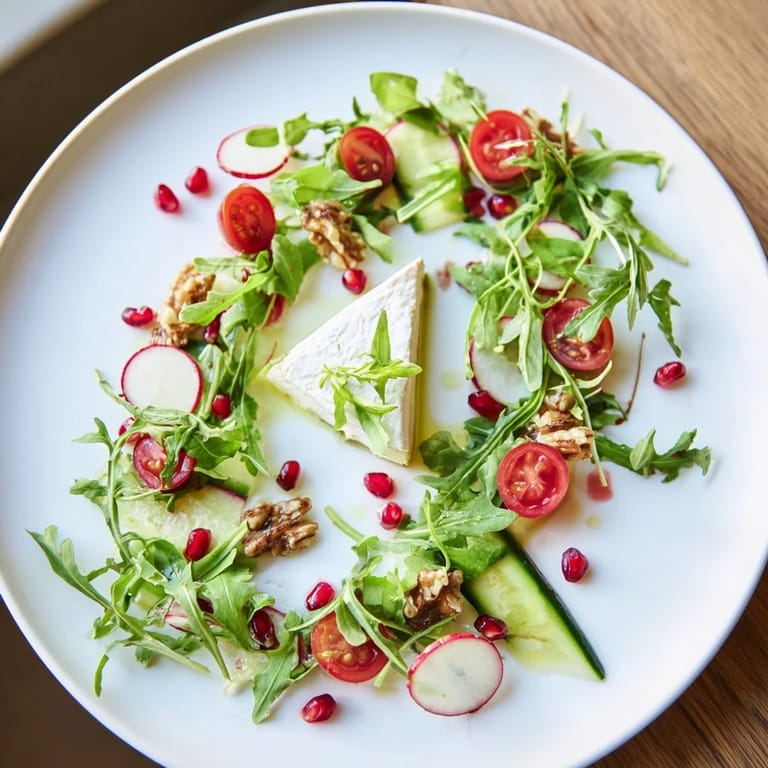
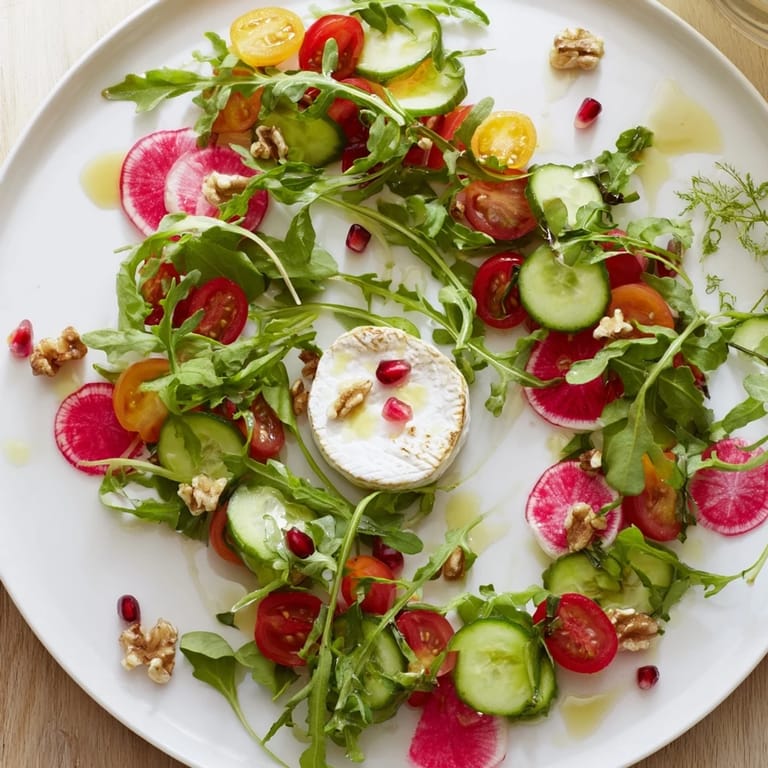
 I discovered the magic of edible geometry at a dinner where everything seemed wrong until a friend arranged vegetables like a spiraling compass pointing to a single wedge of melting cheese. That moment changed how I thought about salads—they didn't have to be tossed in a bowl, they could be art on a board. Now when I build this salad, I'm chasing that same feeling of orchestrated beauty, each slice of radish and tomato a deliberate brushstroke toward something creamy and precious at the center.
I made this for the first time when hosting my in-laws, and I was terrified of it looking too fussy or pretentious. But watching my mother-in-law lean over the platter and trace the lines of arugula with her finger before taking her first bite—that's when I realized this salad isn't about being fancy, it's about inviting people to interact with their food in a playful way.
Ingredients
- Baby arugula: The peppery foundation that guides your eye outward; buy it the day you're serving to keep it crisp and bright.
- Cherry tomatoes: Halve them so they sit nicely in orderly rows and catch the light like tiny jewels.
- Cucumber: Slice it thin enough to be delicate but sturdy enough not to wilt under its own weight.
- Watermelon radish: The secret visual hero—those pink and white rings are what make people pause and stare.
- Pomegranate seeds: Scatter them like accents, their tartness and pop adding complexity to every bite.
- Toasted walnuts: The earthiness balances the brightness; toast them yourself if you can, the smell is worth it.
- Extra-virgin olive oil: Use something you actually love tasting, this is where quality matters most.
- White balsamic vinegar: Gentler than dark, it won't muddy your careful color arrangement.
- Honey: Just a touch, enough to round out the acidity without sweetness taking over.
- Dijon mustard: The emulsifier that makes the dressing cling instead of sliding off.
- Artisanal cheese wheel: This is your focal point—visit a cheese counter and ask what's good right now, at room temperature or slightly chilled.
Tired of Takeout? 🥡
Get 10 meals you can make faster than delivery arrives. Seriously.
One email. No spam. Unsubscribe anytime.
Instructions
- Set your stage:
- Place the cheese wheel on its small pedestal or plate, positioning it off-center on one corner of your serving board. Think of it as a destination, not a centerpiece.
- Create the arugula sweep:
- Arrange the arugula in a loose arc radiating outward from the cheese, like iron filings drawn to a magnet. Let some leaves overlap naturally—perfection looks stiff.
- Layer with intention:
- Arrange tomatoes, cucumber, and watermelon radish in alternating rows, all angled toward the cheese as if pointing the way inward. The rhythm of these lines is what your guests will follow with their eyes first, their forks second.
- Scatter the jewels:
- Tuck pomegranate seeds and walnuts into the spaces between vegetable rows, maintaining that directional flow. Let some cluster where they land, others stand alone.
- Make the dressing:
- Whisk together the oil, vinegar, honey, and mustard in a small bowl until the honey dissolves and everything emulsifies into something glossy and unified. Taste it and adjust salt and pepper until it tastes like what you want to eat.
- Finish with precision:
- Drizzle the dressing lightly over the vegetables, deliberately avoiding the cheese wheel so it stays pristine and creamy. A light hand here means your arrangement stays visible and vibrant.
- Present and invite:
- Bring it to the table and explain the concept if you'd like, or let people discover it themselves. Encourage them to tear off a piece of cheese and combine it with whatever vegetables call to them.
 Pin It
 The first time someone told me they'd never seen a salad like this, I felt something shift—like I'd accidentally created a moment where food became less about nutrition and more about wonder. That's when cooking stopped being just a skill and became a way to connect.
The Cheese Question
Your choice of cheese transforms this entire dish, and that's the gift of it. A buttery Saint-Marcellin melts almost shyly into the vegetables, while Humboldt Fog brings an earthy, tangy surprise. Camembert is forgiving and familiar, a soft-ripened blue adds unexpected drama. Visit your cheese counter and ask what's in peak condition that day—the person behind the counter usually knows something special that's ready to shine.
On Vegetables and Timing
The vegetables here are arranged raw, which means they should be at their absolute crispest when you begin. The watermelon radish is particularly important—its thin rings are fragile and beautiful, so slice it just before serving and handle it gently. I learned this the hard way, arranging radishes an hour early and watching them slowly soften into sad, floppy circles. Respect your ingredients' timeline, and they'll respect your vision.
Variations and Reasons to Play
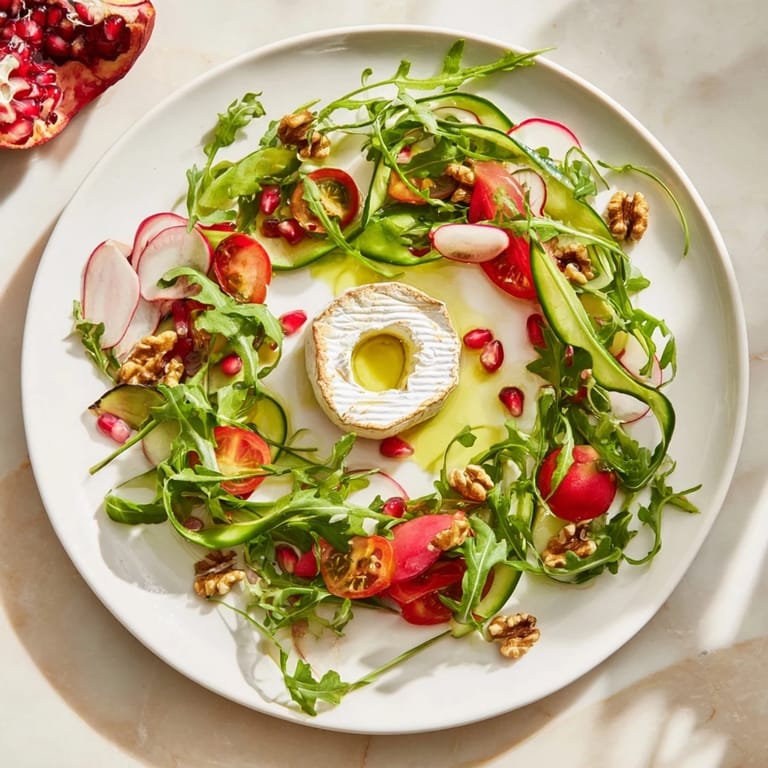
Once you understand the principle of this salad, you're free to riff on it endlessly. The structure—radiating lines, a cheese centerpiece, careful color placement—works with whatever vegetables are in season around you. I've made a winter version with roasted beets and sliced pear, a summer version drowning in peaches and basil. The dressing can shift too, from the white balsamic to a lemon vinaigrette or even a light herb oil. What stays constant is the idea that you're creating something that tells a story before anyone takes their first bite.
- Add thinly sliced prosciutto or smoked salmon tucked between vegetable rows for a savory richness.
- Finish with edible flowers—pansies, nasturtiums, or violet blossoms amplify the visual drama.
- Pair with a chilled Sauvignon Blanc or dry rosé, and watch how the wine's acidity plays against the creamy cheese.
 Pin It
 This salad taught me that the most memorable meals aren't always the most complex—sometimes they're the ones where someone took the time to arrange the ingredients like they mattered. And they do.
Recipe Questions & Answers
- → What type of cheese works best for this salad?
Soft-ripened cheeses like Saint-Marcellin, Brie, or Camembert provide a creamy contrast and central visual appeal.
- → Can I prepare this salad ahead of time?
To maintain freshness and visual impact, arrange ingredients shortly before serving and keep dressing separate until ready to serve.
- → What dressing complements this salad?
A light mix of extra-virgin olive oil, white balsamic vinegar, honey, Dijon mustard, salt, and pepper enhances the flavors without overpowering.
- → Are there suitable variations for non-vegetarians?
Adding thinly sliced prosciutto or smoked salmon pairs well with the salad’s fresh and creamy elements.
- → How does the arrangement influence the dining experience?
The radial placement of ingredients toward the cheese wheel creates a dramatic centerpiece and encourages interaction with the components.