 Pin It
 Last spring, I was standing in my kitchen on a gray Tuesday morning when my neighbor knocked with a basket of courgettes from her garden—so many that I had no choice but to get creative. I'd planned something heavy for lunch, but looking at those bright green vegetables, I realized what I actually wanted was something light and alive. That's when this soup came together, almost by accident, and it's been my go-to ever since for those moments when the season shifts and you need something that tastes like hope.
I made this for my sister when she came over after a difficult week, and watching her face soften as she tasted it was everything. She asked for the recipe right there at the table, which sounds simple, but it told me I'd done something right—created comfort in a bowl that didn't feel heavy or fussy, just genuinely good.
Ingredients
- Courgettes (2 medium, diced): These are the star, and their delicate flavor means they need the right companions—don't skip the garlic and pesto or they'll disappear into the background.
- Peas (200 g, fresh or frozen): Frozen ones are secretly better than fresh for this soup because they're picked at peak ripeness and add natural sweetness without any extra effort.
- Potato (1 medium, peeled and diced): This isn't just filler; it's what gives the soup its body and makes it feel substantial without needing cream.
- Onion and garlic (1 medium onion, 2 cloves): The flavor foundation that makes everything else taste like itself, so don't rush the sautéing step.
- Vegetable stock (1 liter): Use something with real flavor here—a good quality stock transforms this from okay to genuinely delicious.
- Olive oil (2 tbsp): Good olive oil matters in the finished soup, so use something you'd actually want to taste.
- Basil pesto (4 tbsp): This is where the personality comes in, so taste your pesto first and adjust the amount based on how assertive it is.
- Salt and black pepper: Season gradually and taste as you go; soup forgives last-minute adjustments better than almost anything else.
Tired of Takeout? 🥡
Get 10 meals you can make faster than delivery arrives. Seriously.
One email. No spam. Unsubscribe anytime.
Instructions
- Sauté the aromatic base:
- Warm the olive oil in a large saucepan over medium heat, then add the chopped onion and minced garlic. You'll know you're doing this right when your kitchen smells incredible and the onion turns translucent but hasn't taken on any color—this usually takes about 3-4 minutes.
- Build the vegetables:
- Add the diced potato and courgette, stirring everything together so each piece gets coated in that garlicky oil. Give it another 3 minutes to let them begin releasing their flavors and soften slightly.
- Add the stock and simmer:
- Pour in the vegetable stock and bring everything to a boil, then immediately reduce the heat and let it simmer gently for 15 minutes. You're waiting for the potato to become completely tender when pierced with a fork—this is your signal that the timing is right.
- Introduce the peas:
- Stir in the peas and let them cook for just 5 more minutes so they stay bright green and don't turn olive-colored from overcooking.
- Blend until silky:
- Remove from heat and use an immersion blender to puree the soup until it's completely smooth, or carefully transfer it in batches to a countertop blender if that's what you have. The immersion blender is less work and less mess, which I've learned to appreciate.
- Season and finish:
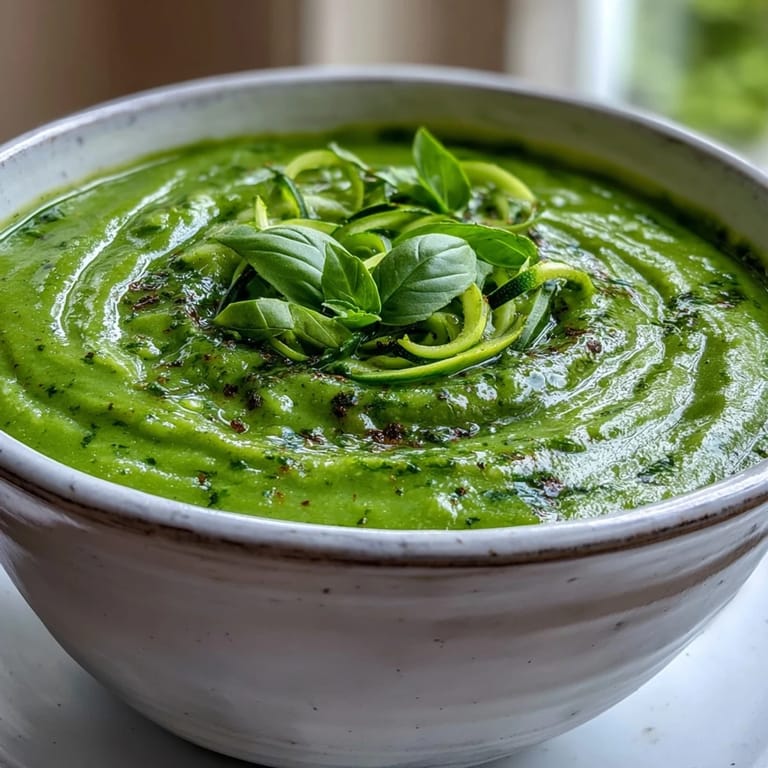
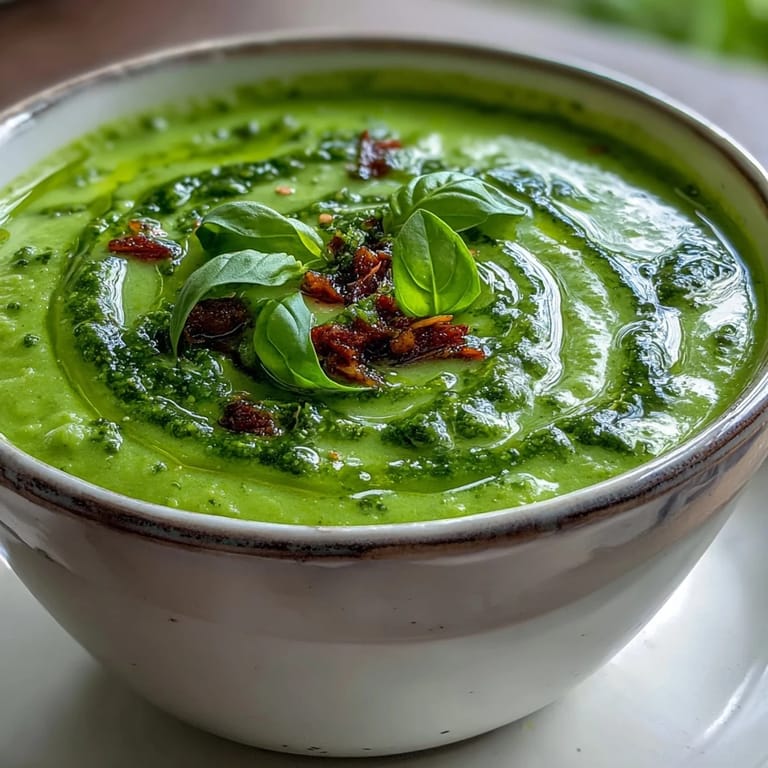
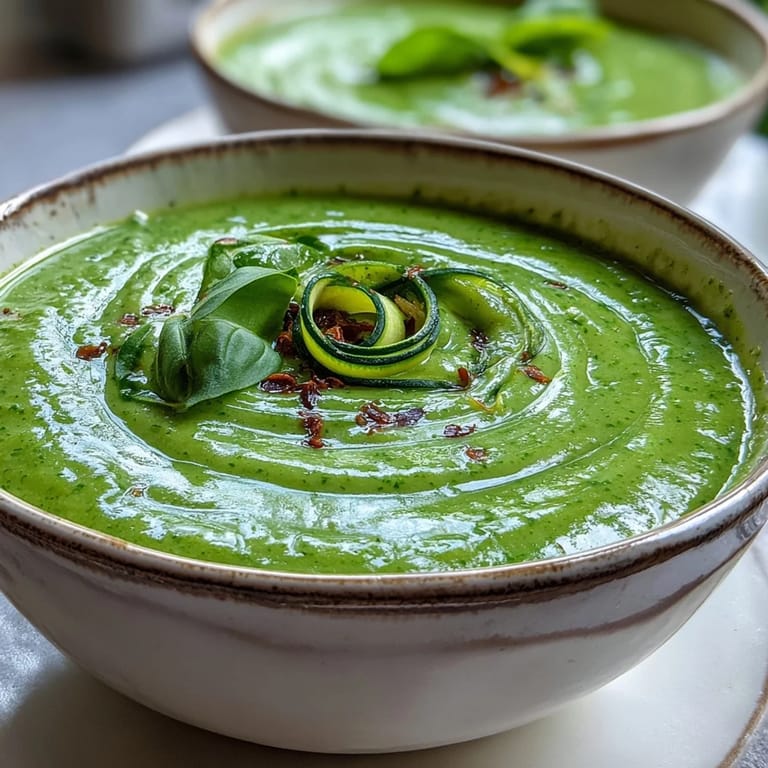
- Stir in 3 tablespoons of pesto, then taste and adjust the salt and black pepper—you're looking for that moment when all the flavors suddenly click into place. Ladle into bowls, swirl in the remaining tablespoon of pesto in a pretty spiral, and scatter fresh basil on top if you have it.
 Pin It
 My mother tasted this once and asked why I wasn't serving it at dinner parties, which struck me because I'd been treating it like a quiet lunch thing. That comment changed how I thought about it, and now it's become one of those dishes I make when I want to say something without words—I care about you, I'm paying attention, and spring is worth celebrating.
When to Make This Soup
Spring and early summer are obvious choices, when courgettes are at their sweetest and gardens are overflowing. But honestly, I make this year-round because frozen peas are just as good as fresh ones, and it's the kind of soup that reminds you what you're actually hungry for—something bright when everything feels gray, or something light when you're tired of heaviness.
Stretching It Further
If you're feeding more people than you expected or want to make it more filling, a splash of cream or coconut milk stirred in before blending transforms it from elegant to genuinely luxurious. I've also added white beans or cooked barley to make it heartier, and both work beautifully without overwhelming the delicate vegetable flavors that make this soup special.
Small Variations That Surprise
Once I swapped the peas for broad beans because that's what I had, and it completely changed the personality of the soup in a good way—slightly earthier, still spring-like, but with more body. The beauty of this recipe is that it's forgiving enough to bend without breaking, so don't stress if you need to substitute something or work with what's in your fridge.
- Try lemon zest stirred in at the end for brightness that makes every spoonful feel alive.
- A tiny pinch of nutmeg added while blending brings unexpected warmth without being obvious.
- Serve it chilled on hot days with a swirl of Greek yogurt instead of pesto for a completely different mood.
 Pin It
 This soup is what I reach for when I want to cook something that feels nourishing without being complicated, and it never fails to make a quiet meal feel like something worth savoring. Keep it in your back pocket for those days when you need a little green, a little brightness, and a whole lot of simplicity.
Recipe Questions & Answers
- → Can I make this soup ahead of time?
Yes, this soup keeps well in the refrigerator for up to 3 days. The flavors often develop and improve overnight. Add the final pesto swirl just before serving for the freshest presentation.
- → Is this soup suitable for freezing?
Absolutely. Cool completely before transferring to airtight containers. Freeze for up to 3 months. Thaw overnight in the refrigerator and reheat gently, adding a splash of water if needed.
- → Can I use fresh peas instead of frozen?
Fresh peas work wonderfully when in season. Shell about 500g peas to get 200g shelled. Add them slightly earlier as fresh peas may need an extra minute or two to become tender.
- → How do I make this soup vegan?
Simply use a vegan pesto (or make your own without cheese) and skip any cream or bread serving suggestions. The soup remains deliciously creamy thanks to the potato base.
- → What can I serve with this soup?
Crusty bread is the classic accompaniment for dipping. Grilled cheese sandwiches, focaccia, or garlic bread also work beautifully. For a lighter option, serve with a simple green salad dressed with lemon vinaigrette.
- → Can I substitute courgettes?
Yes, try tender stemmed broccoli, spinach, or a mix of spring greens. These will maintain the vibrant green color while offering different flavor profiles. Adjust cooking time as needed.