 Pin It
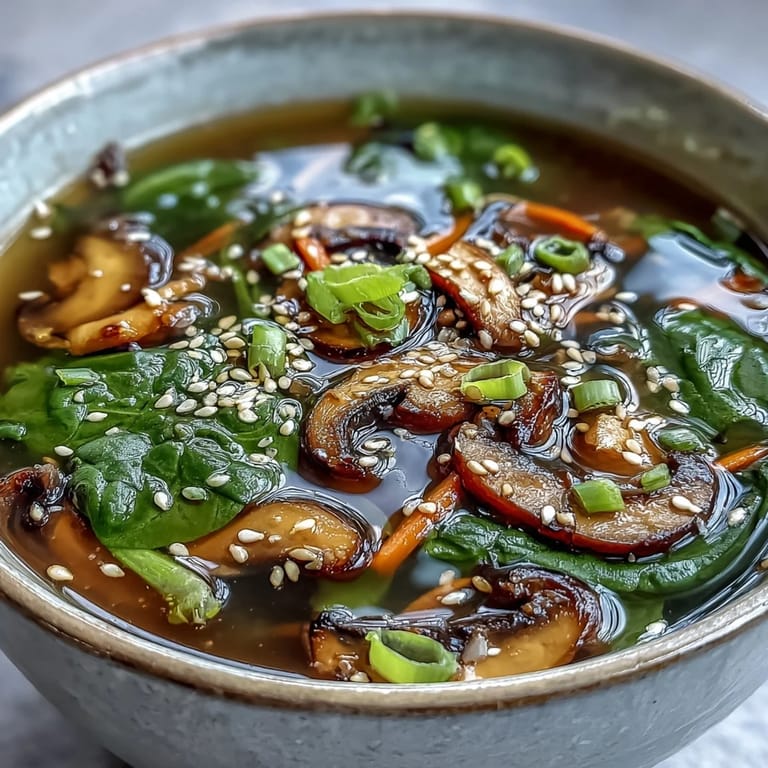
 There's something about a steaming bowl of miso ginger soup that feels like a quiet conversation with yourself on a cold afternoon. I discovered this soup almost by accident, when my kitchen was running low on fancy ingredients but overflowing with ginger and a jar of miso I'd been meaning to use. The result was so unexpectedly comforting that it became my go-to remedy for those gray winter days when my body needed something nourishing but my energy was elsewhere.
I made this for my sister during one of those unexpected visits where she showed up exhausted from work and we both needed to decompress. She took one sip and the tension in her shoulders visibly dropped, and suddenly we were just two people in a kitchen, talking about nothing important while the steam rose between us. That's when I realized this soup does something beyond nutrition—it creates a moment.
Ingredients
- Low-sodium vegetable broth (6 cups): The foundation matters here; quality broth tastes noticeably different and you'll taste it throughout the whole bowl.
- Fresh ginger (2-inch piece, peeled and thinly sliced): Don't skip peeling or slice it thick—thin slices release their warmth more evenly into the broth as it simmers.
- Garlic (2 cloves, thinly sliced): Slicing rather than mincing lets the cloves stay intact and easier to fish out if you prefer.
- White or yellow miso paste (2 tablespoons): This is your umami anchor; keep it away from boiling temperatures to preserve those beneficial probiotics.
- Shiitake mushrooms (1 cup, thinly sliced): They add earthiness and a subtle meaty texture that makes this feel more substantial than it actually is.
- Baby spinach or bok choy (1 cup, roughly chopped): Either works beautifully; spinach wilts faster while bok choy holds its shape better if you prefer more texture.
- Carrot (1 medium, julienned or thinly sliced): Thin cuts let it soften enough to be tender without turning to mush.
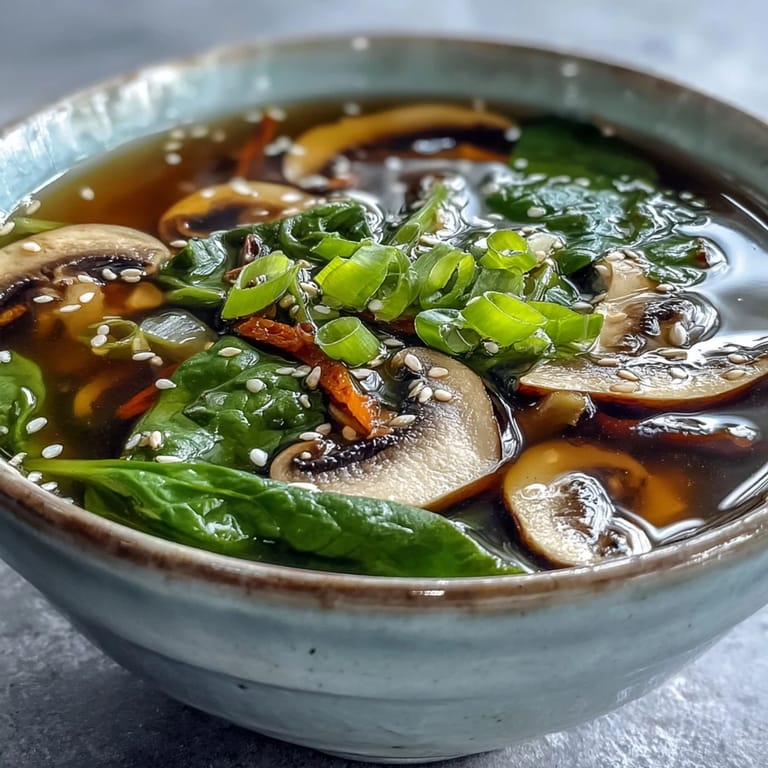
- Green onions (2, sliced): Save these for the end—they stay fresher tasting and bring a bright note that grounds the warming spices.
- Toasted sesame seeds (1 tablespoon): Toast them yourself if you have time; that nutty flavor makes a real difference in the final bowl.
- Fresh cilantro (1 tablespoon, optional): A personal touch that's entirely up to your taste; it adds brightness if you want it.
- Chili oil or red pepper flakes (1 teaspoon, optional): A small amount of heat can awaken all the other flavors without overwhelming them.
Tired of Takeout? 🥡
Get 10 meals you can make faster than delivery arrives. Seriously.
One email. No spam. Unsubscribe anytime.
Instructions
- Bring the broth to a gentle simmer:
- Pour your vegetable broth into a large saucepan and let it heat over medium until small bubbles start breaking the surface—not a rolling boil, just a quiet simmer.
- Infuse with ginger and garlic:
- Add your thinly sliced ginger and garlic now, letting them dance in the hot broth for about 10 minutes while your kitchen fills with that unmistakable warming aroma. This waiting time is where the magic happens, so resist the urge to rush.
- Add the heartier vegetables:
- Stir in the shiitake mushrooms and julienned carrot, giving them about 5 minutes to become tender without losing their individual character.
- Prepare the miso bridge:
- This is the trick I learned the hard way: ladle out about a cup of the hot broth into a small bowl and whisk it together with your miso paste until it's completely smooth. This prevents lumps and keeps the miso's probiotics intact.
- Merge everything thoughtfully:
- Turn the heat down to low, then slowly pour your miso mixture back into the pot while stirring gently—keep the temperature low so you're never boiling the miso once it's in.
- Wilt the greens:
- Add your spinach or bok choy along with the sliced green onions and let them soften for just about a minute, stirring occasionally so they integrate evenly.
- Taste and adjust:
- Here's where you become the real chef—taste it and decide if it needs more miso depth, a dash of soy sauce for saltiness, or anything else your palate is asking for.
- Serve with intention:
- Ladle the soup into bowls and top each one with a sprinkle of toasted sesame seeds, fresh cilantro if you're using it, and a tiny drizzle of chili oil for that final warmth.
 Pin It
 What strikes me most about this soup is how it somehow tastes better on the days when you need it most. There's no pretense here, just honest ingredients working together to create something that feels like it's been simmering on your stove for hours, even though you made it in half an hour.
Making It Your Own
This recipe is genuinely flexible in ways that don't compromise what makes it special. I've added cubed silken tofu on mornings when I needed more substance, swapped the spinach for whatever greens were actually in my crisper drawer, and even tossed in some soba noodles when I wanted to turn it into something more like a meal and less like a side. The beauty is that the ginger-miso foundation remains strong enough to carry any variation you introduce.
Timing and Simplicity
One of my favorite things about this soup is how it respects your time without asking you to sacrifice quality. Thirty minutes total is genuinely enough to have something ready that tastes considered and intentional, which means you can make it on nights when you're tired rather than only when inspiration strikes. The work is minimal and the waiting is mostly just simmering, which means you're free to do other things while the flavors marry together.
The Finishing Touches That Matter
I used to serve this soup plain and it was fine, but adding those few final touches—the sesame seeds with their toasted nuttiness, the bright cilantro, that tiny bit of heat—transforms it from good to memorable. These aren't complicated additions, just thoughtful ones that recognize that the bowl in front of you deserves a little celebration.
- Toast your own sesame seeds if you have five minutes; the difference between raw and toasted is genuinely noticeable and worth the effort.
- Add heat gradually rather than all at once, tasting between additions so you find your personal sweet spot of warmth.
- Make the miso paste mixture separately before combining—this single step is what separates smooth, creamy soup from disappointing lumpy soup.
 Pin It
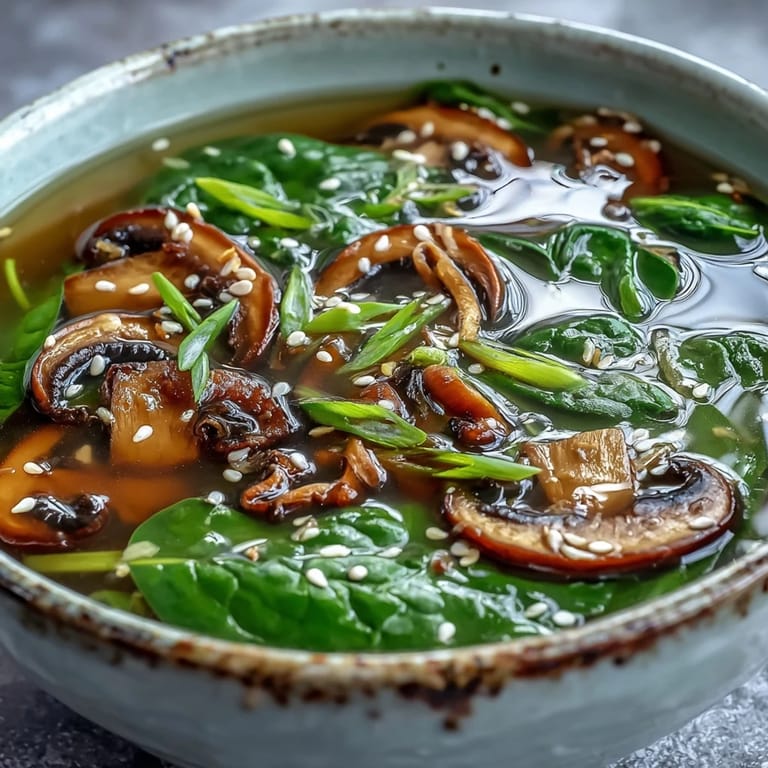
 There's real wisdom in soup, the kind that doesn't need explaining—just sipped slowly and felt. This one earned its place in my regular rotation simply by showing up when I needed it most.
Recipe Questions & Answers
- → What type of miso works best for this soup?
White or yellow miso paste delivers a milder, sweeter flavor that complements the ginger without overpowering the vegetables. Red miso creates a deeper, more intense taste if you prefer stronger umami notes.
- → Why add miso at the end of cooking?
High heat destroys the beneficial probiotics in fermented miso paste. Whisking it into warm (not boiling) broth preserves both the living cultures and the delicate flavor profile.
- → Can I make this soup ahead of time?
Prepare the vegetable broth base up to 3 days in advance, but add the miso paste and fresh greens just before serving. This prevents the greens from becoming mushy and maintains the probiotic benefits.
- → What vegetables can I substitute?
Kale, Swiss chard, or napa cabbage work well instead of spinach or bok choy. Try adding sliced radishes, snow peas, or shredded cabbage for different textures and flavors.
- → How can I add more protein to this soup?
Cubed silken tofu absorbs the miso-ginger broth beautifully while adding plant-based protein. Edamame, cooked chickpeas, or shredded cooked chicken also make excellent additions.
- → Is this soup spicy?
The base version offers gentle warmth from fresh ginger without significant heat. Adjust the spice level by adding more ginger, chili oil, or red pepper flakes according to your preference.