 Pin It
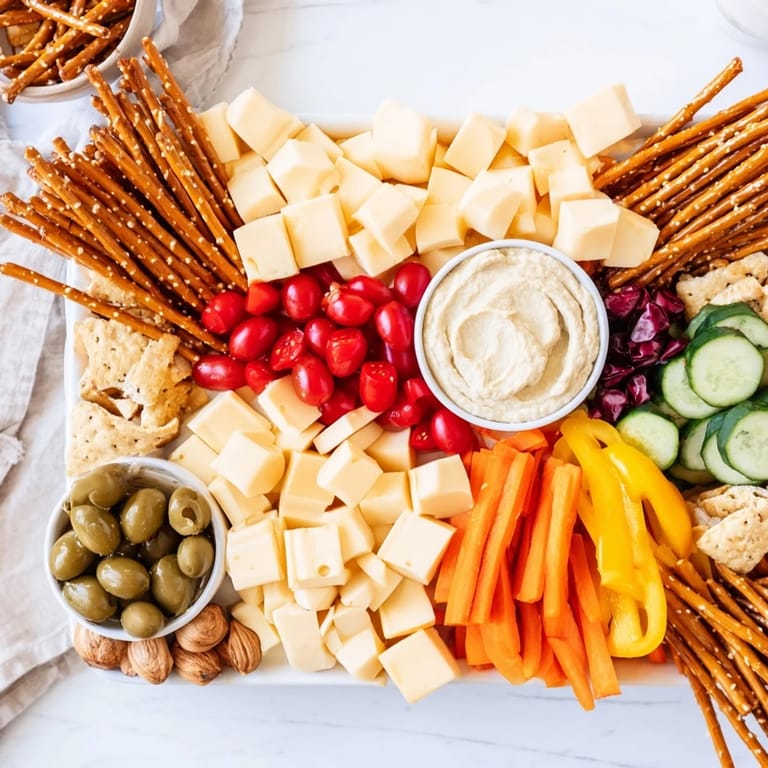
 I was setting up for a dinner party when my friend joked that my appetizer spread looked like aerial photography of downtown. That sparked it—what if I actually leaned into that? Within minutes, I was arranging pretzel rods like city streets on a platter, and suddenly every ingredient became a neighborhood block waiting to be explored. The beauty of it is that guests don't just eat; they navigate, discover, and build their own flavor combinations as they go.
My kid watched me arrange the first grid and immediately started planning which block he'd tackle first. By the time everyone gathered around, what started as my design had become this living thing—people kept rearranging elements, trading discoveries, asking where the best combinations were hiding. That's when I realized this wasn't just food; it was an experience that pulled people together without feeling forced.
Ingredients
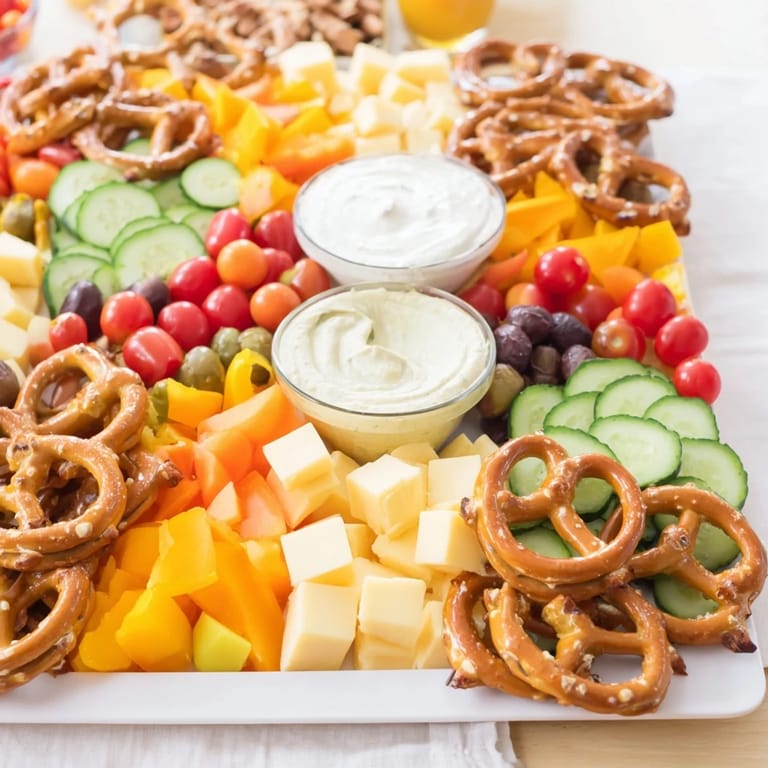
- Pretzel rods: Twenty of them form your street grid—they're sturdy enough to divide sections while adding that irresistible salty crunch that keeps people coming back.
- Mild cheddar, gouda, and mozzarella: Three different textures and flavors in one ingredient category; the variety keeps the cheese blocks from feeling monotonous.
- Salami and smoked turkey: Optional, but they add complexity and richness that satisfies those hunting for something more substantial.
- Cherry tomatoes, cucumber, yellow bell pepper, and baby carrots: These bright vegetables do the real visual lifting and provide freshness that balances richer elements.
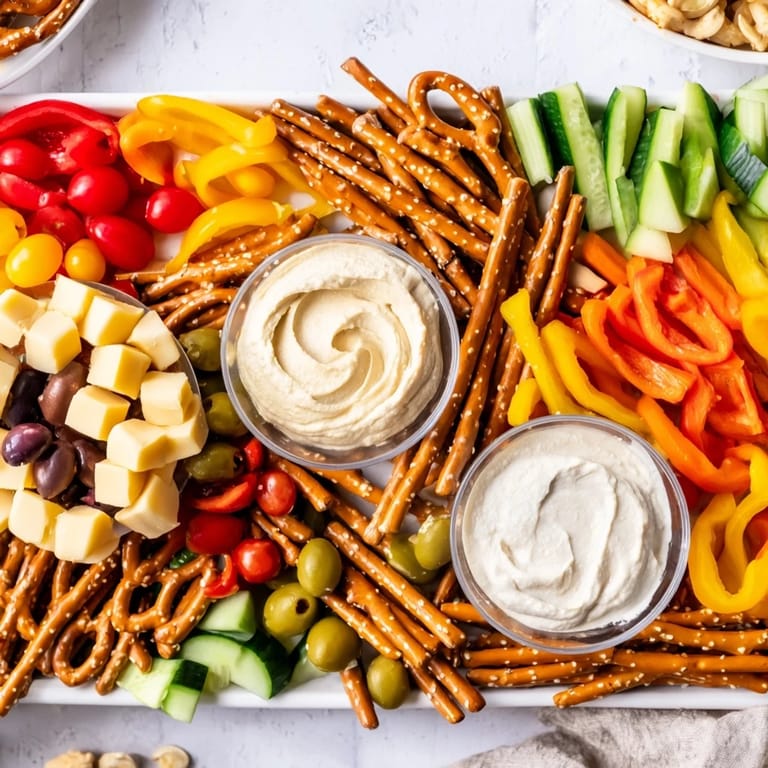
- Hummus and ranch dip: Position these as anchors—they're the destination that makes wandering through the grid feel rewarding.
- Mixed olives and roasted nuts: The small, accent ingredients that make people pause and say, 'Oh, these too?'
Tired of Takeout? 🥡
Get 10 meals you can make faster than delivery arrives. Seriously.
One email. No spam. Unsubscribe anytime.
Instructions
- Map out your grid:
- Lay pretzel rods across your platter like city streets—horizontal and vertical—creating rectangular blocks. Don't stress about perfect symmetry; slightly irregular grids actually feel more organic and real.
- Fill each neighborhood:
- Cluster each ingredient type into its own block: cheeses here, vegetables there, meats forming their own district. The visual compartmentalization makes it easy for guests to navigate and build combinations.
- Anchor with dips:
- Tuck small bowls of hummus and ranch into or beside the grid so they feel part of the landscape rather than afterthoughts.
- Set and forget:
- Step back and let people discover the landscape you've created. The best moment is when someone realizes they can mix and match freely.
 Pin It
 There was a moment when someone layered salami, cheddar, and hummus on a pretzel rod and called it brilliant. That small invention, that ownership of the platter, reminded me why interactive food matters—it transforms a snack into something people feel they've created themselves.
Building Your Own Flavor Routes
The magic of this platter is that there's no wrong path through it. One person gravitates toward all cheese and olives, another builds veggie-heavy combinations with hummus. I've watched people create flavor sequences like they're planning a tasting menu—sweet carrot, salty olive, creamy mozzarella, sharp salami. That organic experimentation is exactly the point.
Timing and Preparation Tactics
Assemble this no more than two hours before guests arrive; any longer and vegetables start weeping and cheese begins looking tired. But here's the secret: prep everything that morning, keep it separate in containers, then arrange on the platter just before people show up. It takes maybe five minutes when you've already done the chopping, and the freshness factor completely changes how the food tastes and looks.
Customization and Variations
This concept adapts beautifully to dietary needs and seasons. In summer, swap heavier meats for fresh fruit—grapes and apple slices fit the grid perfectly and add brightness. Winter calls for more nuts and dried fruit alongside the cheese. For vegan guests, plant-based cheese works just fine, and nobody misses the salami when you load the grid with roasted vegetables or marinated artichokes.
- Add marinated mushrooms or sun-dried tomatoes for an extra flavor dimension that feels special.
- Try specialty mustards or hot sauce tucked into small jars—they give adventurous guests more mixing options.
- Keep the ingredient ratios flexible; this platter celebrates abundance, so more is always welcome.
 Pin It
 This platter taught me that the best entertaining happens when you step back and let people explore. It's urban planning meets snacking, and somehow, everyone leaves feeling like they discovered something just for them.
Recipe Questions & Answers
- → How do I create the pretzel rod grid?
Lay out the long pretzel rods on a rectangular platter forming intersecting lines that resemble city streets, creating distinct blocks for ingredients.
- → What cheeses work best in this platter?
Mild cheddar, gouda, and mozzarella cube nicely and provide a balanced flavor, complementing other elements in the arrangement.
- → Can I make this snack platter vegan?
Yes, substituting plant-based cheeses and omitting meats ensures a fully vegan variation that retains the original layout and flavors.
- → What dips pair well within the grid?
Hummus and ranch-style dips provide creamy, flavorful options that contrast well with crunchy pretzels and fresh vegetables.
- → Are there suggestions for enhancing flavors?
Adding marinated vegetables, specialty mustards, or fresh fruits like grapes and apples can introduce sweetness and depth to the platter.
- → What are suitable drink pairings for this platter?
Crisp white wines or light lagers complement the savory and fresh elements, balancing richness and freshness in each bite.