 Pin It
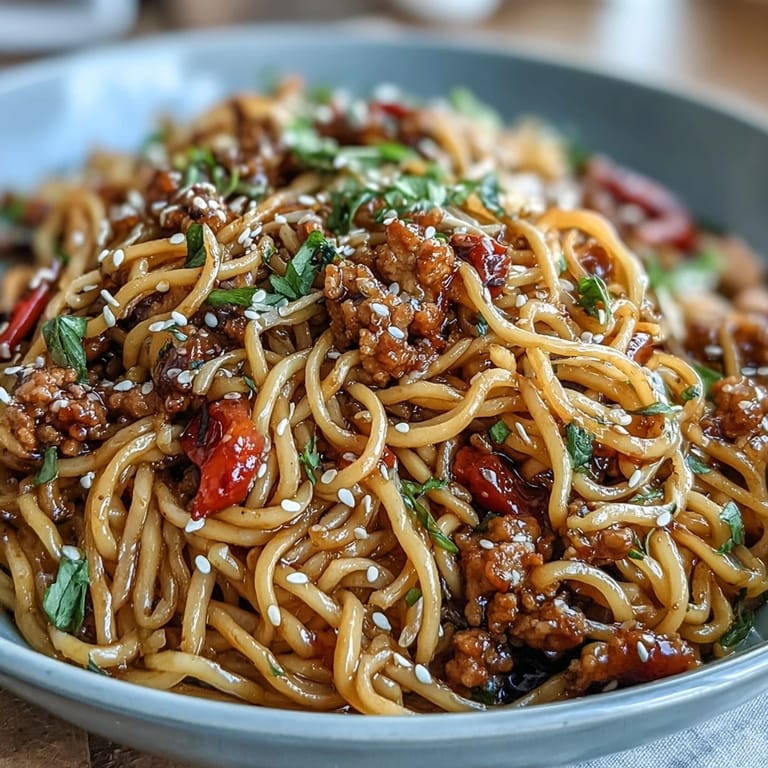
 My kitchen was chaos that Wednesday night—I'd grabbed ground turkey instead of chicken at the market, and my kids were hungry in twenty minutes. Rather than panic, I remembered how my neighbor had raved about gochujang and the way it transforms simple proteins into something restaurant-worthy. I mixed up a quick sauce, threw together whatever vegetables I had on hand, and tossed it all with noodles. The smell alone had everyone hovering before I'd even plated it.
I made this for my book club once, tripled the batch, and watched four people go back for seconds without even asking what was in it. Someone described it as "that Korean place we love but better," and I didn't correct them—just smiled and accepted the compliment while mentally noting the ginger was the secret they couldn't quite name.
Ingredients
- Ground turkey (1 lb): Lean and forgiving, it absorbs the sauce beautifully without drowning in its own fat—just break it up as it cooks so it gets slightly crispy at the edges.
- Fresh or dried wheat noodles (10 oz): Udon holds up best to the vigorous tossing, but ramen works too; cook them until just tender, then rinse to stop the cooking.
- Shredded carrots (1 cup): They add natural sweetness and stay slightly crunchy if you don't overcook them.
- Red bell pepper, thinly sliced: Sweet and colorful, it softens just enough to be tender but keeps some bite.
- Small onion, thinly sliced: Gets slightly caramelized in the pan and mellows as the sauce coats everything.
- Napa cabbage, shredded (2 cups): Delicate and crisp, it wilts into the noodles in the best way, almost like it was meant to be there.
- Green onions, sliced: Fresh brightness at the end; don't skip this textural contrast.
- Soy sauce (3 tbsp): The backbone of the sauce—use a good quality one if you have it.
- Gochujang (2 tbsp): This fermented chili paste is non-negotiable; it's where all the personality comes from, so don't substitute lightly.
- Sesame oil (1 tbsp): A little goes a long way; it smells incredible and adds nutty depth.
- Brown sugar (1 tbsp): Balances the heat and saltiness with subtle sweetness.
- Minced garlic (2 cloves): Raw garlic whisked into the sauce keeps its bite and freshness.
- Rice vinegar (1 tbsp): Adds a gentle acid that brightens everything.
- Freshly grated ginger (1 tsp): The warming spice that people taste but can't quite place; never use ground ginger here.
- Toasted sesame seeds: Scatter them on at the end for texture and a toasted aroma that finishes the dish.
Tired of Takeout? 🥡
Get 10 meals you can make faster than delivery arrives. Seriously.
One email. No spam. Unsubscribe anytime.
Instructions
- Build your sauce first:
- Whisk soy sauce, gochujang, sesame oil, brown sugar, garlic, rice vinegar, and ginger together in a small bowl. You'll notice the gochujang doesn't dissolve completely—that's fine, it'll bloom and distribute as everything cooks together.
- Cook the noodles ahead:
- Follow package directions, then drain and rinse under cold water to stop them cooking and prevent clumping. They'll finish warming when they hit the hot skillet.
- Brown the turkey properly:
- Heat your skillet or wok over medium-high heat with a drizzle of oil, then add the turkey and cook for 4 to 5 minutes, breaking it into small, evenly-sized pieces as it browns. Listen for that sizzle and look for light golden bits at the edges.
- Stir-fry the aromatics:
- Add onion, carrots, and bell pepper, then keep the pan moving for 2 to 3 minutes until they're just softened but still snappy. Add the cabbage and stir for another minute or two.
- Bring it all together:
- Pour in your prepared sauce, tossing to coat the turkey and vegetables evenly. You'll smell the gochujang wake up as it heats.
- Finish with the noodles:
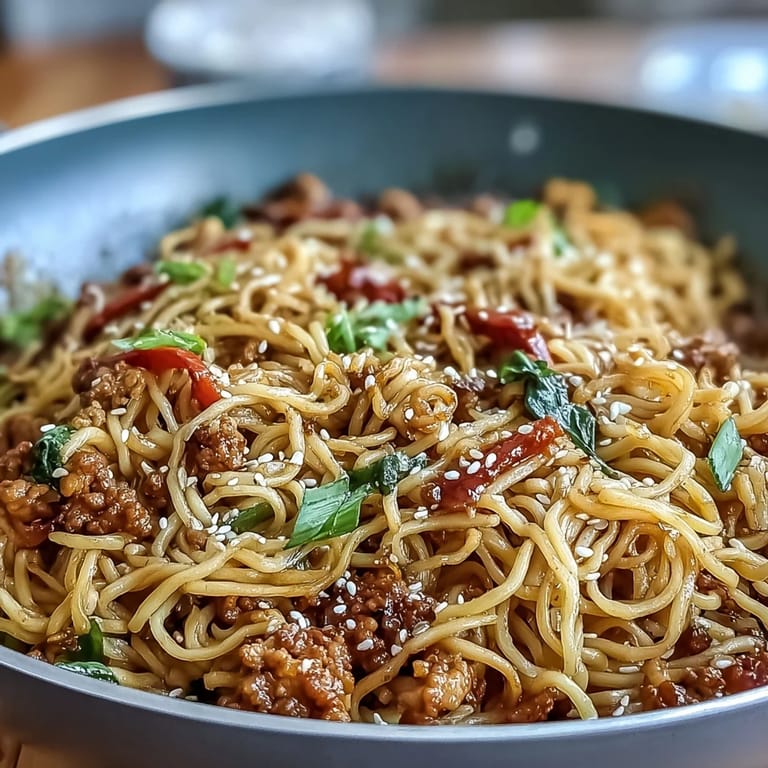
- Add the cooled noodles and toss everything for 2 to 3 minutes until the noodles are hot and every strand is glossy with sauce. Don't let it sit too long or the noodles will continue absorbing liquid.
- Plate and garnish:
- Transfer to bowls or plates, then scatter sesame seeds and extra green onions on top while everything's still steaming. Serve immediately.
 Pin It
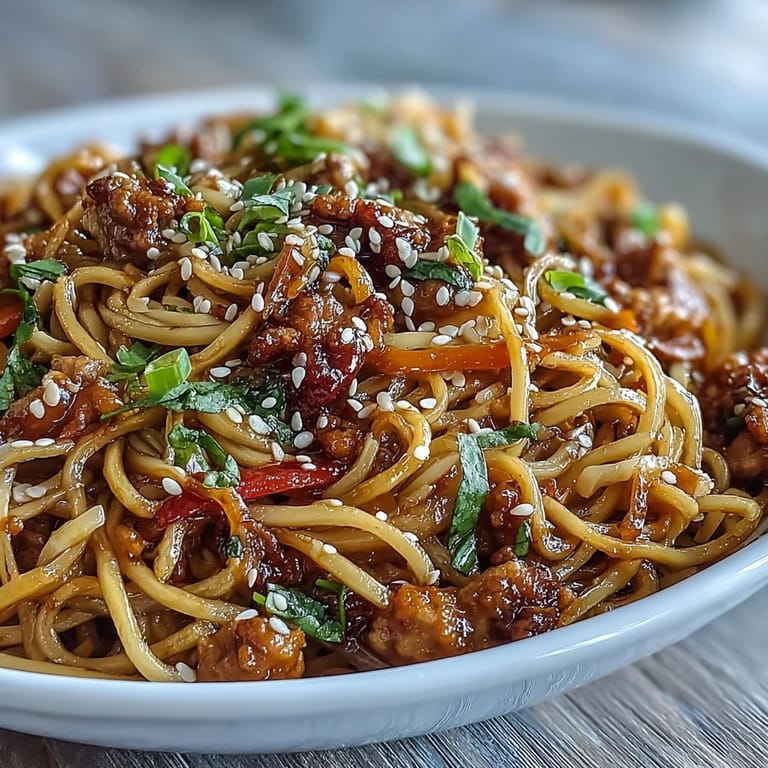
 There was something almost meditative about tossing those noodles in the skillet, watching the sauce turn everything glossy and dark, steam rising up with that beautiful gochujang-sesame smell. It felt less like I was following a recipe and more like I was creating something my family would ask for again and again.
Why Ground Turkey Works Here
Turkey gets a bad reputation for being dry, but that's only true if you treat it like chicken and cook it to death. In a stir-fry like this, its mild flavor becomes an asset—it lets the gochujang and sesame shine without competing. The quick, high-heat cooking keeps it tender, and the sauce keeps everything moist. If you prefer, ground chicken tastes nearly identical, or swap in beef for something heartier.
The Sauce Is Everything
I used to make Korean-inspired noodles with just soy sauce and garlic, and they were fine. Then I committed to gochujang, and everything changed. This sauce—salty, spicy, sweet, tangy, with sesame richness underneath—is what transforms ordinary ground turkey into something people lean back from their plate and sigh about. Mix it in a bowl first so the gochujang gets a chance to loosen up and distribute evenly; trying to stir it in raw into a hot pan leaves you with clumps.
Timing and Temperature Tips
Medium-high heat is your friend here; it's hot enough that things cook quickly and stay textured, but not so violent that vegetables shatter or noodles break apart. I learned this the hard way when I cranked it to high and ended up with mushy cabbage and turkey that stuck to the pan. The whole dish should take maybe 15 minutes from skillet to table, so have everything prepped and within arm's reach before you start heating oil.
- Cut your vegetables while the noodles cook so you're not scrambling mid-stir-fry.
- Keep the sauce nearby in its bowl so you can pour it in without interrupting your rhythm.
- If things feel like they're sticking, a splash of water or chicken broth loosens everything up without watering down the flavor.
 Pin It
 This recipe became my shortcut to feeling like I'd cooked something impressive without the fuss, and somehow that's turned it into one of those meals I make when I want to feel grounded. It's honest food that doesn't pretend to be fancier than it is.
Recipe Questions & Answers
- → What type of noodles work best for this dish?
Fresh or dried wheat noodles such as udon or ramen are ideal as they hold up well to stir-frying and absorb the sauce flavors.
- → Can I substitute ground turkey with other proteins?
Yes, ground chicken or beef can be used as alternatives, adjusting cooking times accordingly for optimal texture.
- → How spicy is the sauce and can it be adjusted?
The sauce has a medium heat level from gochujang. For more heat, add gochugaru or increase gochujang; reduce for milder taste.
- → What are good garnishes for added flavor?
Toasted sesame seeds and sliced green onions add texture and a fresh, nutty finish to the dish.
- → Is there a gluten-free option available?
Use gluten-free tamari in place of soy sauce and substitute wheat noodles with rice noodles to make it gluten-free.