 Pin It
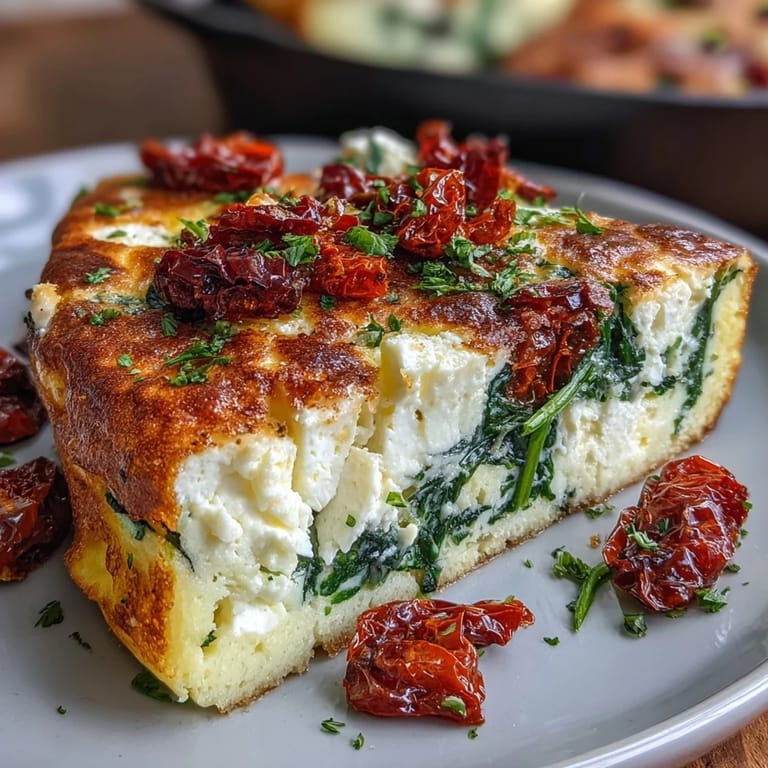
 My neighbor Sarah showed up one Saturday morning with a basket of fresh spinach from her garden and a jar of sun-dried tomatoes she'd been saving, asking if I knew what to do with them. I'd been in a brunch rut, making the same scrambled eggs week after week, so I decided to channel my inner Italian grandmother and throw together a frittata. Twenty minutes later, when that golden, puffy thing emerged from the oven, I understood why she'd brought those ingredients—they were meant for this dish all along.
I made this for my book club last month, and it became the unexpected star of the potluck—everyone asked for the recipe before dessert even arrived. What struck me was how a dish so simple could spark a conversation about Mediterranean travel, childhood dinners, and the magic of cooking with good olive oil. One of my friends admitted she'd always been intimidated by frittatas, but watching it bake through my oven window somehow made it seem less mysterious.
Ingredients
- Fresh baby spinach: Two cups might look like a mountain, but it wilts down dramatically—this is what gives the frittata its substance and that beautiful green speckle throughout.
- Sun-dried tomatoes: Buy the ones packed in oil if you can; they're already soft and flavorful, saving you a step and adding richness to every bite.
- Yellow onion: One small one, finely chopped, becomes almost sweet as it softens in the olive oil and acts as the quiet foundation for everything else.
- Garlic: Just one clove, minced, because this isn't a garlic showcase—it's more like a supporting actor that makes the whole scene work better.
- Large eggs: Six of them are the backbone; they need to be at room temperature if you want them to cook evenly and puff up properly.
- Whole milk: A quarter cup makes the frittata creamy and tender rather than dense; don't skip this or use a substitute hastily.
- Feta cheese: Half a cup, crumbled by hand rather than pre-crumbled, tastes brighter and tangier and distributes more beautifully throughout.
- Parmesan cheese: The grated kind adds a savory depth that plays nicely with the feta's saltiness.
- Dried oregano: A half teaspoon brings that Mediterranean whisper you're after without overwhelming the other flavors.
- Olive oil: Two tablespoons of good quality olive oil—the kind you actually like the taste of—makes a real difference in the final result.
Tired of Takeout? 🥡
Get 10 meals you can make faster than delivery arrives. Seriously.
One email. No spam. Unsubscribe anytime.
Instructions
- Heat your oven and skillet:
- Start by preheating your oven to 375°F while you grab an ovenproof skillet—a 10-inch one is perfect—and let it warm with two tablespoons of olive oil over medium heat. You want the oil shimmering and fragrant, not smoking.
- Build your flavor base:
- Toss in your chopped onion and listen for that gentle sizzle; cook it for three to four minutes, stirring occasionally, until it softens and turns translucent at the edges. The kitchen will smell amazing by the time you add one minced garlic clove and cook for another minute.
- Wilt the spinach:
- Pour in your chopped spinach all at once—it looks like way too much, but trust the process—and stir gently until it's bright green and soft, about two minutes. Scatter your sun-dried tomatoes over everything and cook for one final minute to warm them through.
- Mix your egg custard:
- In a separate bowl, whisk together your six eggs with the milk, half a teaspoon of dried oregano, salt, and pepper until everything is combined and pale. Fold in your crumbled feta and grated Parmesan, stirring until the cheese is distributed throughout.
- Combine and set the edges:
- Pour the egg mixture evenly over your vegetables in the skillet, give it one gentle stir to marry everything together, then leave it alone for two to three minutes on the stovetop. You'll notice the edges starting to set and turn slightly opaque while the center still looks loose—this is exactly what you want.
- Finish in the oven:
- Transfer your skillet carefully to the preheated oven and bake for ten to twelve minutes until the center is just set and the top has taken on a light golden color. A slight jiggle in the very middle when you give the pan a gentle shake means it's done; it will continue cooking slightly as it cools.
- Rest and serve:
- Remove the skillet from the oven and let it cool for a few minutes—this makes slicing cleaner and the frittata easier to handle. Serve it warm, at room temperature, or even cold the next day with a simple salad or crusty bread.
 Pin It
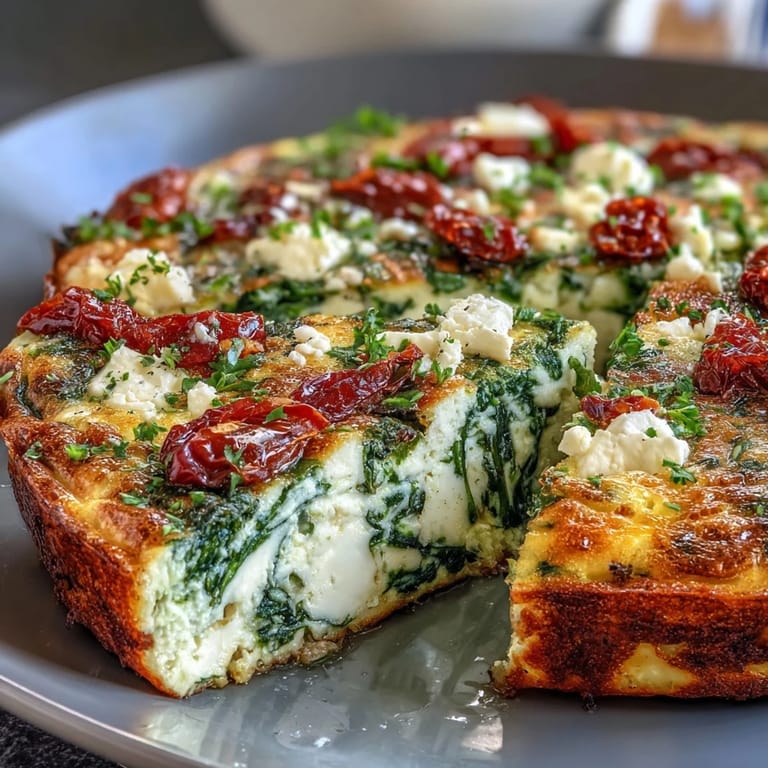
 There's something about serving a homemade frittata that makes you feel like you've accomplished something real, even though you barely tried. It's the kind of dish that brings people together without demanding much from you, which is perhaps the greatest recipe magic of all.
Why This Frittata Works for Any Occasion
Brunch, a light dinner, even a next-day lunch from the refrigerator—this frittata adapts to whatever you need it to be. I've served it to houseguests who arrived unexpectedly, brought it to potlucks where it vanished, and eaten cold slices straight from the pan at midnight while standing in front of my refrigerator. The Mediterranean flavors feel refined enough for company but the preparation is casual enough that you won't stress about timing.
Variations and Swaps That Work Beautifully
This frittata is a canvas, really, once you understand the basic structure. I've substituted the sun-dried tomatoes with roasted red peppers, swapped the feta for goat cheese, and even added crispy bacon one winter morning when I had it on hand. The constants are eggs, cheese, and vegetables—everything else can bend to what you have available or what sounds good that day, and it rarely disappoints.
Storage and Make-Ahead Wisdom
This frittata is one of those rare dishes that actually improves after a day in the refrigerator as the flavors settle and marry together. Store it covered in an airtight container and it'll keep for three to four days, ready to be sliced, warmed gently in a low oven if you prefer it warm, or eaten straight from the fridge if you're in a hurry. You can also make the vegetable base the night before and store it separately, then whisk your eggs and cheese together the next morning for a true quick breakfast.
- Frittatas freeze well when wrapped tightly in plastic and foil, lasting up to three months for future easy meals.
- Reheat gently in a 300°F oven for about ten minutes rather than the microwave, which can make it a bit rubbery.
- This dish pairs beautifully with a simple green salad dressed in lemon vinaigrette or served alongside crusty bread and fresh fruit.
 Pin It
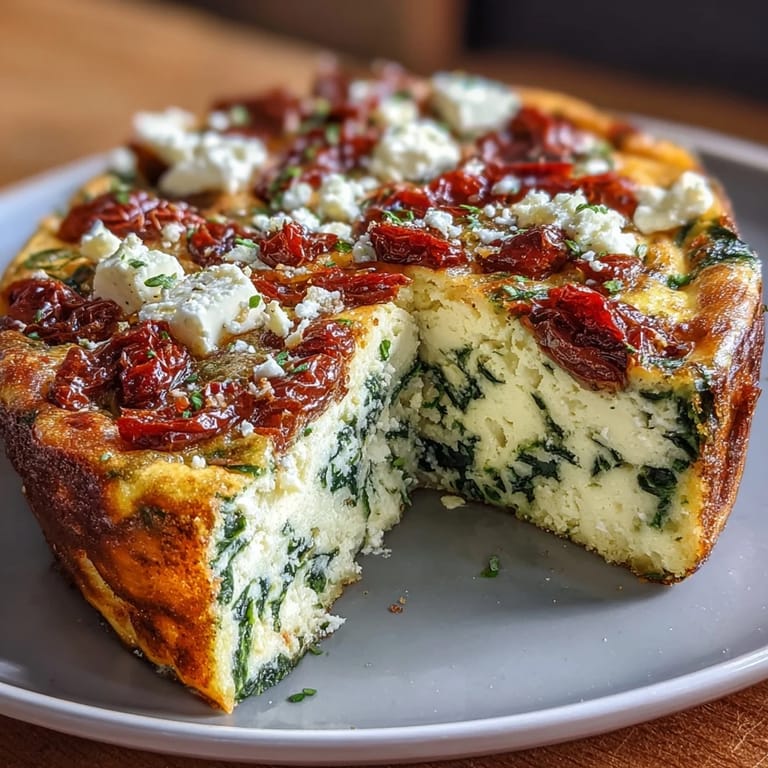
 There's genuine comfort in mastering a recipe this straightforward, and I hope it becomes one of those dishes you make again and again without needing to check the measurements. Food tastes best when it's made with ease and shared with people you care about.
Recipe Questions & Answers
- → Can frozen spinach be used instead of fresh?
Yes, frozen spinach can replace fresh spinach. Thaw well and drain excess water to avoid sogginess before cooking.
- → What baking dish is best for this frittata?
A 10-inch ovenproof skillet is ideal for even cooking and easy transfer from stovetop to oven.
- → Can this dish be made dairy-free?
Yes, use plant-based feta alternatives and omit Parmesan to create a dairy-free version.
- → How can the frittata be served?
Serve warm or at room temperature, perfect alongside a green salad or crusty bread.
- → What wine pairs well with this egg dish?
A crisp white wine like Sauvignon Blanc enhances the flavors of spinach and tangy feta.