 Pin It
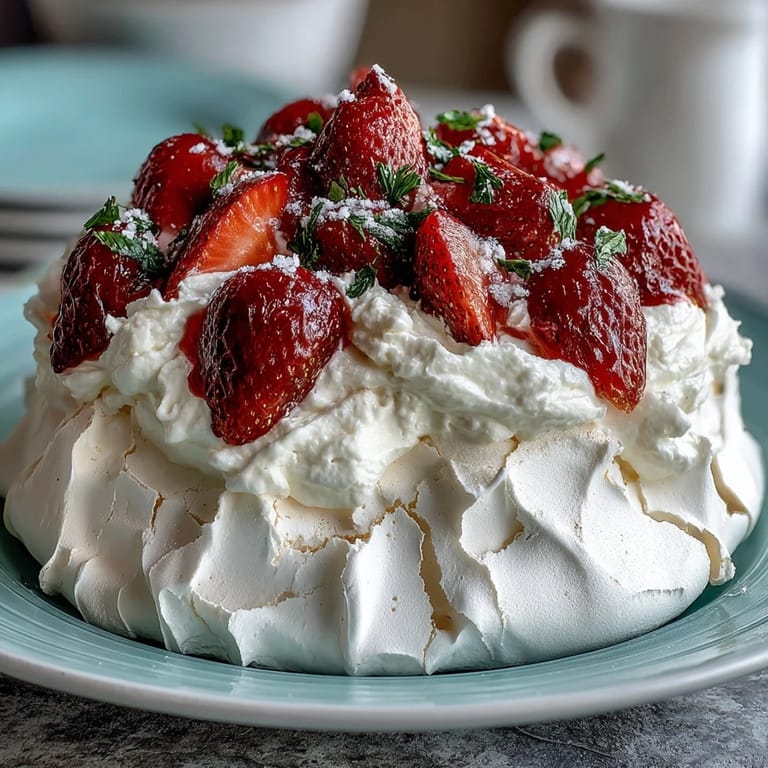
 My mum pulled a pavlova out of the oven one Christmas Eve, and I watched her slide it onto a plate with this look of pure concentration, like she was defusing something delicate. The meringue had this glossy, creamy interior that crackled under my fork, and when the cold whipped cream hit the warm nest, something magical happened. That's when I understood why this dessert has been making people feel fancy and special for generations, even though it's secretly just egg whites and sugar doing all the heavy lifting.
I made this for my sister's birthday during a heat wave, and I was absolutely certain it would be a disaster because everything kept sweating in the kitchen. But the low oven temperature and that trick of leaving the oven door cracked somehow saved the whole thing, and by the time friends arrived, the meringue had set into this beautiful, golden creation that somehow felt both elegant and effortless.
Ingredients
- Egg whites (4 large, room temperature): Cold eggs won't whip properly, so take them out of the fridge 15 minutes ahead—this is non-negotiable and honestly the biggest trick.
- Superfine sugar (1 cup): Regular sugar works, but it dissolves slower and your meringue will look grainy instead of glossy, so it's worth seeking this out.
- Cornstarch (1 tsp): This creates that distinctive chewy center that makes pavlova different from regular meringue, almost like a macaroon texture inside.
- White vinegar (1 tsp): Sounds weird but it stabilizes the meringue and keeps it from weeping, which is pavlova shorthand for getting sad and soggy.
- Vanilla extract (1 tsp for meringue, 1 tsp for cream): Vanilla is quiet but essential, adding a warmth that makes everything taste more like dessert and less like egg foam.
- Heavy cream (1 cup, chilled): Cold cream whips faster and fuller, and that billowy texture is half the point, so don't skip the chilling part.
- Powdered sugar (2 tbsp): Dissolves into the cream almost instantly unlike granulated, so the whipped cream stays thick and stable.
- Fresh strawberries (2 cups, hulled and sliced): Peak season berries are sweeter and need less sugar, but even out-of-season ones get better when you let them sit with a little sugar for ten minutes.
- Fresh mint (optional): A small handful scattered on top makes this look like you tried harder than you actually did, which is the essence of good cooking.
Tired of Takeout? 🥡
Get 10 meals you can make faster than delivery arrives. Seriously.
One email. No spam. Unsubscribe anytime.
Instructions
- Set your stage right:
- Preheat the oven to 275°F and line a baking sheet with parchment paper, then draw a 9-inch circle as your guide so the meringue knows where it's supposed to be. A pencil on the parchment side works better than you'd think because it won't smudge into the meringue.
- Whip those egg whites into submission:
- In a bowl that's so clean you could eat from it (seriously, any fat residue ruins this), beat the egg whites on medium speed until soft peaks form, then start adding superfine sugar a tablespoon at a time while beating on high. Keep going for 7 to 10 minutes until you have something that looks glossy, thick, and capable of holding peaks that don't collapse.
- Fold in the secret ingredients:
- Using a spatula and a gentle hand, fold in the cornstarch, vinegar, and vanilla extract, being careful not to deflate all that air you just spent ten minutes creating. You'll know it's right when there are no white streaks left but the mixture still looks pillowy and full of itself.
- Shape your nest:
- Spoon the meringue onto the parchment paper inside your circle guide, spreading it into a disc and then using the back of a spoon to create slightly raised edges so it forms a nest shape that cradles the cream and berries. This takes about five minutes of gentle shaping, and it doesn't have to be perfect because imperfect is more charming anyway.
- Bake low and slow:
- Bake for 1 hour and 15 minutes at 275°F, then turn off the oven and leave the door slightly ajar while the meringue cools completely inside. This slow cooling prevents cracks and keeps the center chewy, so resist the urge to open the door and peek before an hour has passed.
- Make the cream while waiting:
- In a chilled bowl, whip the cold heavy cream with powdered sugar and vanilla until soft peaks form, which takes about 3 minutes if your bowl is actually cold. Soft peaks are the sweet spot because they'll still spread nicely without turning into butter.
- Prep the berries:
- Toss sliced strawberries with a tablespoon of granulated sugar and let them sit for 10 minutes to release their juices and become even sweeter and more jammy. This macerating step is what separates fresh berries from sad ones.
- Assemble your masterpiece:
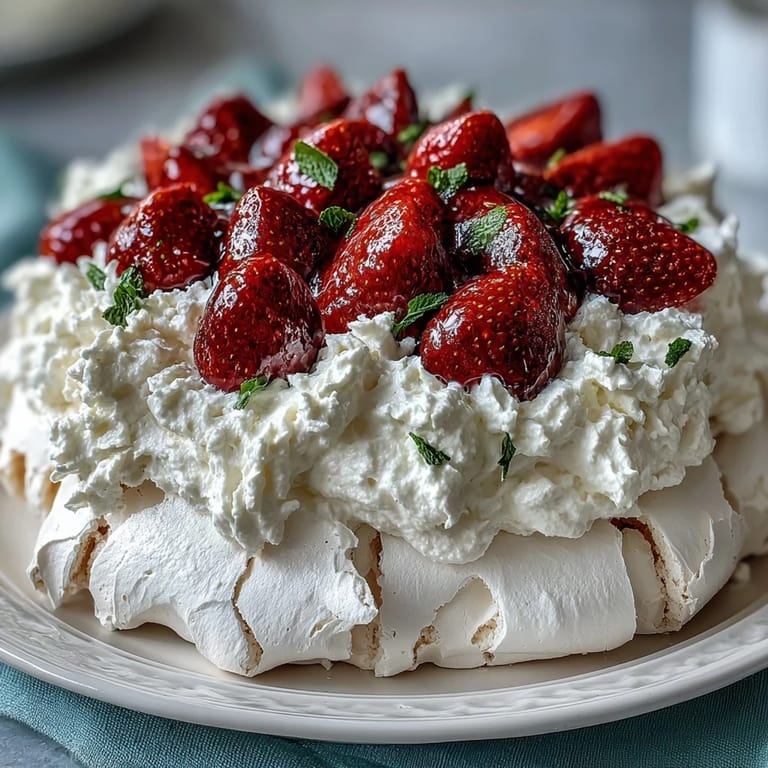
- Once the meringue is completely cool, carefully transfer it to a serving plate and spread the whipped cream evenly over the center, leaving a little border of meringue showing around the edges. Top with the macerated strawberries and scatter mint leaves on top if you're feeling fancy, then serve right away because meringue is a time-sensitive ingredient.
 Pin It
 The first time someone asked for seconds on pavlova, they didn't ask politely—they just sort of looked at the empty plate and then back at me with this hopeful expression. That moment made me realize this dessert works because it feels indulgent and special without being difficult, which is a gift in a kitchen.
Why Meringue Can Be Finicky (And How to Fix It)
Meringue gets a reputation for being temperamental, but honestly it's more about understanding what it wants. Humidity is the real enemy here, which is why this dessert is perfect for cooler months or dry climates but might need some extra patience if you're baking during humid weather. I've learned to make it on days when the air feels crisp rather than sticky, and on humid days I just accept that the meringue will soften faster and plan to serve it within an hour or two of assembling.
The Berry Situation
Strawberries are traditional and beautiful, but I've had excellent results with raspberries mixed in, or even blackberries if you want something slightly more tart to balance the sweetness. The macerating step works with any berry, and that little bit of time sitting with sugar is what transforms them from just fruit into topping magic. Some people skip the maceration entirely if the berries are already very ripe and juicy, which is fine—just understand that you're trading a more concentrated flavor for simplicity.
Making It Work For Your Crowd
This recipe makes 8 servings, which is perfect for a dinner party but can be scaled up by multiplying the meringue base if you need more. I've successfully made two pavlovas side by side on the same oven rack without any issues, and people always appreciate having enough that nobody has to split a slice. If you want to make this ahead, the meringue base can be baked the morning of and kept in an airtight container, but wait to add cream and berries until just before serving.
- Assemble this no more than 2 hours before serving or the meringue will get soggy from the cream and berry juices.
- If your kitchen is warm, keep the assembled pavlova in the fridge until 10 minutes before serving to keep the meringue from softening too much.
- For a party, you can set up a toppings bar and let guests assemble their own if you want to shift a tiny bit of work to them and buy yourself time.
 Pin It
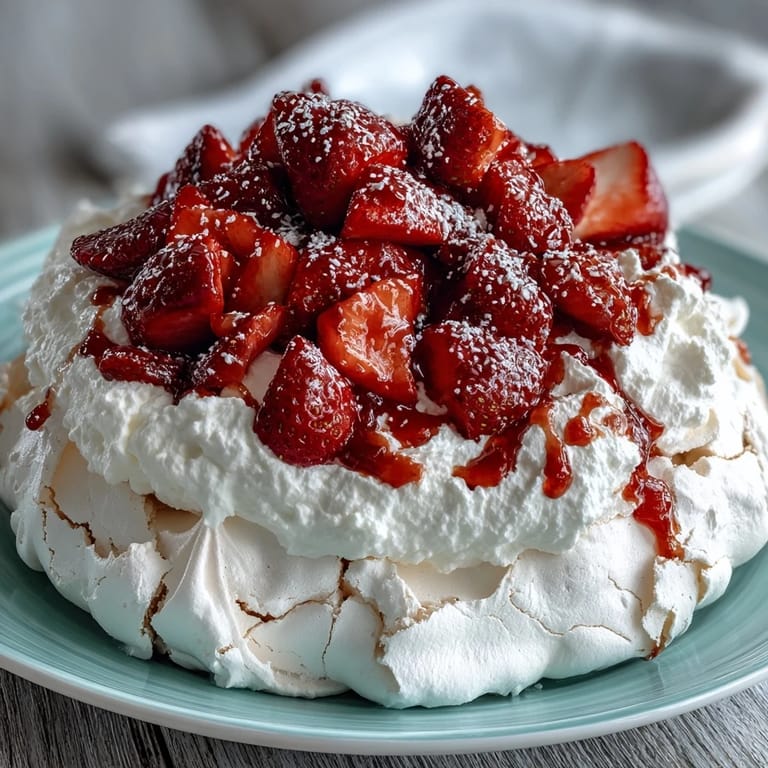
 This pavlova has taught me that sometimes the most memorable desserts aren't the complicated ones but the ones that show up elegant and kind. Every time you pull one of these out, someone's face lights up in a way they probably wouldn't for a regular cake.
Recipe Questions & Answers
- → How do I achieve stiff peaks for the meringue?
Beat the egg whites at medium speed until soft peaks form, then gradually add superfine sugar while increasing speed to high until glossy, stiff peaks develop.
- → What is the role of cornstarch in the meringue?
Cornstarch helps stabilize the meringue, maintaining its structure and giving it a chewy texture after baking.
- → Can I prepare the pavlova in advance?
The meringue base can be baked ahead and stored, but whipped cream and strawberries are best added just before serving to keep freshness.
- → How should I store leftovers?
Keep any leftovers refrigerated. Note that the meringue will soften over time when combined with moist toppings.
- → Are substitutions possible for the toppings?
Yes, a mix of berries or different fresh fruits can be used to vary the flavor and presentation.
- → What temperature is ideal for baking the meringue?
Baking at a low temperature of 275°F (135°C) ensures the meringue dries out evenly without browning too much.