 Pin It
 There's something about a homemade coleslaw that stops me mid-conversation at a picnic. I was at a backyard barbecue years ago, watching someone pull out store-bought slaw in a plastic container, when a neighbor casually mixed up this version in about ten minutes—and suddenly everyone forgot about the burgers for a moment. The crispness, the way the dressing clung to every strand of cabbage, the faint sweetness cutting through the tang—it felt like someone had finally figured out what coleslaw was supposed to be. Now I make it almost every time I'm invited somewhere, and people always ask for the secret.
I learned to really love this slaw on a summer evening when my daughter announced she'd decided to become vegetarian, right in the middle of a cookout I'd planned around ribs. Instead of panic, I made a massive batch of this, paired it with some grilled corn and beans, and she ate more than anyone else at the table. It became our thing that summer—proof that sometimes the side dish becomes the main event.
Ingredients
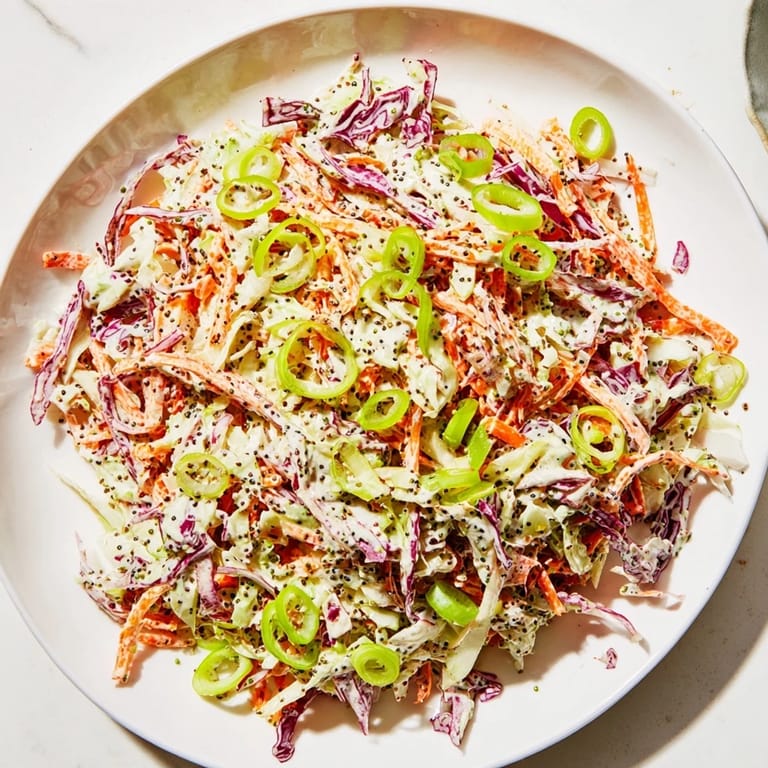
- Green cabbage: Buy it whole and shred it yourself with a sharp knife or box grater—the texture matters more than you'd think, and pre-shredded cabbage oxidizes and loses its snap.
- Red cabbage: Adds color and a slightly earthier flavor that balances the creamy dressing beautifully.
- Carrots: Grated fine so they soften slightly as they sit, adding natural sweetness and texture contrast.
- Green onions: The brightness here is essential—don't skip them or use regular onions, which would be too sharp and wouldn't soften in the dressing.
- Mayonnaise: Use real mayo, not salad dressing; the difference in richness and flavor is immediate and noticeable.
- Sour cream or Greek yogurt: This cuts the heaviness of straight mayo and adds a subtle tang that makes the whole thing taste fresher.
- Apple cider vinegar: The acidity brightens everything; white vinegar tastes too harsh by comparison.
- Dijon mustard: Just enough to add complexity without making it taste mustardy—it's a background player here.
- Sugar: A small amount balances the acid and the richness; it won't taste sweet, just complete.
- Celery seed: Optional, but if you have it, it's a tiny flavor unlock that makes people pause and ask what's in there.
Tired of Takeout? 🥡
Get 10 meals you can make faster than delivery arrives. Seriously.
One email. No spam. Unsubscribe anytime.
Instructions
- Prep your vegetables:
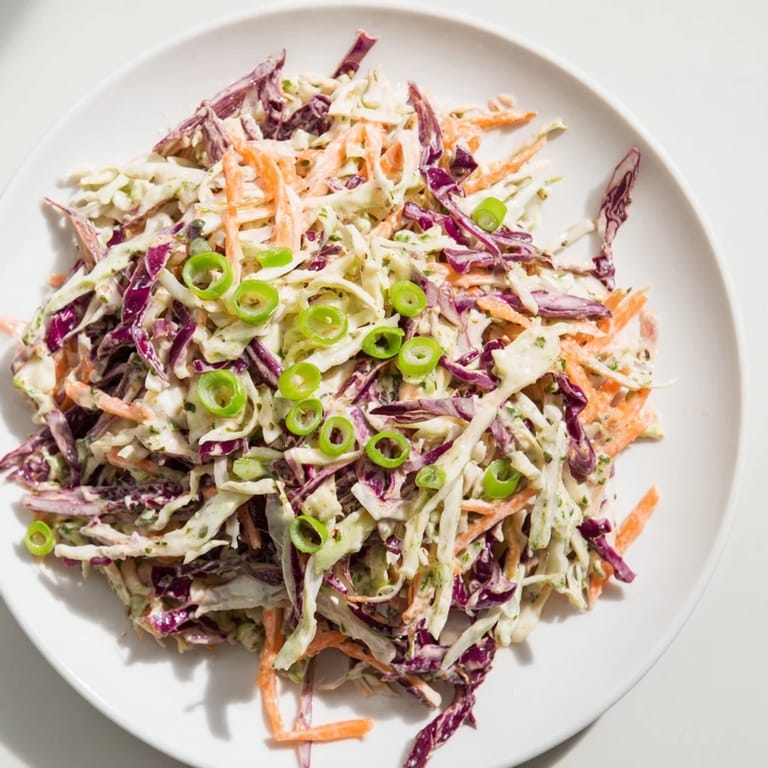
- Shred the cabbage as finely as you can manage—thinner pieces mean the dressing coats better and everything melds faster. Grate the carrots, slice the green onions on a slight angle so they look intentional, and get everything into a large bowl.
- Make the dressing:
- Whisk the mayo, sour cream, vinegar, mustard, sugar, celery seed, salt, and pepper in a separate bowl until it's completely smooth and pale. Taste it plain—it should taste balanced and tangy, with no sharp edges.
- Bring it together:
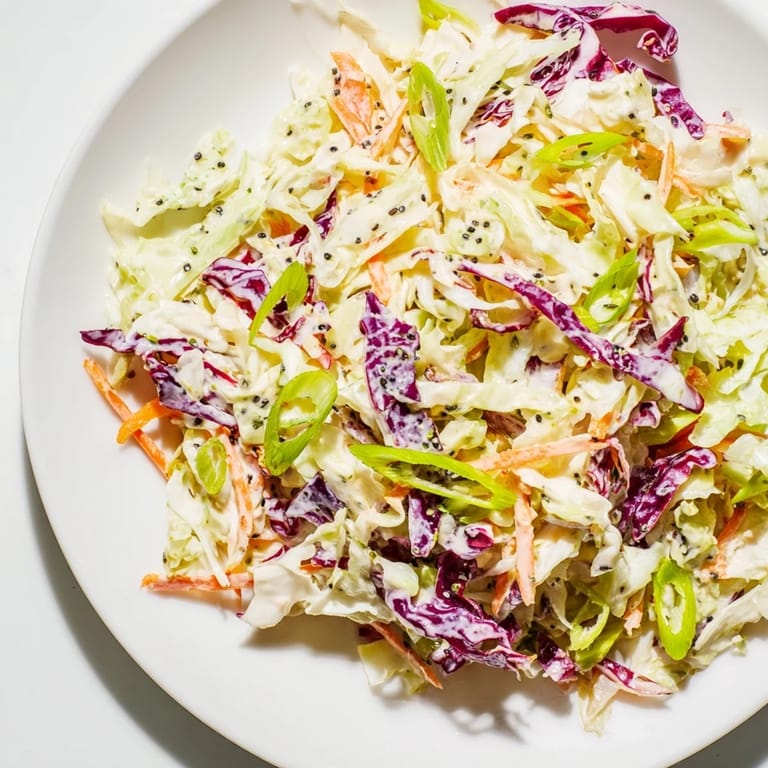
- Pour the dressing over the vegetables and toss like you're folding something fragile, making sure every strand of cabbage gets coated. The goal is even distribution, not bruising the vegetables.
- Rest and adjust:
- Let it sit for at least thirty minutes before serving—this gives the vegetables time to soften slightly and the flavors to marry. Taste again and adjust the salt, vinegar, or sugar if needed; it's your slaw, and your preferences matter.
 Pin It
 The moment I realized this slaw had staying power was when someone at a potluck took a second helping and admitted they'd never really liked coleslaw before. Something about the balance—how nothing overpowers anything else—just clicks. It's one of those recipes that disappears first and gets asked about most.
Why the Dressing Makes All the Difference
The combination of mayo and sour cream is what sets this apart from other slaws I've made over the years. The mayo provides richness and body, while the sour cream lightens it and adds tang without the sharp edge of vinegar alone. It's a small choice that transforms the whole thing from heavy to balanced, and once you understand why those two ingredients are there, you start seeing the pattern everywhere—it's about complementary contrasts, not doing one thing loudly.
Timing and Temperature
There's a sweet spot with this slaw where it's still cold and crisp but the dressing has had time to coat everything. Make it too far ahead and it softens more than you want; make it too close to serving and the flavors haven't melded. I usually make it while guests are arriving, so by the time we sit down, it's perfect. Room temperature cabbage accepts the dressing faster, so don't worry about chilling the vegetables first—that's an extra step that doesn't help.
Variations Worth Trying
Once you have the base down, this becomes a playground. I've added sliced apples, dried cranberries, toasted nuts, and fresh herbs depending on what's in the fridge or what the main dish calls for. The dressing is forgiving enough that it works with almost any vegetable combination you throw at it. Think of this recipe as a template, not a rulebook.
- Add a grated apple or handful of raisins if you want a sweeter version that works especially well with pulled pork.
- Toss in fresh parsley, dill, or cilantro just before serving for an herb-forward take.
- Experiment with different vinegars—white wine vinegar or rice vinegar create subtle shifts in flavor that are worth exploring.
 Pin It
 This slaw has become my go-to when I'm not sure what to bring to a gathering, because it's simple enough that it never feels like a cop-out, and good enough that people remember it. That's the kind of recipe worth keeping close.
Recipe Questions & Answers
- → Can I substitute sour cream with Greek yogurt?
Yes, Greek yogurt can replace sour cream for a lighter, tangy texture while maintaining creaminess.
- → What is the best way to shred cabbage for this dish?
Use a sharp knife or box grater to finely shred green and red cabbage for optimal texture.
- → How long should the salad be chilled before serving?
While it can be served immediately, chilling for at least 30 minutes helps flavors blend better.
- → Is celery seed necessary in the dressing?
Celery seed is optional but adds a subtle, aromatic note that complements the dressing well.
- → Can I add sweetness to this slaw?
Adding grated apple or raisins provides a natural sweetness that balances the tangy dressing.