 Pin It
 I stumbled upon burrata at a market on the tail end of summer, when the vendor practically pushed it into my hands with a knowing smile. That creamy center was so luxurious it felt like a small rebellion against eating salad, and I knew right then I had to build something that honored it rather than buried it. The idea of arranging fruit in rings around it came to me while watching the moon rise over the water one evening—suddenly the plate became a canvas instead of just a dish.
I made this for a dinner party where one guest arrived exhausted from a long day, and watching their face light up when I plated it—watching them slow down and actually taste each bite—reminded me why simple, beautiful food matters. Sometimes the most memorable meals aren't complicated; they're just thoughtfully assembled.
Ingredients
- Fresh blueberries (1 cup): These jewel-like orbs provide tartness and a visual anchor—don't buy them more than a day or two ahead or they'll start weeping.
- Seedless purple grapes, halved (1 cup): I halve them because they disappear into the arrangement whole, and the flat side catches the light beautifully.
- Burrata cheese (1 large ball, about 200 g): This is the star; keep it cold until the last possible moment, and handle it gently since the creamy interior is delicate and forgiving.
- Fresh basil leaves, torn (1/3 cup): Tearing rather than cutting prevents bruising and releases the oils—the aroma should make you pause.
- Baby arugula or mixed greens (1 cup, optional): A tender bed makes plating easier and adds a peppery whisper if you choose to use it.
- Extra-virgin olive oil (2 tbsp): Quality matters here; this is one of three ingredients doing all the heavy lifting.
- Balsamic glaze (1 tbsp): The thick, syrupy version, not vinegar—it's the final flourish that ties everything together.
- Sea salt and freshly ground black pepper: These aren't afterthoughts; they're flavor amplifiers that wake up every element on the plate.
- Lemon zest (optional): A whisper of brightness that shifts the whole composition if you choose to add it.
Tired of Takeout? 🥡
Get 10 meals you can make faster than delivery arrives. Seriously.
One email. No spam. Unsubscribe anytime.
Instructions
- Set the stage:
- If using greens, pile them loosely in the center and edges of a wide, shallow bowl or platter—this isn't about neatness, it's about creating a soft bed. The wider the vessel, the more dramatic the presentation.
- Create the moonlight ring:
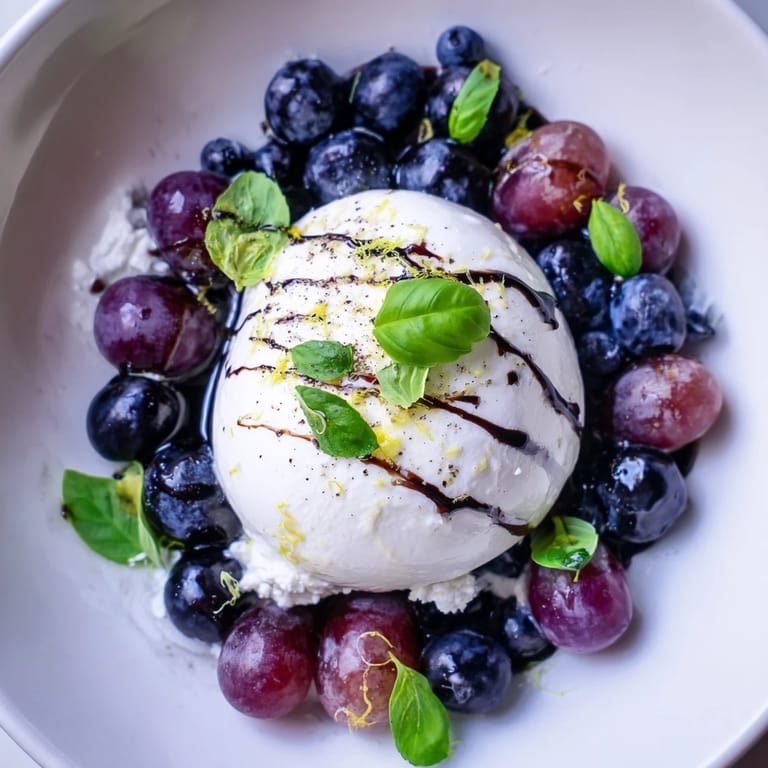
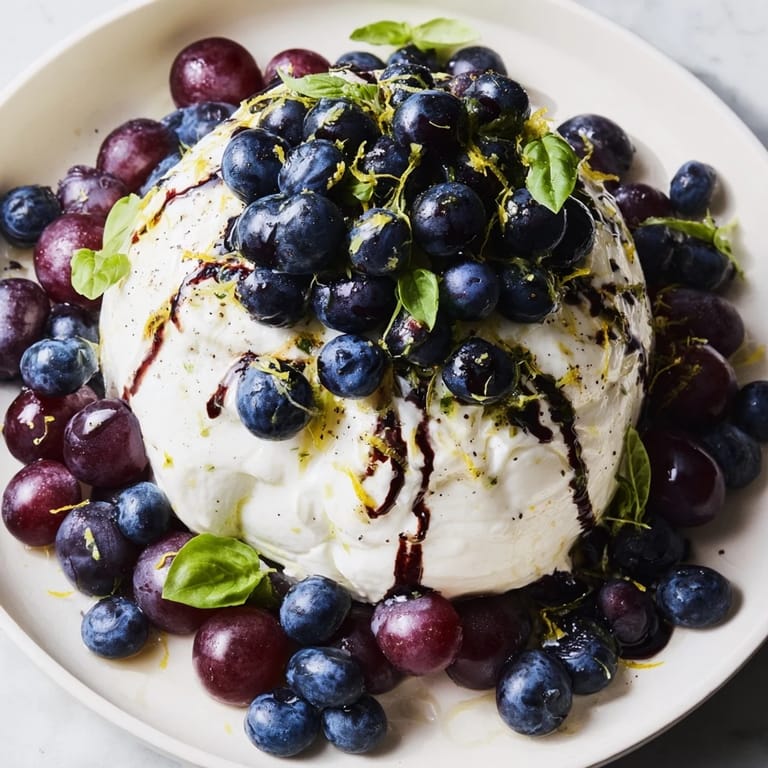
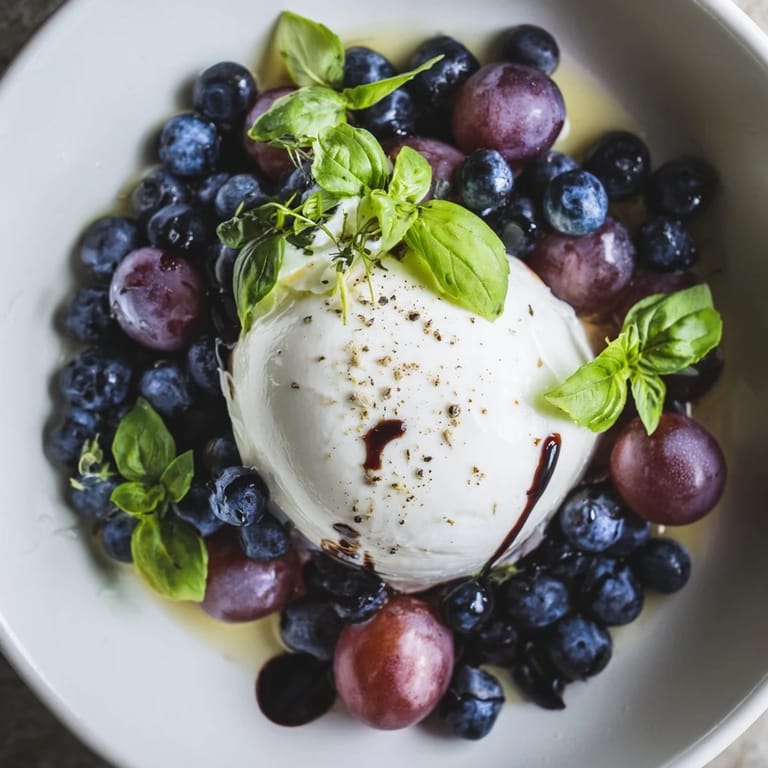
- Scatter the blueberries and grape halves in a generous circle around the center, leaving clear space in the middle like you're drawing an orbit. This is where your hands become your best tool; take a breath and let the fruit land where it feels right.
- Place the moon:
- Nestle the burrata ball into the center—it should sit like it's the most important thing in the room, which it is. The contrast between its creamy pale center and the dark fruit around it is the whole magic.
- Anoint with oil:
- Drizzle the olive oil in thin streams across everything, letting it pool slightly where the cheese cradles it. This isn't about coverage; it's about creating little pockets of richness.
- Thread the balsamic:
- Using a small spoon, let the glaze fall in a thin, deliberate stream over the fruit and across the top of the burrata. Watch how it catches the light—you want visible ribbons, not a slick.
- Finish with intention:
- Scatter torn basil leaves (the irregular pieces matter), dust with lemon zest if using, then season generously with salt and pepper. Taste a blueberry first to check the fruit's own sweetness, then adjust seasoning to match.
- Serve at once:
- This dish should arrive at the table the moment it's finished, while the burrata is still perfectly cool and everything is at peak brightness.
 Pin It
 A friend once asked why I'd served this for an appetizer instead of a main course, and I realized the beauty was in the lightness—in leaving people wanting more of the evening rather than more of the plate. It became our summer signature, the dish I'd make when the heat was still climbing and conversation mattered more than fullness.
Why This Works Right Now
This salad exists in that rare moment when appearance and flavor align perfectly—the fruit is in season, burrata is at its creamiest, and basil grows wild in gardens everywhere. It's the kind of dish you can't really improvise successfully in winter, so it teaches you to cook with the calendar rather than against it. The minimal cooking required (which is to say none) is actually a feature; it lets the quality of your ingredients shine without apology.
Building Your Own Variations
Once you understand the architecture—fruit surrounding cheese, oil and acid binding them—the possibilities unfold naturally. I've made it with blackberries when blueberries weren't available, substituted burrata with fresh mozzarella on leaner days, even added crispy prosciutto torn into delicate shards when the mood called for it. Each version teaches you something about balance and restraint.
Timing and Company
This dish is a statement about pacing, meant to be savored slowly in good light with people you actually want to sit with. It pairs beautifully with a glass of something crisp and cold, and often becomes less about the food and more about the conversation that blooms around it. When you plate it, you're not just serving salad; you're creating a moment where everyone at the table slows down enough to notice how beautiful simple food can be.
- Pair with a Sauvignon Blanc, dry rosé, or even a light Pinot Grigio for the perfect accompaniment.
- Toast crusty bread rubbed with garlic to serve alongside—it's not required but it fills the quiet moments beautifully.
- Make this the opening course to something richer, or let it stand alone if the evening is warm enough and the company is right.
 Pin It
 This salad taught me that food doesn't always have to be complex to be memorable—sometimes the most elegant meals are the ones where you get out of your own way and let good ingredients speak. Make this when the moment feels right, and you'll understand why it stays with you long after the plate is cleared.
Recipe Questions & Answers
- → What type of cheese pairs well in this dish?
Burrata provides a creamy texture that complements the sweetness of the fruit and the herbal notes of basil.
- → Can I substitute the grapes or blueberries?
Yes, blackberries or other soft berries make excellent alternatives for similar flavor and texture.
- → Is it necessary to use fresh basil?
Fresh basil enhances the aromatic quality and freshness, though other mild herbs could work if unavailable.
- → How should the balsamic glaze be applied?
Drizzle it in a thin, even stream over the fruit and cheese to add sweet acidity without overpowering.
- → What serving suggestions complement this dish?
Pair it with crusty bread or enjoy it on its own, along with crisp white wines like Sauvignon Blanc or dry rosé.