 Pin It
 There's something about arranging a platter of mini quiches that makes you feel like you've unlocked a secret. Years ago, I showed up to a spring brunch with these golden, perfectly portioned bites, and the host actually gasped—not because they were complicated, but because they looked like I'd spent hours fussing in the kitchen when really, I'd discovered the charm of doing less and impressing more. That afternoon taught me that the best entertaining isn't about stress; it's about these little moments of ease wrapped in pastry.
I made these for my neighbor's baby shower on a rainy April morning, and I remember how the kitchen smelled like nutmeg and butter while everyone was still outside with umbrellas. When they came in dripping wet and saw the quiches on the table, something shifted—suddenly the gathering felt less like an obligation and more like a celebration. Those little bites became the reason people lingered at the table.
Ingredients
- Ready-made shortcrust pastry (1 sheet, about 250 g): This is where you save yourself an hour of work without sacrificing quality—quality butter in store-bought pastry is often better than what we'd make in a rush anyway.
- Large eggs (4): These are the structure of your custard, so don't skip the size; smaller eggs won't give you the same silky set.
- Heavy cream (150 ml): The richness that makes these quiches taste like you fussed.
- Whole milk (150 ml): Balances the cream so the custard stays light and doesn't feel heavy after a few bites.
- Salt, black pepper, and nutmeg: That whisper of nutmeg is the trick—it's barely noticeable but completely necessary.
- Fresh baby spinach (60 g, chopped): Young leaves cook down quickly and mix seamlessly into the custard.
- Feta cheese (30 g, crumbled): Tangy and salty, it speaks to the spinach in a way that feels natural.
- Cremini or button mushrooms (80 g, finely chopped): Chop them small so they distribute evenly and cook through in the time the quiche bakes.
- Gruyère cheese (20 g, grated): More flavorful than cheddar, it turns mushrooms into something earthy and sophisticated.
- Cooked ham (50 g, finely diced): Pre-cooked means no guessing whether it will finish in the oven.
- Swiss cheese (30 g, grated): Mild enough not to overpower the ham, creamy enough to meld into the custard.
Tired of Takeout? 🥡
Get 10 meals you can make faster than delivery arrives. Seriously.
One email. No spam. Unsubscribe anytime.
Instructions
- Heat the oven and prepare the tin:
- Set your oven to 180°C (350°F) and grease the mini muffin tin so the quiches slip out without sticking. This temperature is gentle enough to cook the custard through without browning the filling too fast.
- Cut and chill the pastry shells:
- Roll out your pastry on a floured surface, cut out 18 rounds about 6–7 cm across, and press each one into a muffin well. Let them chill in the fridge while you prep the fillings—cold pastry stays tender.
- Make the custard base:
- Whisk eggs, cream, milk, salt, pepper, and a small pinch of nutmeg until the mixture is completely smooth and uniform. This custard is what holds everything together, so don't rush the whisking.
- Sauté the spinach:
- Heat olive oil in a small pan, add minced garlic, then spinach, and cook until it wilts—just 1–2 minutes. Let it cool slightly, then fold in crumbled feta so the cheese stays in distinct pieces rather than melting into the warm spinach.
- Cook the mushrooms:
- Melt butter in a skillet, add minced shallot and finely chopped mushrooms, and cook until the mushrooms turn golden and any moisture evaporates—about 5 minutes. Cool briefly, then stir in grated Gruyère so it stays grainy and distinct.
- Combine the ham filling:
- Simply mix diced ham, grated Swiss cheese, and sliced spring onion in a bowl—no cooking needed, which is one of the reasons this combination works so well.
- Fill the pastry shells:
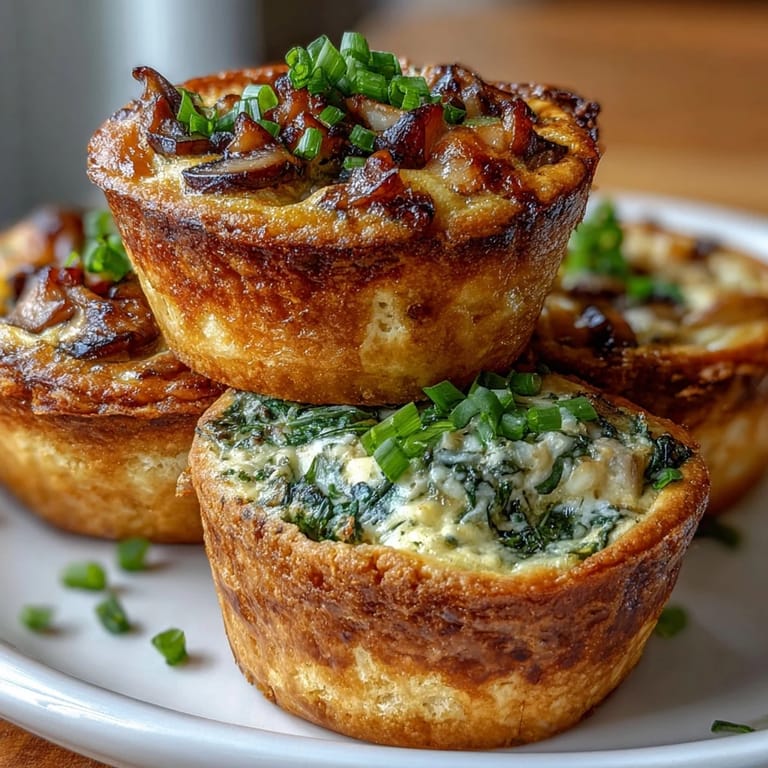
- Remove the chilled pastry from the fridge and divide each filling type among 6 shells, distributing them evenly across the tin. This way, every bite tastes different depending on which one you reach for.
- Add the custard carefully:
- Pour the egg mixture over each filling until it reaches just below the rim of the pastry—overfilling causes spillage and uneven cooking. Move the tin gently to level the custard.
- Bake until set:
- Bake for 20–25 minutes, watching for the moment when the tops turn golden and a gentle jiggle in the center shows they're just set. A toothpick inserted in the middle should come out clean.
- Cool and serve:
- Let them rest for 5 minutes in the tin so they hold their shape, then slide them out gently. They're wonderful warm straight from the oven, cool enough to eat in your fingers, or even chilled the next day.
 Pin It
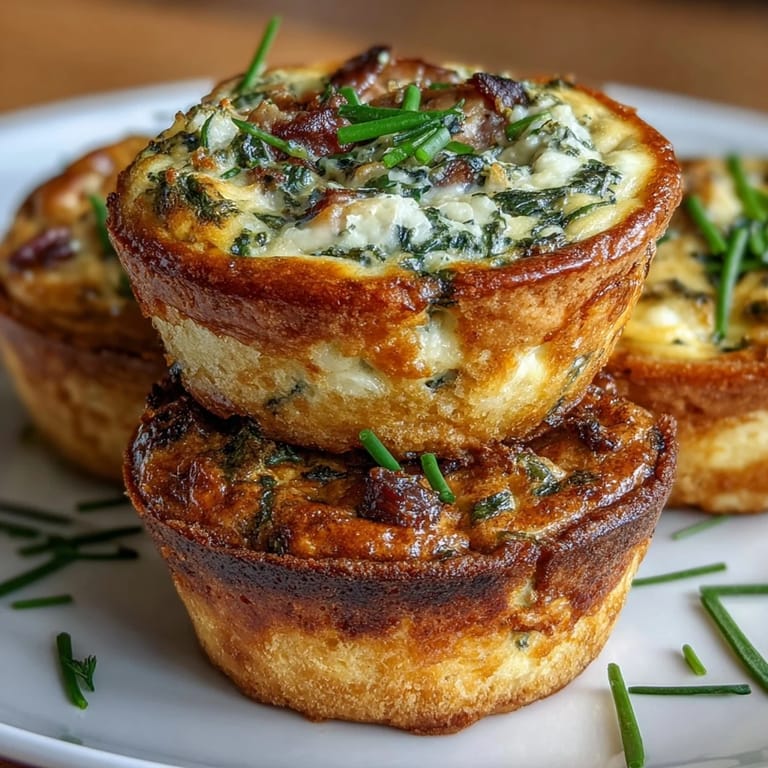
 My daughter once asked why these weren't just called quiches, and I realized it's because the word mini feels like a promise—a promise that something small can still be complete and satisfying. These three flavors together feel like you've given people a choice without making them feel bad about what they chose.
Why This Spring Trio Works
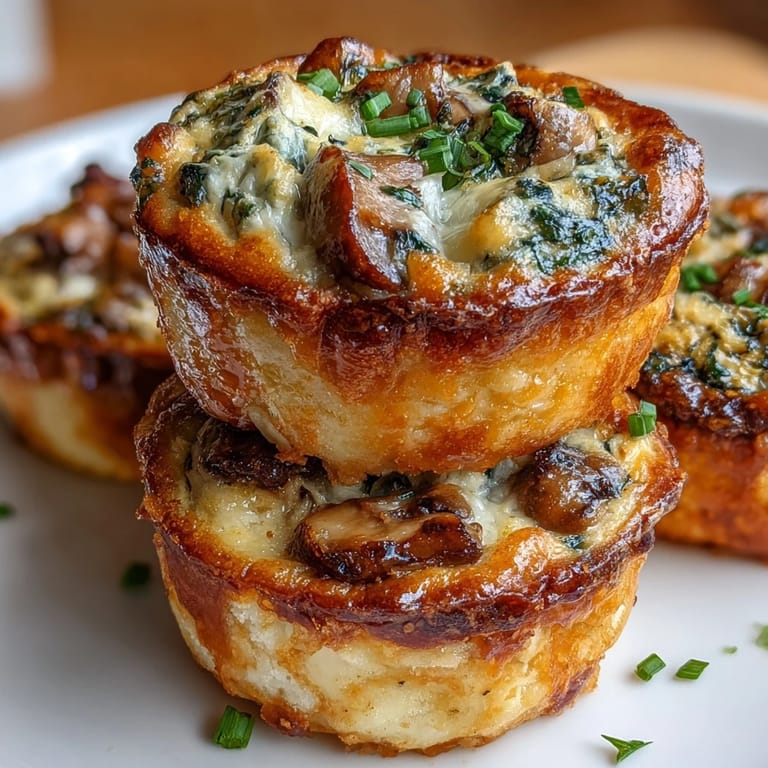
Spring vegetables and brunch are a natural pair, and these three fillings capture what the season feels like—fresh spinach that just came to farmers' markets, mushrooms that appeared suddenly, and the last of the ham from the winter pantry meeting something new. The trio also solves the vegetarian problem without making vegetarians feel like an afterthought; two of the three are entirely plant-forward, and no one has to know unless you mention it.
Timing and Temperature Matter
The temperature of 180°C is cooler than you might expect for baking, but it's intentional—it gives the custard time to set gently without the pastry edges darkening before the center cooks through. I learned this the hard way after burnt edges and undercooked centers, and now I set a timer for 20 minutes and check from there rather than assuming 25 minutes is the end point. Every oven is different, and the last 5 minutes can change everything.
Make-Ahead Magic and Storage Secrets
These quiches live well in the fridge for three days, which means you can bake them the morning of an event and reheat them gently before serving—they taste nearly as good warm from a low oven as they do fresh. I've even frozen unbaked quiches and baked them straight from frozen, adding just 5 extra minutes to the bake time. The one thing that doesn't survive well is a soggy pastry, so if you're not serving within a few hours, store them in an airtight container rather than leaving them out.
- Reheat in a 160°C oven for 8–10 minutes to warm through without drying out the custard.
- Frozen unbaked quiches go straight into the oven—just add 5 minutes to the bake time and check for doneness.
- If pastry starts to brown too fast, tent the pan loosely with foil for the last few minutes of baking.
 Pin It
 These little quiches have taught me that sometimes the most impressive thing you can do in the kitchen is make something feel effortless. They're proof that good food doesn't need to be complicated to feel like celebration.
Recipe Questions & Answers
- → How do I prevent the pastry from getting soggy?
Chilling the pastry before filling and baking helps maintain crispness. Avoid overfilling with custard, which can cause sogginess.
- → Can I prepare the fillings in advance?
Yes, fillings can be prepared and cooled ahead of time. Store them in airtight containers in the refrigerator until ready to assemble.
- → What are good substitutes for the cheeses used?
Feta can be swapped with goat cheese, and Gruyère with cheddar. Swiss cheese may also be replaced with similar melting cheeses to suit taste.
- → How to make these suitable for a gluten-free diet?
Use a gluten-free shortcrust pastry in place of regular pastry to make the quiches gluten-free.
- → What wine pairs well with these mini quiches?
A crisp rosé or sparkling wine complements the variety of flavors and textures in these bite-sized treats.