 Pin It
 My neighbor brought over a slice of lemon blueberry bread one summer morning, still warm from her oven, and I was instantly hooked by that combination of tart citrus and sweet bursts of fruit. What struck me most was how she'd used sourdough starter, which gave it this subtle tang that made the lemon taste even brighter. I pestered her for weeks until she finally shared her technique, and now this loaf has become my go-to when I want something that feels both impressive and deeply comforting. The swirl technique took me a few tries to master, but once I got it right, I couldn't stop making it.
I baked this for my book club once, pulling it from the oven just as everyone arrived, and the smell alone made everyone forget their usual small talk. One friend asked if I'd bought it from a bakery, and I'll admit I let her wonder for a solid minute before confessing. That moment taught me something: homemade bread has a kind of magic that store-bought never quite captures, especially when you can point to the exact blueberries you swirled in yourself.
Ingredients
- Bread flour (3 cups): The higher protein content helps create that tender crumb while still giving you structure to hold all those juicy berries without the loaf collapsing.
- Active sourdough starter (1/2 cup): This is where the magic lives—use a starter that's bubbly and fed a few hours before mixing, not one that's been languishing in the fridge for weeks.
- Whole milk (1 cup): Lukewarm is key; milk that's too hot will kill your starter, but if it's cold your dough will rise slower than you'd like.
- Unsalted butter (1/4 cup): Softened, not melted, so it incorporates smoothly without making the dough greasy.
- Granulated sugar (1/4 cup): Just enough to feed the yeast and add subtle sweetness without overwhelming the lemon and blueberry flavors.
- Large egg: Adds richness and helps bind everything together into a soft, tender crumb.
- Fine sea salt (1 tsp): Don't skip this; it enhances every flavor and controls fermentation.
- Lemon zest (from 1 lemon): Fresh zest matters enormously—use a microplane and get the bright yellow bits only, not the bitter white pith.
- Fresh or frozen blueberries (1 cup): Frozen actually works beautifully here since you're cooking them down anyway, and they burst more readily than fresh.
- Lemon juice (2 tbsp for swirl): Brightens the blueberries and cuts through the sweetness perfectly.
- Cornstarch (1 tbsp): This thickens the blueberry filling so it doesn't soak into your dough and make everything soggy.
- Powdered sugar (1/2 cup) and lemon juice (1–2 tbsp for glaze): Optional but worth it; the glaze adds a professional finish and another hit of lemon brightness.
Tired of Takeout? 🥡
Get 10 meals you can make faster than delivery arrives. Seriously.
One email. No spam. Unsubscribe anytime.
Instructions
- Cook down your blueberry filling:
- Combine blueberries, sugar, and lemon juice in a saucepan over medium heat, stirring occasionally as they pop and release their juice—this takes about 5–7 minutes and the whole kitchen will smell incredible. Once they're broken down and syrupy, stir in the cornstarch and cook for another minute until it thickens, then set aside to cool completely so you don't end up with a warm, runny filling.
- Build your dough:
- Pour your lukewarm milk into a large bowl with the sourdough starter, softened butter, sugar, egg, salt, and that beautiful lemon zest you just zested. Mix everything together, then gradually add your flour while kneading—by hand this takes about 10 minutes of real work, or 8–9 minutes in a stand mixer—until the dough feels smooth, elastic, and only slightly sticky.
- Let it rise slowly:
- Grease a bowl, plop your dough in, cover it with a damp towel, and let it sit at room temperature until it's roughly doubled in size. This usually takes 4–6 hours depending on how active your starter is and how warm your kitchen is; a cooler room means more flavor development anyway.
- Shape your loaf with intention:
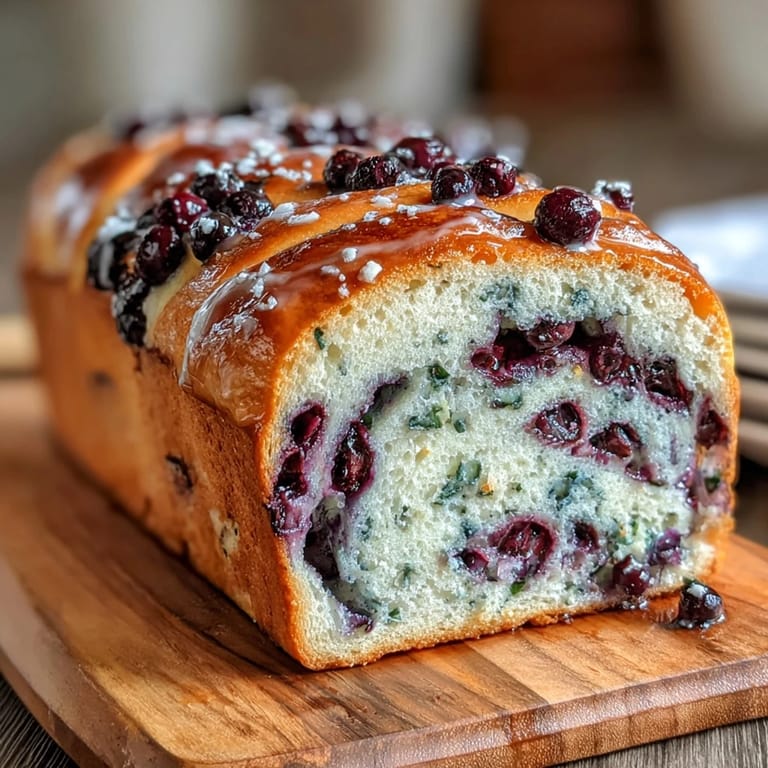
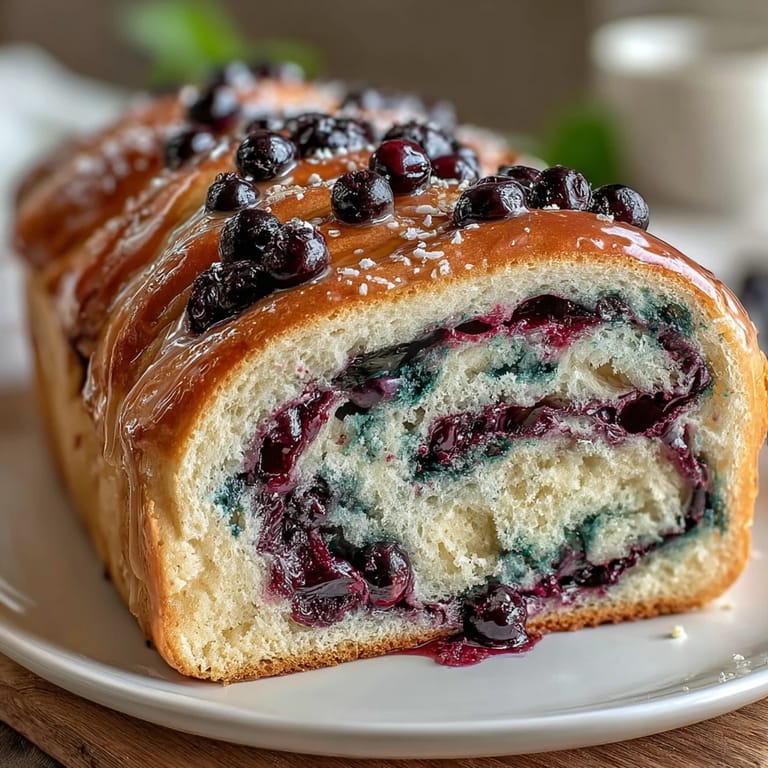
- Turn your risen dough onto a floured surface and gently roll it into a rough 9x16-inch rectangle. Spread that cooled blueberry mixture all over it, leaving about an inch of bare dough around the edges so the filling doesn't squeeze out when you roll.
- Roll and nestle:
- Starting from one short end, roll the dough tightly toward you, then place it seam-side down in your greased loaf pan. The seam should be underneath so it stays sealed while rising.
- Final rise:
- Cover the pan loosely and let it rise for 1–2 hours until the dough is puffy and rises just above the rim of the pan. You're looking for it to be almost doubled, but not so over-proofed that it's collapsing.
- Bake until golden:
- Heat your oven to 350°F and bake for 35–40 minutes—the loaf should be deep golden brown and sound hollow when you tap the bottom. If the top is browning too fast, tent it loosely with foil for the last 10 minutes.
- Glaze if you're feeling fancy:
- While the bread cools, whisk together powdered sugar and lemon juice until it's pourable but not watery, then drizzle it over the cooled loaf. It sets into a beautiful glossy finish that catches the light.
 Pin It
 There's something almost meditative about watching this loaf rise, knowing that what started as a few ingredients and some living starter culture is becoming this beautiful thing. Every time I pull it from the oven and smell that lemon-blueberry steam, I feel a little proud of the time I took to let it rise properly instead of rushing it.
Sourdough Starter and Fermentation Magic
The sourdough starter is what separates this loaf from ordinary sweet bread—it contributes both flavor and natural leavening that you can't replicate with commercial yeast alone. If your starter has been sitting in the fridge for a while, feed it at least once, preferably twice, in the 8–12 hours before you make this bread; you want it bubbly and active, doubling reliably after feeding. The slow fermentation also means the bread keeps longer and actually tastes better the next day as the flavors mellow and deepen.
Why the Blueberry Filling Works So Well
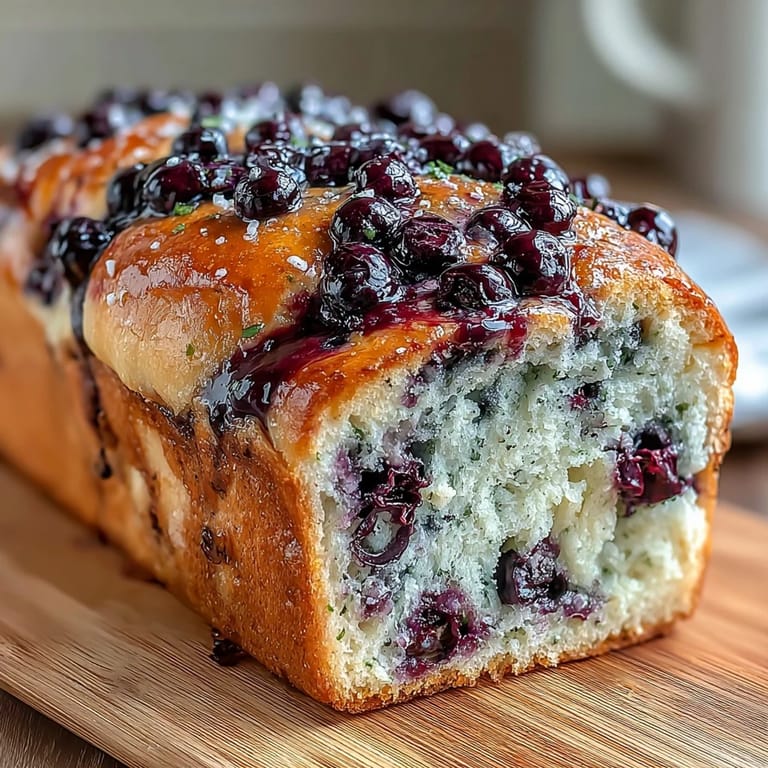
Cooking the blueberries down concentrates their flavor in a way that raw berries never could, and the cornstarch thickens the juice so it stays put instead of turning your loaf into a wet mess. The lemon juice cuts through the sweetness of the blueberries and echoes the lemon zest in the dough itself, creating this cohesive flavor profile that somehow tastes more refined than the sum of its parts. I learned this the hard way after one attempt with uncooked berries that migrated to the bottom of the loaf by the time it finished baking.
Serving and Storage Moments
This bread is at its absolute best within the first 24 hours, warm or at room temperature, ideally with a cup of tea or coffee alongside. The next day, try slicing it and toasting it gently—the edges crisp up while the inside stays tender, and the flavor somehow gets even brighter.
- A thick slice with cream cheese spread is breakfast luxury, or dessert if you're feeling a little indulgent.
- It pairs unexpectedly well with herbal tea, especially chamomile or lemon verbena.
- Store it wrapped in a kitchen towel in an airtight container for up to three days, though honestly it rarely lasts that long.
 Pin It
 Every time I make this loaf, I'm reminded that the best recipes aren't just about following steps—they're about understanding why each step matters, then making the bread your own. Bake this when you have time to let it rise properly, when you're not rushing, because that patience is what makes it sing.
Recipe Questions & Answers
- → How do I achieve a good rise in sourdough dough?
Use an active sourdough starter and keep the dough in a warm, draft-free spot. Allow enough time (4–6 hours) for the dough to double in size before shaping.
- → Can frozen blueberries be used for the swirl?
Yes, frozen blueberries work well. Thaw and drain excess juice before cooking the filling to prevent sogginess.
- → What is the purpose of the lemon zest in the dough?
Lemon zest adds fresh citrus oils, enhancing brightness and complementing the blueberry swirl throughout the loaf.
- → How can I tell when the loaf is baked properly?
The bread should be golden brown and sound hollow when tapped on the bottom, indicating it is fully baked inside.
- → Can I substitute raspberries for blueberries?
Absolutely, raspberries provide a similar tartness with a different flavor profile, making a delicious alternative swirl.
- → Is the optional lemon glaze necessary?
The glaze adds a sweet, tangy finish enhancing the lemon notes, but the loaf is flavorful without it as well.