 Pin It
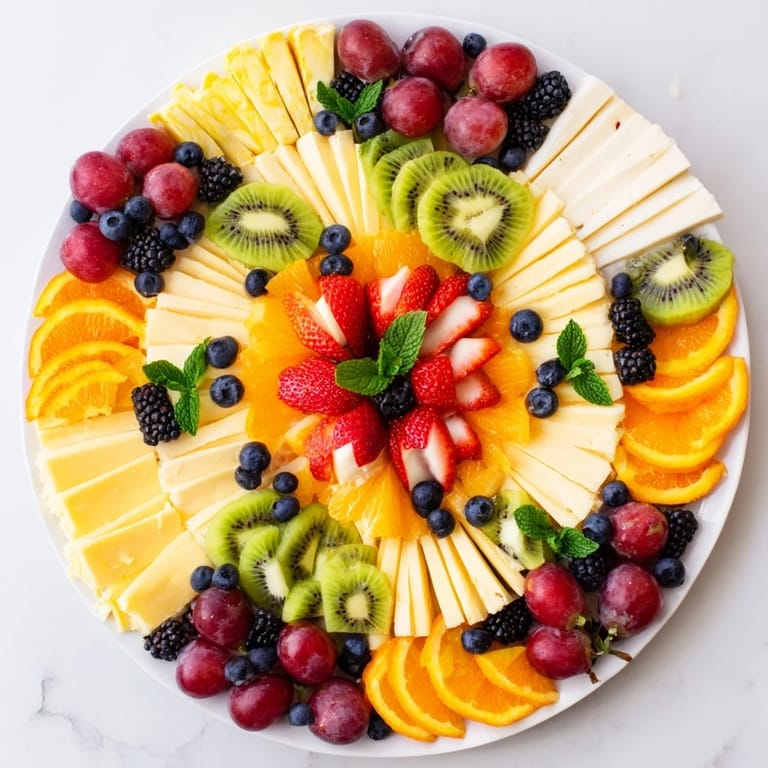
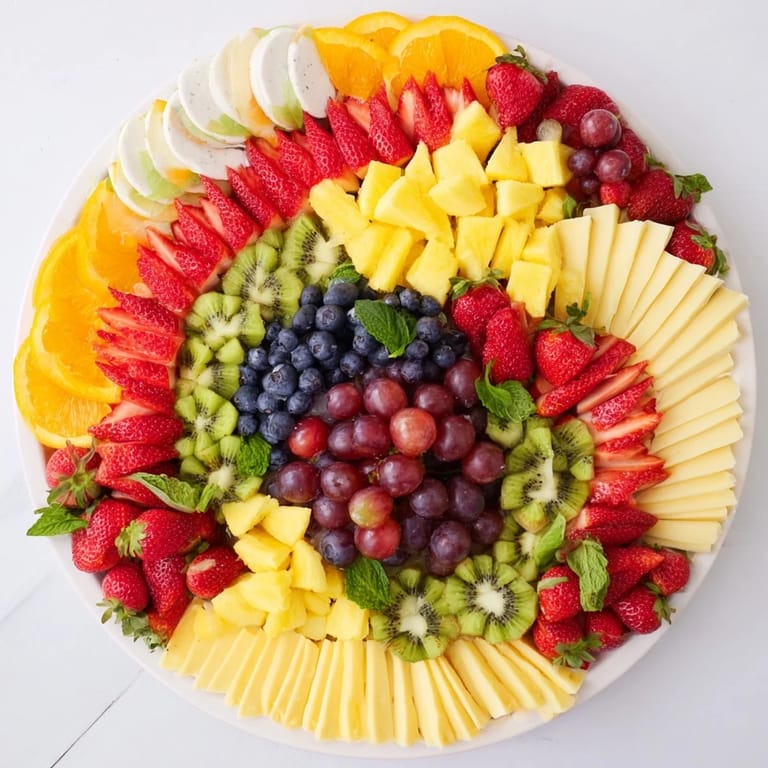
 There's something magical about arranging food into patterns—it transforms a simple platter into a conversation piece. I discovered this while setting up for a dinner party when I realized that instead of scattering fruit and cheese randomly, I could turn them into something that caught the light and made people pause before eating. The Kaleidoscope Circle was born that evening, and now it's my go-to when I want to impress without spending hours in the kitchen.
I made this for my sister's engagement party last spring, and watching people actually hesitate before cutting into it—not wanting to disturb the pattern—taught me that presentation matters as much as taste. Someone said it looked like edible art, and honestly, that stuck with me.
Ingredients
- Seedless red grapes: They hold their shape and add jewel-like pops of color that anchor the design.
- Fresh strawberries: Halve them so the cut side shows that vibrant interior—it's what makes the pattern pop visually.
- Kiwi wedges: Their bright green and tiny seeds create natural visual texture that photographs beautifully.
- Pineapple wedges: Cut small so they maintain proportion with other elements and stay golden throughout assembly.
- Blueberries: Perfect for filling gaps and adding depth to the color palette without overwhelming the design.
- Orange segments: They add brightness and a natural sweetness that balances cheese flavors.
- Aged cheddar: Its deep color and slightly sharp bite make it the anchor cheese—cut into triangular wedges to match the fruit geometry.
- Manchego: This Spanish cheese has a subtle nuttiness that complements fruit perfectly, and it slices cleanly into elegant wedges.
- Brie: Its creamy texture and mild flavor provide softness against sharper cheeses; cut small so it stays in place.
- Goat cheese: The tanginess cuts through sweetness, and sliced into thin rounds, it adds visual contrast and creaminess.
- Fresh mint leaves: They're not just garnish—they add aroma that makes the platter feel alive and intentional.
Tired of Takeout? 🥡
Get 10 meals you can make faster than delivery arrives. Seriously.
One email. No spam. Unsubscribe anytime.
Instructions
- Prep your canvas:
- Wash everything thoroughly, then pat fruits dry so they don't slip around during assembly. Cut fruits into uniform wedges so they sit properly—precision here makes the kaleidoscope pattern actually work.
- Cut your cheese into conversation:
- Slice each cheese into matching shapes—triangular wedges for cheddar and Manchego, small cubes or wedges for brie, thin rounds for goat cheese. The consistency matters more than you'd think; uniform pieces create the symmetry that makes this whole thing work.
- Build from the center:
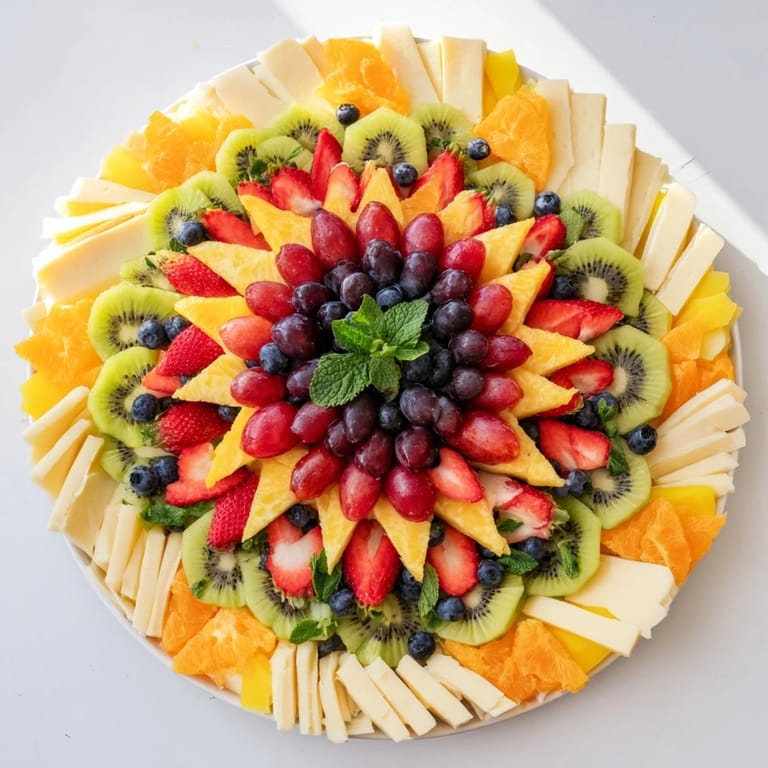
- Start in the middle of your round platter and work outward, placing one fruit wedge, then one cheese wedge, alternating as you go. Think of it like you're drawing with food—each placement sets up the next.
- Create concentric circles:
- Once you've completed one full ring, start another just inside or outside it, repeating your color and shape pattern. This repetition is what creates the kaleidoscope effect that makes people stop and look.
- Fill the spaces thoughtfully:
- Use blueberries or leftover grapes to fill any gaps where the pattern breaks. These little touches are where the platter goes from good to stunning.
- Finish with intention:
- Scatter fresh mint leaves across the platter right before serving, letting them land naturally in gaps and along edges. The green adds life and tells people this was made with care.
 Pin It
 What I didn't expect was how this platter would become a ritual at my dinner parties—it's not just food, it's proof that the smallest effort to arrange things with intention changes how people experience a meal. The conversations that start with 'This is too pretty to eat' are worth every careful slice.
Why Symmetry Matters
The kaleidoscope effect isn't just decoration—it actually guides the eye and makes the platter feel intentional rather than thrown together. When colors and shapes repeat, people unconsciously understand that care went into this. I've noticed that platters arranged randomly get picked at casually, but this one? People slow down and look first.
Seasonal Swaps That Keep It Fresh
This recipe thrives on adaptation—in summer, swap kiwi for fresh peaches, in winter add pomegranate seeds for jewel-tone drama, in fall use apple slices brushed with lemon juice. The formula stays the same but the platter feels like it belongs to the season. Cheese rotations matter too; if you can't find Manchego, a creamy Camembert or sharp Gruyère works beautifully.
Timing and Temperature Tips
Assemble this no more than a few hours before serving—it's at its best when fruits are cool and fresh, not when they've sat sweating under plastic wrap. If you need to prep it earlier, keep everything separate in bowls and assemble right when guests arrive. The cheese should be cool but not cold from the fridge, which makes it easier to work with and keeps flavors from being muted.
- Cut softer cheeses like brie and goat cheese last so they hold their shape during arrangement.
- Refrigerate for up to an hour before serving if needed, but remove from the fridge 10 minutes before bringing it out so cheeses soften slightly for better flavor.
- If berries start looking tired, a light misting of water right before serving freshens them up without damaging the presentation.
 Pin It
 This platter is proof that simple ingredients, a little patience, and an eye for pattern can create something that feels luxurious and special. Serve it proud.