 Pin It
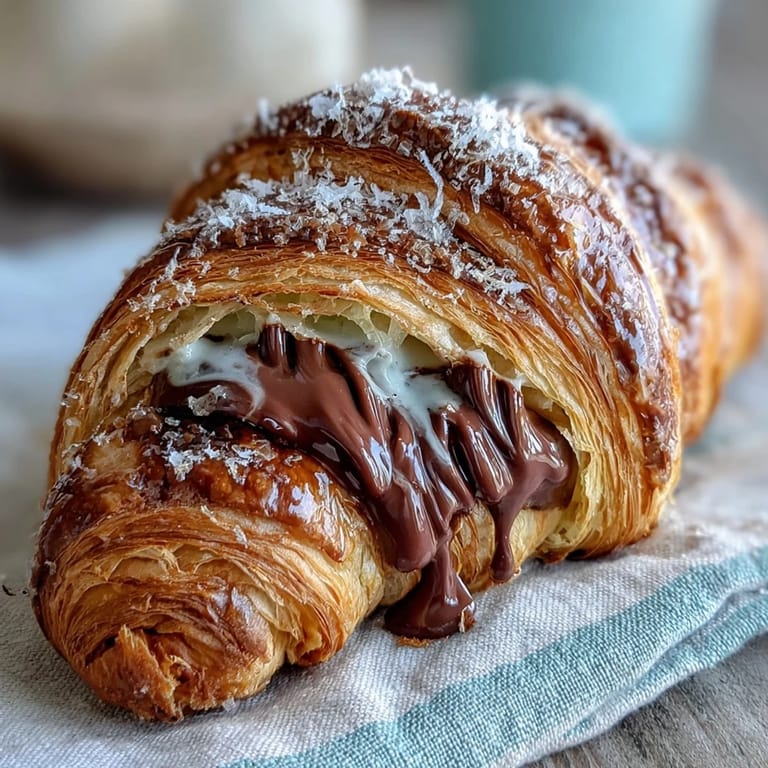
 My first attempt at sourdough croissants happened on a rainy Saturday when I'd convinced myself that combining two of my favorite things—tangy sourdough and buttery lamination—would somehow be easier than the recipes suggested. It wasn't, but somewhere between the third fold and that moment when the oven door opened to reveal deep golden crescents with shards of dark chocolate peeking through, I understood why French bakers consider this craft a love language. Now, every croissant I make carries that same spark of possibility.
I'll never forget the Sunday morning my neighbor knocked on my door with that specific knock that means she'd smelled something remarkable wafting over the fence. She stood there holding a coffee mug, eyes wide, and we split one of these croissants right there in my kitchen. She was quiet for a long moment—not the polite quiet, but the genuine one—and then asked if I could teach her. That's when I realized these croissants had become my love language too.
Ingredients
- Bread flour (500 g): The protein structure here matters more than you'd think—it builds strength to hold all those delicate butter layers without tearing when you fold.
- Active sourdough starter (100 g, 100% hydration): This is your flavor engine and your time keeper; use one that's bubbly and fed within 4 hours of mixing.
- Cold whole milk (220 ml): Whole milk creates a softer crumb than water alone, and the cold temperature keeps everything manageable during mixing.
- Granulated sugar (60 g): Just enough to feed the yeast and add subtle sweetness that won't compete with the chocolate.
- Fine sea salt (10 g): This stabilizes gluten and balances the sourness; measure precisely since too much will slow fermentation.
- Unsalted butter for the dough (30 g, softened): The softened butter incorporates smoothly into your initial dough, unlike cold butter which would interfere with lamination.
- European-style butter for laminating (250 g, cold): European butter's higher fat content creates sharper, more defined layers; American butter will still work but won't separate quite as dramatically.
- Dark chocolate (120 g, 60% cocoa minimum): The cocoa percentage matters—too low and it vanishes, too high and it overwhelms; 70% is my sweet spot for balance.
- Egg wash (1 large egg mixed with water): This brings that signature gleaming, mahogany-brown finish that tells people these are homemade treasures.
Tired of Takeout? 🥡
Get 10 meals you can make faster than delivery arrives. Seriously.
One email. No spam. Unsubscribe anytime.
Instructions
- Mix your foundation:
- Combine flour, sourdough starter, cold milk, sugar, salt, and softened butter in a stand mixer with the dough hook. Mix on low speed for about 4 to 5 minutes—you're not looking for full development here, just a smooth, slightly elastic dough that comes together cleanly. Cover the bowl and let it rest at room temperature for 30 minutes; this short rest lets the flour fully hydrate and makes the next steps easier.
- Build strength through folding:
- Transfer your dough to a lightly oiled bowl and cover it loosely. Over the next 2 to 3 hours at room temperature, perform two sets of stretch-and-folds about 1 hour apart—wet your hand, grab one side of the dough, stretch it up and fold it over itself, rotate the bowl, and repeat from all four directions. You'll feel the dough tighten and strengthen under your hands. After the bulk fermentation is done, refrigerate overnight for 8 to 12 hours; this cold rest is essential for flavor development and makes the dough easier to laminate.
- Prepare your butter block:
- Place your cold European butter between two sheets of parchment paper and pound it gently with a rolling pin until it softens just enough to be workable but not greasy. Roll it into an even 20 x 20 cm square, checking that all edges are roughly uniform thickness, then slide it onto a plate and refrigerate until it's firm but still slightly flexible—about 30 to 40 minutes depending on your kitchen temperature.
- Encase the butter:
- On a lightly floured surface, roll your cold dough into a 30 x 30 cm square, dusting with flour as needed to prevent sticking. Place the butter block in the center and fold the four corners of dough over it like an envelope, pressing gently to seal. Roll this butter-filled package into a 60 x 20 cm rectangle, working from the center outward and keeping the edges as even as possible; you'll see the butter begin to resist and create distinct layers.
- First fold and chill:
- Fold the rectangle into thirds like a business letter—fold the bottom third up, then the top third down over it—and place on parchment paper. Wrap it loosely and refrigerate for exactly 30 minutes; this rest allows the butter to firm up again and prevents it from squishing out during the next roll.
- Second and third folds:
- Remove the dough from the fridge with the open edge on your right, and repeat the rolling and folding process two more times, always chilling 30 minutes between turns. After the third fold, wrap and refrigerate for at least 2 hours, or until you're ready to shape—overnight is actually ideal if your schedule allows.
- Shape with intention:
- Roll the final dough to a 60 x 30 cm rectangle about 4 mm thick, trimming edges with a sharp knife for clean lines. Cut vertically into 12 long triangles, each with a base of roughly 10 cm; a pizza cutter makes this easier and cleaner than a knife. Place one dark chocolate baton at the wide base of each triangle, then roll tightly toward the point, tucking the tip underneath so the croissant curves gently. Arrange on parchment-lined baking sheets with plenty of space—these will puff significantly.
- Patient final proof:
- Cover the shaped croissants loosely with plastic wrap or a kitchen towel and proof at room temperature for 4 to 5 hours; you're waiting for them to nearly double in height and feel very puffy and jiggly when you gently shake the pan. If your kitchen is cool, find a slightly warm, draft-free corner, or proof them in an oven with just the light on. Resist the urge to rush this—it's where all your lamination work translates into actual flakiness.
- Bake to golden perfection:
- Preheat your oven to 200°C about 20 minutes before baking. Beat the egg with 1 tablespoon of water and brush it gently across the top of each croissant, getting into the curves but not so much that it pools. Bake for 18 to 22 minutes, rotating the baking sheets halfway through if your oven bakes unevenly; you're aiming for a deep mahogany brown that signals crispness and proper caramelization.
- Rest before indulging:
- Transfer the croissants to a wire rack and let them cool for at least 15 minutes before eating; this allows the interior crumb to set and prevents your mouth from burning on molten chocolate. The waiting is torture, but it's worth every second.
 Pin It
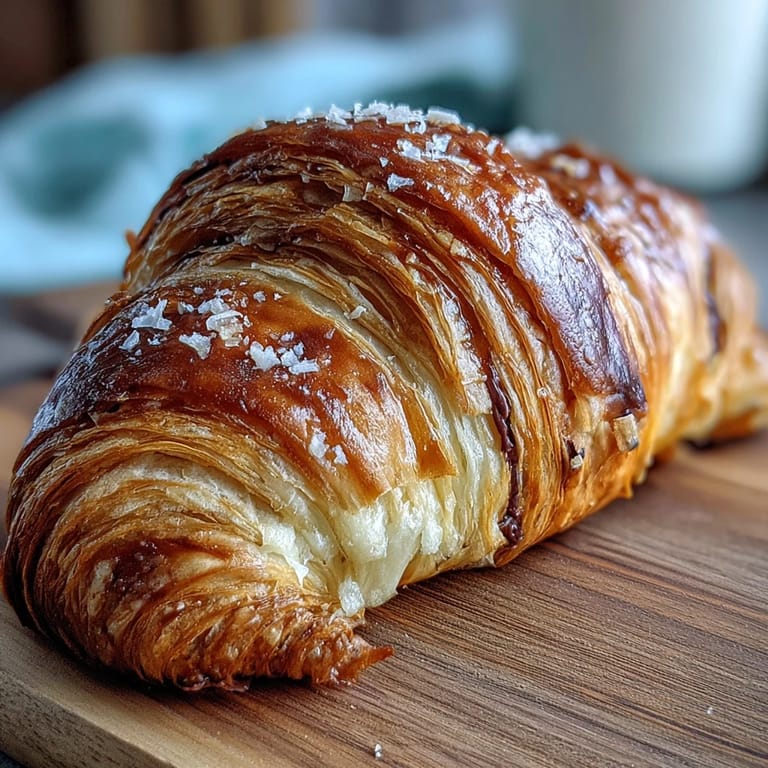
 There's a moment during the third fold when your forearms are dusted with flour, the kitchen smells like butter and fermented dough, and you realize you're doing something that bakers have perfected over centuries. That's when these croissants stop being just a recipe and become an act of presence, a meditation on patience and layers, quite literally.
The Sourdough Advantage
Using sourdough starter instead of commercial yeast changes everything about these croissants. The wild fermentation develops complex flavor compounds that create a subtle tanginess—a background note that makes the chocolate taste richer and the butter taste more pronounced. I learned this by accident when I ran out of instant yeast and decided to use what I had on hand, and I've never gone back.
Chocolate Selection Matters More Than You Think
The quality and cocoa percentage of your chocolate determines whether these croissants taste elegant or one-dimensional. At 60%, the chocolate melts smoothly and balances sweetness with complexity; at 70%, it becomes a statement that stands beside the buttery, tangy layers rather than beneath them. I've made these with cheap chocolate chips and with single-origin 72% bars, and the difference in texture and flavor satisfaction is profound.
Storage, Reheating, and Why Fresh Is Still Best
These croissants are absolutely best the day they're baked while the exterior still snaps and the interior crumb is tender and warm. If you have leftovers—and you might want to make extra to ensure you do—wrap them loosely in parchment and store them in an airtight container for up to 2 days. Gently reheat in a 160°C oven for 8 to 10 minutes until the exterior recrisps and the chocolate softens again, but never use a microwave, which will turn the pastry into a sad, dense brick.
- Freezing is possible too: wrap cooled croissants individually in plastic wrap, then foil, and freeze for up to 1 month; thaw at room temperature for 2 hours before reheating.
- If you're making these for guests, bake them the morning of so they're still warm and luminous when served.
- Leftover chocolate batons and dough scraps can be baked separately as small treats—they won't be perfect, but they're delicious practice for next time.
 Pin It
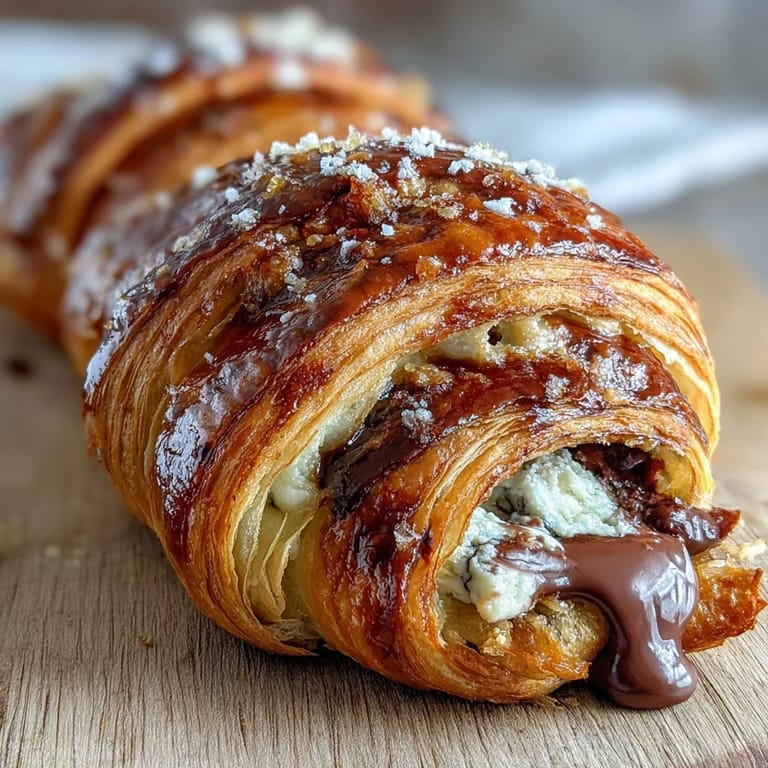
 Making sourdough croissants teaches you that good things require time, attention, and a willingness to trust the process. Every time you pull a golden batch from the oven and break into that flaky exterior to find melting dark chocolate, you'll understand why this recipe is worth the effort.
Recipe Questions & Answers
- → How do you achieve the flaky texture in sourdough croissants?
Flakiness comes from laminating cold butter into the dough through repeated rolling and folding, creating distinct layers that puff up during baking.
- → What type of chocolate works best for the filling?
High-quality dark chocolate with at least 60% cocoa content melts well and balances the buttery dough with a rich, bittersweet flavor.
- → Why is it important to proof the dough multiple times?
Proofing allows the dough to develop flavor, texture, and rise properly, creating the tender crumb and airy layers typical of croissants.
- → Can I make these croissants without sourdough starter?
While sourdough adds unique tang and complexity, similar croissants can be made with commercial yeast though the flavor differs.
- → How should I store leftover croissants?
Store croissants in an airtight container at room temperature for up to one day, or reheat gently in the oven to restore crispness.