 Pin It
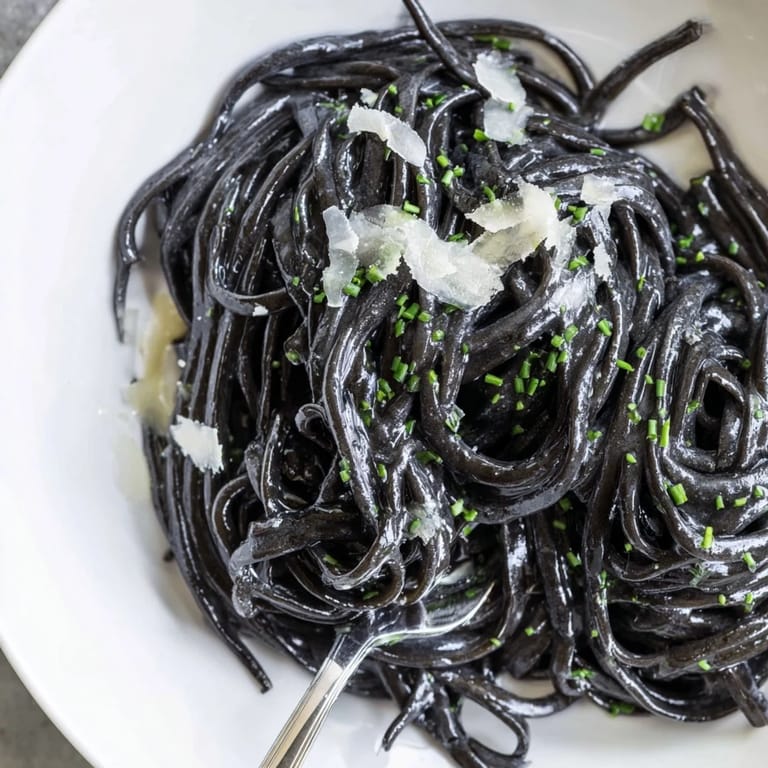
 I still remember the first time I served squid ink pasta at a dinner party - the gasps of surprise when I brought out those gleaming black strands nestled in cream sauce. My kitchen was fragrant with garlic and wine that evening, and the dramatic contrast of the ebony pasta against white plates created such a striking visual. The dish began as an experiment after finding squid ink pasta at a specialty Italian market, but has since become my signature when I want to impress without hours of complicated cooking.
Last winter, I prepared this for a small gathering with friends who had traveled from out of town. The kitchen was warm against the chill outside, steam rising from the pot as I stirred the inky black pasta. My friend Marco, whose Italian grandmother had apparently made something similar, watched over my shoulder with approving nods as I reduced the wine for the sauce. When everyone fell silent after the first bites, exchanging glances of surprise and pleasure, I knew the recipe was a keeper.
Ingredients
- Squid Ink Pasta: The star of the show with its dramatic black color and subtle briny flavor that gives the dish its distinctive character.
- Shallots and Garlic: These aromatics create the foundation of flavor, mellowing into sweet notes as they cook in butter.
- Dry White Wine: Choose something you would actually drink, as the flavor concentrates during cooking and becomes part of the sauce identity.
- Heavy Cream: This transforms into a silky sauce that clings perfectly to the pasta, creating a luxurious mouthfeel with each bite.
- Parmigiano-Reggiano: Always grate it fresh right before serving for that distinctive nutty finish that elevates the entire dish.
Tired of Takeout? 🥡
Get 10 meals you can make faster than delivery arrives. Seriously.
One email. No spam. Unsubscribe anytime.
Instructions
- Pasta Perfect:
- Bring a large pot of water to a rolling boil and add a generous pinch of salt before adding your squid ink pasta. The water should taste like the sea, which complements the briny notes in the pasta.
- Build Your Flavor Base:
- While the pasta cooks, melt butter in your skillet until it starts to foam, then add those finely chopped shallots. Watch them transform from sharp to sweet as they become translucent.
- Aromatic Addition:
- Add the minced garlic just until you can smell its heavenly aroma wafting up from the pan. Your kitchen will fill with that unmistakable fragrance that signals good things are coming.
- Wine Reduction:
- Pour in the white wine and listen for that satisfying sizzle as it hits the hot pan. Let it bubble away, reducing slightly while the alcohol evaporates and leaves behind concentrated flavor.
- Creamy Transformation:
- Reduce the heat before adding your heavy cream and lemon zest to prevent curdling. Watch as the sauce thickens just enough to coat the back of a spoon, signaling it's ready.
- Unify The Elements:
- Toss your drained pasta directly into the sauce, using tongs to coat every strand. If needed, add splashes of the starchy pasta water to create that restaurant-quality silky finish.
- Final Flourish:
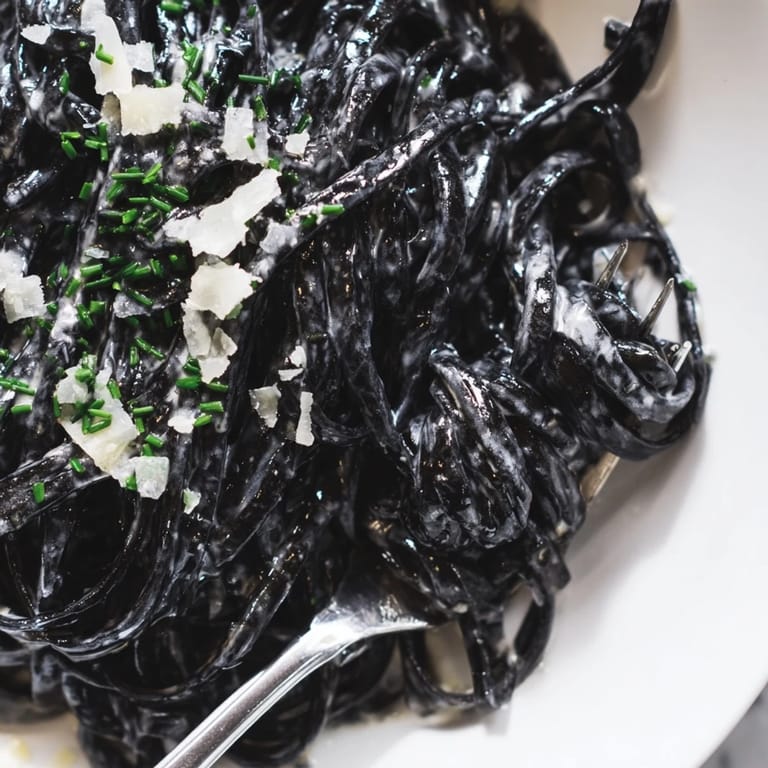
- Remove from heat and serve immediately on warmed plates. The contrast of black pasta against the cream sauce with the bright green chives on top creates a visual masterpiece.
 Pin It
 This pasta became more than just dinner the night my partner received a promotion at work. I surprised him with this dramatic dish, candlelight reflecting off the glossy strands, a bottle of Pinot Grigio chilling beside our plates. We talked late into the evening, twirling forkfuls of the midnight-colored pasta, the creamy sauce providing comfort and luxury all at once. Now, whenever there's something worth celebrating, he gives me that knowing look and asks if we might have that special black pasta.
Selecting Your Ingredients
The quality of your ingredients makes all the difference with a dish this simple. I learned this lesson when I once used an inexpensive cooking wine instead of a proper drinking wine and the sauce tasted noticeably flat. For the heavy cream, look for one without additives or stabilizers, as it will create a more natural texture in your sauce. Fresh pasta works wonderfully if available, but high-quality dried squid ink pasta produces equally impressive results with a slightly firmer bite that stands up beautifully to the cream sauce.
Perfect Pairings
This dramatic pasta calls for equally thoughtful accompaniments. A crisp, mineral-forward white wine like Pinot Grigio or Vermentino creates a palate-cleansing contrast to the rich cream sauce. I once served this with a simple side of roasted asparagus drizzled with lemon, and the bright green spears against the black pasta created a stunning visual harmony. For a complete meal that maintains the elegant feel, start with a light seafood appetizer like seared scallops or a simple fennel salad dressed with lemon and good olive oil.
Make It Your Own
While the basic recipe creates a stunning dish on its own, Ive experimented with countless variations over the years. One winter evening when the pantry was sparse, I added saffron to the cream sauce, creating a golden pool around the black pasta that was visually striking and added a wonderful aromatic dimension. Another time, seeking to add texture, I topped each serving with toasted breadcrumbs mixed with lemon zest and the contrast was divine.
- For a more substantial meal, gently fold in seared scallops or sautéed shrimp just before serving, being careful not to break them up in the sauce.
- A handful of fresh spring peas adds sweet pops of color and flavor that brighten the entire dish, especially welcome in warmer months.
- For an extra layer of indulgence, stir in a spoonful of mascarpone cheese at the very end for an even silkier sauce that coats each strand of pasta.
 Pin It
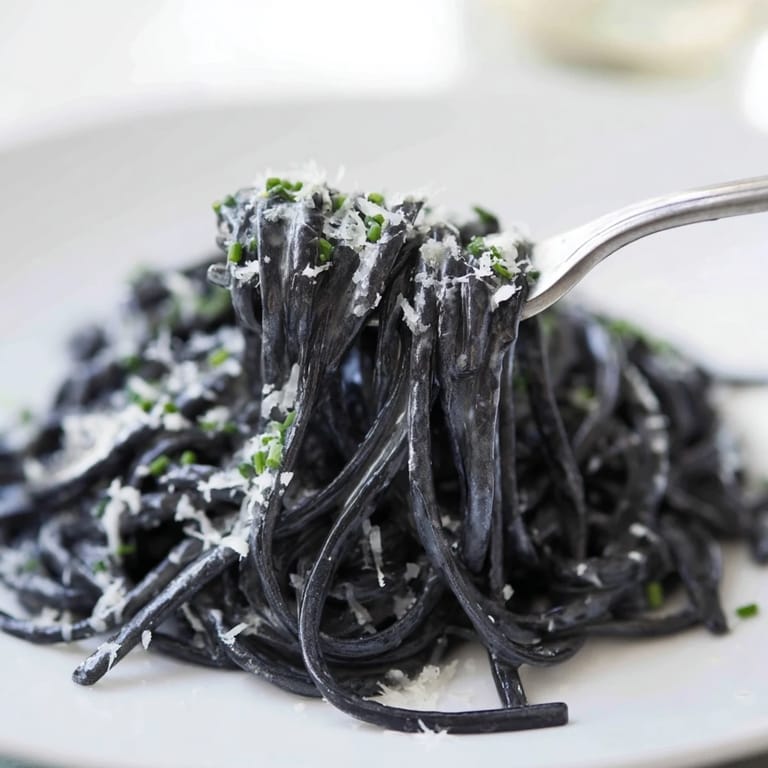
 Whenever I serve this dramatic squid ink pasta, I'm reminded that cooking is as much about creating moments as it is about flavors. This dish, with its striking appearance and silky texture, has a way of turning an ordinary evening into something memorable.
Recipe Questions & Answers
- → Can I use fresh squid ink pasta instead of dried?
Yes, absolutely. Fresh squid ink pasta will cook much faster—typically 2–4 minutes instead of the 8–12 minutes for dried pasta. Check the package instructions and start testing for doneness earlier. The cooking time will be shorter, but the overall technique remains the same.
- → What if I don't have dry white wine?
You can substitute with a splash of lemon juice or a bit of chicken broth for acidity and depth. The wine adds a subtle sophistication, but it's not essential. Alternatively, use a crisp white vermouth or even skip it entirely if needed, though the flavor profile will be slightly different.
- → How do I prevent the cream sauce from breaking?
Keep the heat low after adding the cream and avoid boiling vigorously. Stir gently and continuously to maintain an even temperature. If the sauce begins to look grainy or separates, lower the heat further and whisk in a tablespoon of cold water or pasta water to restore its silky texture.
- → Can I make this dish ahead of time?
The sauce can be prepared up to 2 hours in advance and reheated gently over low heat before tossing with the pasta. Cook the pasta fresh just before serving to ensure it maintains its al dente texture. Avoid refrigerating the finished dish, as the sauce may thicken too much.
- → What wines pair well with this dish?
A crisp Italian white wine like Pinot Grigio, Vermentino, or Gavi works beautifully with the rich cream and delicate seafood flavors. The acidity in these wines cuts through the richness and complements the lemon zest. Avoid heavy or oaked white wines that might overpower the dish.
- → How can I add more protein to this meal?
Sautéed shrimp or calamari can be stirred into the cream sauce just before tossing with the pasta. Cook them separately in butter until just opaque, then add them to the sauce. This transforms the dish into a heartier pasta with seafood while maintaining the elegant presentation.