 Pin It
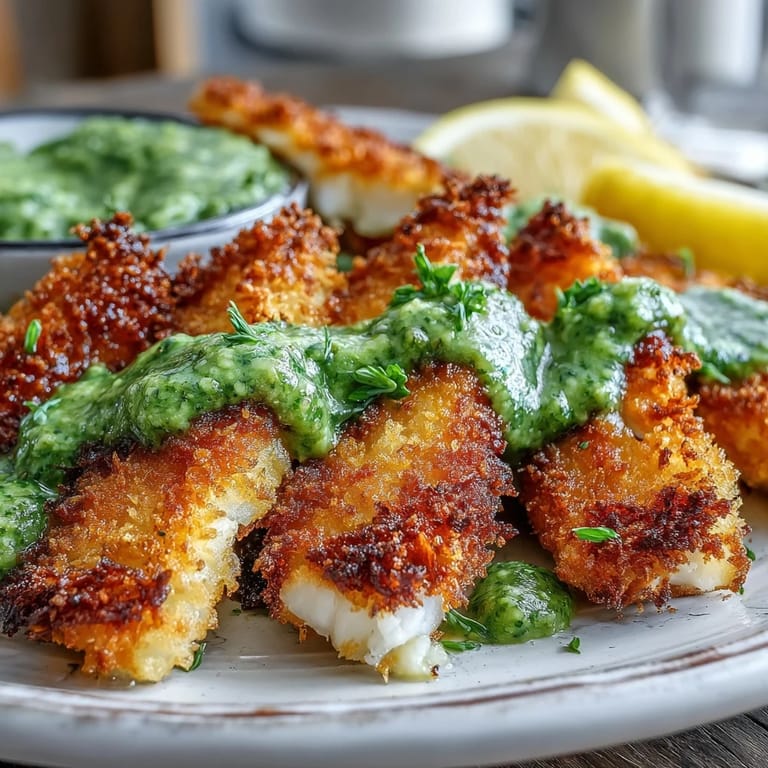
 My neighbor knocked on the door one Thursday evening holding a bag of frozen peas and asking if I had any ideas beyond mushy side dish territory. I'd just bought beautiful haddock fillets that afternoon, and somewhere between her skeptical look and my overconfident promise, these goujons were born. The Parmesan crust idea came from a half-empty wedge in my fridge that needed using, and honestly, I wasn't sure it would work. Twenty minutes later, we were standing at my kitchen counter dipping golden, crackling fish strips into the brightest green pesto either of us had ever made, laughing at how something so simple could taste this grown-up.
I've made these for my kids' friends who claimed they hated fish, and watched them go back for thirds. There's something about the word goujon that makes it sound fancier than fish finger, even though that's essentially what this is. One dad asked for the recipe, admitting he'd only ever served frozen ones from a box. I told him the truth: this version takes barely longer, tastes infinitely better, and the pea pesto makes everyone feel like you've been holding out on a secret.
Ingredients
- Skinless haddock fillets: Haddock has a mild sweetness and firm flake that holds up beautifully to coating and baking, though cod or pollock work just as well if that's what your fishmonger has fresh.
- Plain flour: The first dredge creates a dry surface that helps the egg stick, so don't skip this step even though it seems fussy.
- Large eggs: Beaten eggs act as the glue between flour and breadcrumb layers, and two eggs give you enough coverage without waste.
- Panko breadcrumbs: These Japanese-style crumbs stay crispier than regular breadcrumbs because of their larger, airier structure, which is exactly what you want here.
- Parmesan cheese (finely grated): The salty, nutty punch of Parmesan mixed into the crust is what makes these taste expensive, so use the real stuff if you can.
- Black pepper, sea salt, smoked paprika: Simple seasoning with an optional smoky note that adds a whisper of complexity without overpowering the fish.
- Frozen peas: Frozen peas are sweeter than fresh because they're picked and frozen at peak ripeness, and they make this pesto silky without being heavy.
- Fresh basil leaves: Basil brings that classic pesto brightness, and it plays surprisingly well with the peas' natural sweetness.
- Parmesan for pesto: A little more Parmesan in the pesto ties the whole dish together and adds body to the sauce.
- Garlic clove: Just one small clove gives background warmth without turning the pesto harsh or overwhelming.
- Pine nuts: They lend a buttery richness and slight resinous note, though sunflower seeds work brilliantly if you need a nut-free option.
- Extra-virgin olive oil: Good olive oil makes the pesto glossy and luxurious, so use something you'd happily dip bread into.
- Lemon juice: Half a lemon's juice brightens the pesto and cuts through the richness of the Parmesan and oil.
Tired of Takeout? 🥡
Get 10 meals you can make faster than delivery arrives. Seriously.
One email. No spam. Unsubscribe anytime.
Instructions
- Prep your oven and tray:
- Preheat the oven to 200°C (180°C fan) and line a baking sheet with parchment paper so the goujons don't stick and cleanup stays easy. Getting this done first means you're ready to bake as soon as the fish is coated.
- Set up your coating station:
- Arrange three shallow bowls in a row: flour in the first, beaten eggs in the second, and a mixture of panko, grated Parmesan, pepper, salt, and smoked paprika in the third. This assembly line setup keeps your hands from getting too messy and makes the process quick.
- Coat the haddock strips:
- Take each haddock strip and dredge it in flour, shaking off the excess, then dip it into the beaten egg, letting any extra drip off, and finally press it into the Parmesan-panko mixture until fully coated. Lay each coated goujon on the prepared baking sheet, leaving a little space between them so they crisp evenly.
- Bake until golden:
- Lightly spray or drizzle the goujons with olive oil, then bake for 15 to 20 minutes, turning them halfway through so both sides get that beautiful golden crunch. They're done when the crust is deeply golden and the fish flakes easily with a fork.
- Make the pea pesto:
- While the fish bakes, blanch the peas in boiling water for 2 minutes, then drain and run them under cold water to stop the cooking and keep that vibrant green color. Throw the peas, basil, Parmesan, garlic, pine nuts, olive oil, and lemon juice into a food processor and blitz until mostly smooth but still with a bit of texture, then season with salt and pepper to taste.
- Serve hot:
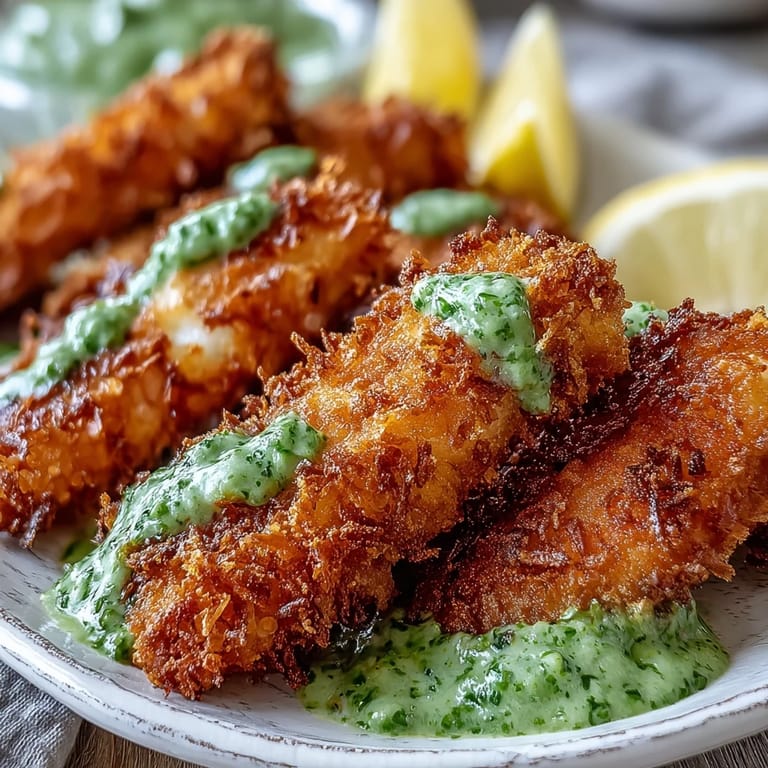
- Plate the hot goujons with a generous spoonful of pea pesto on the side, a few lemon wedges for squeezing, and a handful of salad leaves if you want something fresh and crisp alongside.
 Pin It
 The first time I served these at a dinner party, someone asked if I'd trained in a restaurant kitchen. I laughed and told them I'd just learned to trust good ingredients and not overthink things. That night, we ran out of pesto before we ran out of goujons, and I took it as the highest compliment. There's something special about a dish that tastes this thoughtful but doesn't demand perfection, and that's exactly why it's become one of my go-to recipes when I want to impress without the stress.
Choosing Your Fish
Haddock is my first choice because it has a slightly sweeter flavor and firmer texture than cod, but honestly, any sustainable white fish works here. Pollock is more affordable and just as delicious, while cod is classic and widely available. The key is making sure the fillets are skinless and relatively thick so you can cut them into strips that hold together during coating and baking. If your fishmonger has fresh fish that day, grab it, ask them to remove the skin if needed, and you're already halfway to success.
Making It Ahead
You can coat the goujons up to 4 hours in advance and keep them covered in the fridge until you're ready to bake. The pesto also keeps well for a couple of days in an airtight container in the fridge, though you'll want to press a piece of plastic wrap directly onto the surface to prevent browning. I've even frozen leftover pesto in ice cube trays and popped a cube or two into pasta or stirred through roasted vegetables on nights when I needed a quick flavor boost. Just remember to bring everything to room temperature or add a few extra minutes to the baking time if the fish is cold from the fridge.
Serving Suggestions
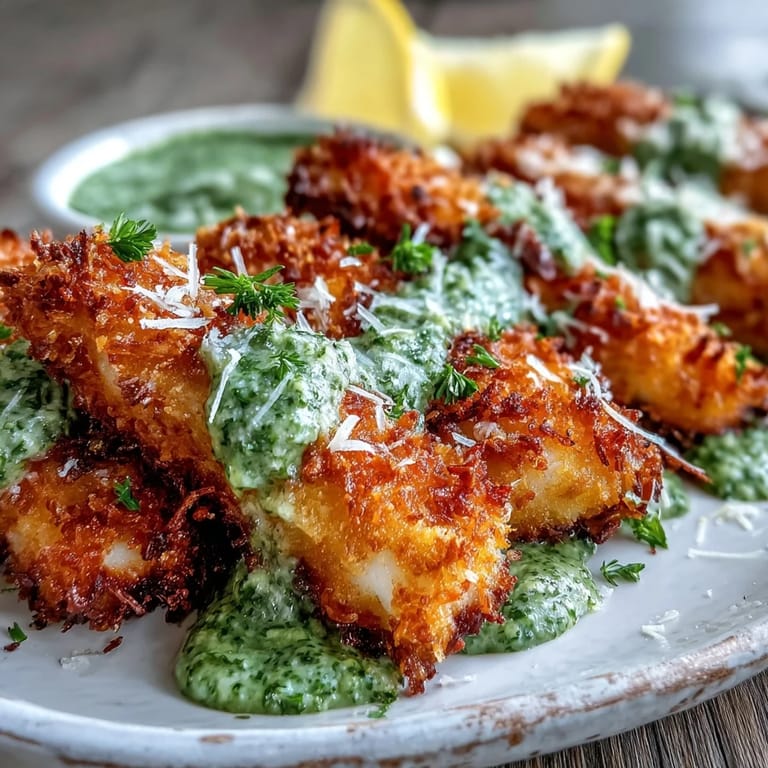
These goujons are sturdy enough to be the star of the plate but also play well with others. I've served them with roasted new potatoes and a simple green salad for a relaxed Sunday lunch, or alongside thick-cut chips and a handful of watercress for a slightly more indulgent take. The pea pesto doubles as a dip, a pasta sauce, or even a spread on crusty bread before the meal starts. If you're feeding kids, they'll dip these into ketchup without complaint, but adults seem to love the pesto so much they forget to ask for anything else.
- Pair with crispy roasted potatoes or oven chips for a British-style fish and chips vibe.
- Serve over a bed of mixed greens dressed lightly with lemon and olive oil for a lighter, fresher meal.
- Offer extra lemon wedges and a small bowl of the pesto so everyone can adjust to their own taste.
 Pin It
 This dish has become my answer to the question of what to make when I want something comforting but not boring, impressive but not stressful. I hope it finds a spot in your rotation too, because every time I make it, someone asks for the recipe, and that's the kind of meal worth sharing.
Recipe Questions & Answers
- → Can I use a different white fish instead of haddock?
Yes, cod or pollock work beautifully as substitutes. Choose firm white fish that holds its shape when cut into strips and won't break apart during coating and baking.
- → How do I make the goujons extra crispy?
Ensure the panko-Parmesan coating is pressed firmly onto each strip, and lightly spray with olive oil before baking. Turning them halfway through cooking promotes even browning and maximum crispiness.
- → Can I make the pea pesto in advance?
Absolutely. Prepare the pesto up to 2 days ahead and store in an airtight container in the refrigerator. Drizzle a thin layer of olive oil on top to prevent discoloration and stir before serving.
- → What can I use instead of pine nuts for the pesto?
Toasted sunflower seeds make an excellent nut-free alternative with similar texture and richness. Walnuts or cashews also work well if tree nut allergies aren't a concern.
- → Can I fry the goujons instead of baking them?
Yes, shallow fry in vegetable oil over medium-high heat for 3-4 minutes per side until golden. This creates an even crispier crust, though baking is a lighter, healthier option.
- → How do I prevent the coating from falling off?
Pat the haddock strips completely dry before coating. The three-stage breading process—flour, egg, then Parmesan-panko—creates layers that adhere properly. Let coated strips rest for 5 minutes before baking.