 Pin It
 The first time I truly understood the magic of shakshuka was standing in a cramped Tel Aviv kitchen on a Saturday morning, watching my friend Raz crack eggs into a bubbling tomato sauce with the ease of someone who'd done it a thousand times. She didn't measure the spices, didn't fuss over the timing—she just knew. That casual confidence stuck with me, and now whenever I make this dish, I feel like I'm channeling that same unhurried grace, even if I'm consulting my notes halfway through.
I made this for my sister during her unexpected visit last spring, and she sat at my kitchen counter describing her stressful week while the pan did most of the work. By the time the eggs were set and the cilantro scattered across the top, her shoulders had relaxed. She tore into the pita, yolk running down her chin, and said nothing for a solid minute—which meant everything.
Ingredients
- Olive oil: Use good quality here because it's one of the few flavors you'll really taste; it should smell fruity and rich, not harsh.
- Yellow onion: The foundation that sweetens as it cooks, giving the whole sauce depth you won't quite identify but will definitely miss if it's gone.
- Red bell pepper: Both for its gentle sweetness and because the color matters—this should look like sunset in a pan.
- Garlic: Mince it fine so it dissolves into the sauce rather than sitting as chewy chunks.
- Red chili: Optional but recommended; even a small amount adds a whisper of heat that makes everything taste more alive.
- Crushed tomatoes: Canned is perfect here, honestly fresher than most fresh tomatoes in winter, and the acidity balances the richness of the egg yolks.
- Fresh tomatoes: When they're good, they're essential; when they're not, the canned ones carry the dish beautifully.
- Tomato paste: A small spoonful that concentrates the tomato flavor and thickens the sauce just enough.
- Ground cumin: Warm and slightly smoky, the signature spice that whispers Middle East.
- Sweet paprika: The one that makes everything look amber and appetizing, with gentle pepper flavor but no real heat.
- Cayenne pepper: Just a pinch if you're cautious, more if you like feeling your food wake you up.
- Ground coriander: Subtle and almost floral, the spice people often forget they tasted and loved.
- Salt and black pepper: Taste as you go because the tomatoes and spices keep evolving.
- Large eggs: Room temperature if you remember, straight from the fridge if you don't—both work, one just cooks slightly more evenly.
- Fresh parsley and cilantro: The bright final note that cuts through the richness and makes your kitchen smell like a market in Jerusalem.
- Feta cheese: Crumbled on top just before serving, salty and creamy against the spiced eggs and soft bread.
Tired of Takeout? 🥡
Get 10 meals you can make faster than delivery arrives. Seriously.
One email. No spam. Unsubscribe anytime.
Instructions
- Build the base:
- Warm olive oil in your largest skillet over medium heat until it shimmers and smells fragrant. Toss in the chopped onion and diced pepper, letting them soften and turn golden, about five to seven minutes—you're not rushing this, you're coaxing out their sweetness.
- Add the aromatics:
- Stir in the minced garlic and chopped chili, cooking just long enough to wake them up, maybe a minute. The kitchen should suddenly smell incredible, like something from a dream you had about traveling.
- Create the sauce:
- Pour in both the crushed and fresh tomatoes along with the tomato paste, stirring everything together until the pan looks like a beautiful red canvas. Sprinkle in your cumin, paprika, cayenne if you're feeling brave, coriander, and a good pinch each of salt and pepper.
- Let it mellow:
- Lower the heat slightly and let the sauce bubble gently for ten to twelve minutes, stirring now and then, until it thickens and deepens in color. You'll notice it stops looking watery and starts looking like something you'd want to pour over bread.
- Make the egg wells:
- Using the back of a spoon, create four little indentations in the sauce, spaced out so the eggs have room to set without touching. These little nests are where the magic happens.
- Crack the eggs:
- Gently crack each egg directly into a well, letting the yolk settle into the center. Don't worry if they're not perfect—a slightly broken yolk will still be delicious, just faster to set.
- Cover and cook:
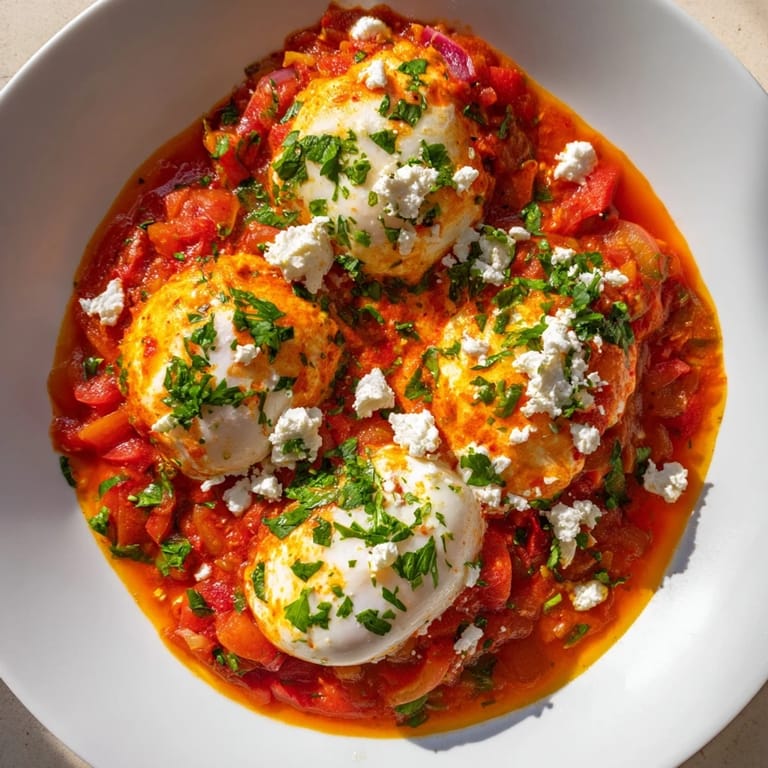
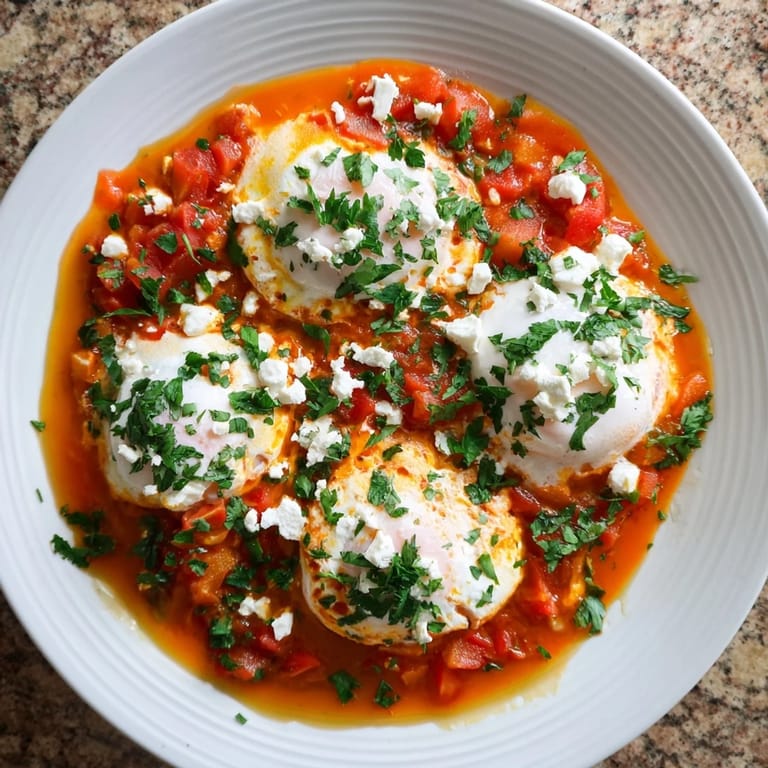
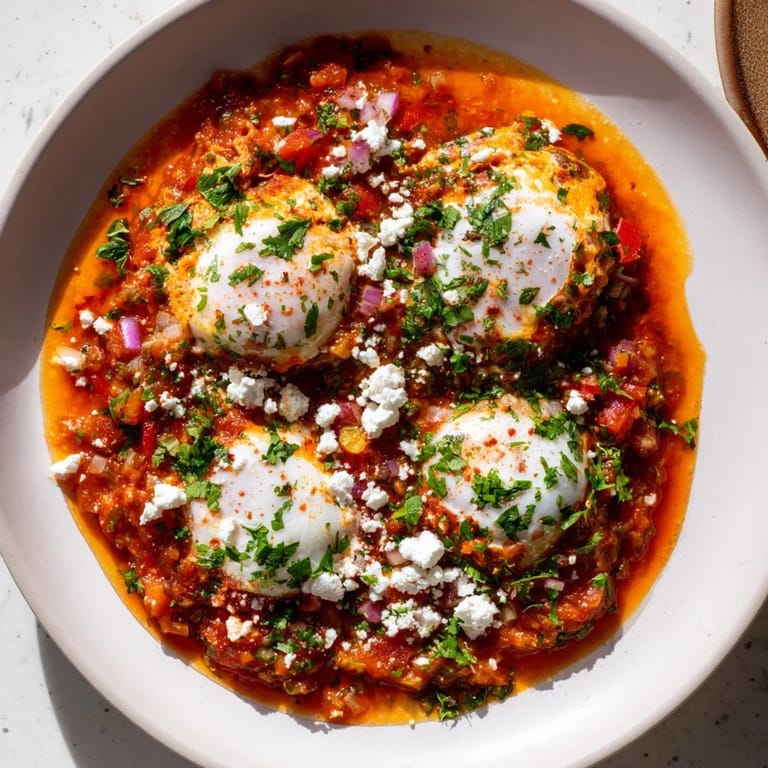
- Place the lid on the pan and reduce heat to medium-low, cooking for six to eight minutes until the whites turn opaque but the yolks still jiggle slightly when you gently shake the pan. This is the moment that separates runny disappointment from perfect shakshuka.
- Finish and serve:
- Remove from heat and scatter the fresh parsley and cilantro across the top, adding crumbled feta if you have it. Serve immediately while the eggs are still warm and the sauce still steams, ideally with warm pita or crusty bread for scooping.
 Pin It
 My neighbor once asked me why I always made extra sauce, and I realized it's because watching someone tear into bread and soak up every last drop of that tomato and egg richness feels like the whole point. It's not fancy food pretending to be humble—it's humble food that tastes like celebration.
The Art of the Sauce
The sauce is where all the real cooking happens, and it's forgiving enough to teach you things. If your tomatoes are acidic, the spices warm and balance them. If your onions aren't quite caramelized, the paprika adds depth anyway. Taste it at the ten-minute mark and decide if it needs more salt, more spice, more time—this is when your palate and the recipe find common ground.
Variations That Work
I've added sautéed spinach when I wanted something more substantial, stirred in roasted eggplant when I was trying to use what was in my fridge, even added a handful of chickpeas once and discovered it was somehow better that way. The beauty of shakshuka is that it's more of a philosophy than a rigid formula—as long as you have a good sauce and eggs to poach into it, you're cooking the right thing. The sauce is flexible, eager to adopt whatever vegetables you've got on your counter or whatever mood you're cooking in.
Serving and Storage
Serve this hot, the moment it comes off the heat, in the same pan it cooked in if you want to feel like you're sharing something honest and direct. Leftover sauce keeps for three days in the fridge and tastes even better on the second day, though the eggs won't, so reheat the sauce gently and poach fresh eggs into it if you have them.
- Serve with warm pita, crusty bread, or even rice if that's what you have.
- A dollop of cool Greek yogurt or labneh on the side cools the spice and adds creamy richness.
- Make this for breakfast, lunch, or a casual dinner—it belongs at any table.
 Pin It
 This dish teaches you that the best food doesn't need to be complicated, just made with attention and shared with someone you're glad to see. Every time I make shakshuka, I'm grateful for that morning in Tel Aviv and every meal that's followed.
Recipe Questions & Answers
- → What vegetables are used in the sauce?
Onions, red bell peppers, garlic, crushed tomatoes, and fresh tomatoes create the base of the sauce.
- → How do I achieve the perfect egg texture?
Cook eggs covered for 6–8 minutes until the whites are set but yolks remain soft and slightly runny.
- → Can I adjust the spice level?
Yes, adding or reducing chili and cayenne pepper adjusts the heat to your preference.
- → What garnishes enhance the flavors?
Fresh parsley, cilantro, and optional crumbled feta add brightness and a savory depth.
- → What sides complement this dish?
Warm pita or crusty bread, along with labneh or Greek yogurt, balance the spiced sauce beautifully.
- → Can I add other vegetables?
Sautéed spinach or eggplant can be added for extra texture and flavor variations.