 Pin It
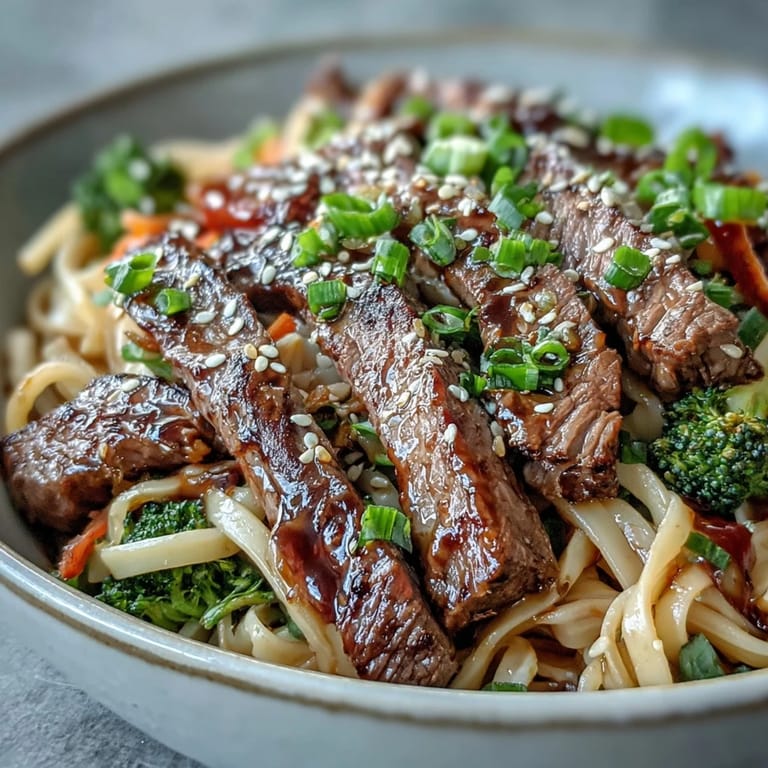
 My neighbor once handed me a grocery bag of wilted vegetables and a half-frozen flank steak with a shrug that said, "Do something with this." I had rice noodles in the pantry and a jar of ginger that hadn't been opened in months. What started as a refrigerator rescue turned into a glossy, umami-rich tangle of noodles and beef that we ate straight from the skillet. That night taught me you don't need a recipe book to make something memorable, just a hot pan and a willingness to taste as you go.
I made this on a Tuesday when my sister called to say she was stopping by in twenty minutes. The kitchen smelled like garlic and sesame by the time she walked in, and she stood at the counter with chopsticks before I even set the table. We talked about nothing important while the noodles disappeared, and she texted me the next morning asking what I'd put in the sauce. Sometimes the best meals are the ones you throw together without thinking too hard.
Ingredients
- Rice noodles: Use the flat, wide kind if you can find them, they hold onto the sauce better than thin vermicelli and give each bite more presence.
- Flank steak: Slice it thin against the grain or it turns chewy, and partially freezing the meat for fifteen minutes makes cutting easier.
- Broccoli florets: Small florets cook faster and catch bits of garlic in their crevices, which is exactly what you want.
- Bell pepper: Red or yellow peppers add a slight sweetness that balances the salty soy sauce without overpowering anything.
- Carrot: Julienned carrots soften just enough to stay crisp, and their color makes the whole dish look more alive.
- Green onions: Save these for the end, their sharpness cuts through the richness and adds a fresh finish.
- Garlic: Mince it fine so it melts into the oil and coats everything without burning in the high heat.
- Ginger: Fresh grated ginger has a brightness that powdered versions can't match, and it wakes up the whole skillet.
- Soy sauce: This is your salt and your umami, so use a brand you actually like tasting.
- Brown sugar: It caramelizes slightly in the pan and tempers the soy sauce, creating a glaze instead of just a salty puddle.
- Sesame oil: A little goes a long way, it adds a nutty depth that makes everything smell like a restaurant kitchen.
- Vegetable oil: You need something neutral with a high smoke point for searing the beef without any burnt flavors.
- Sesame seeds: They add a quiet crunch and a toasted flavor that ties the whole bowl together.
Tired of Takeout? 🥡
Get 10 meals you can make faster than delivery arrives. Seriously.
One email. No spam. Unsubscribe anytime.
Instructions
- Cook the noodles:
- Boil the rice noodles according to the package directions, then drain and rinse them under cold water to stop the cooking. This keeps them from turning gummy when you toss them in the skillet later.
- Sear the beef:
- Heat vegetable oil in a large skillet or wok over medium high heat until it shimmers, then add the sliced flank steak in a single layer. Let it sear undisturbed for about two minutes before flipping so you get a nice browning, then remove it and set it aside.
- Bloom the aromatics:
- In the same skillet, toss in the minced garlic and grated ginger, stirring constantly for about thirty seconds. You'll know it's ready when the smell fills your kitchen and the garlic just starts to turn golden.
- Stir fry the vegetables:
- Add the broccoli, bell pepper, and julienned carrot to the skillet and stir fry for about five minutes, tossing frequently. The vegetables should soften but still have a crisp bite, and the edges of the broccoli might pick up a little char.
- Mix the sauce:
- While the vegetables cook, whisk together the soy sauce, brown sugar, and sesame oil in a small bowl until the sugar dissolves completely. Taste it if you want to adjust the sweetness or saltiness before it hits the pan.
- Bring it all together:
- Return the beef to the skillet and pour the sauce over everything, stirring to coat the meat and vegetables evenly. The sauce will bubble and thicken slightly as it heats, clinging to every surface.
- Toss in the noodles:
- Add the cooked rice noodles to the skillet and gently toss everything together using tongs or a spatula, making sure the noodles are evenly coated and warmed through. This takes about two minutes, and the noodles will soak up the sauce and turn glossy.
- Garnish and serve:
- Transfer everything to a serving bowl or individual plates, then sprinkle with chopped green onions and sesame seeds. Serve it hot, straight from the skillet if you want that just cooked warmth.
 Pin It
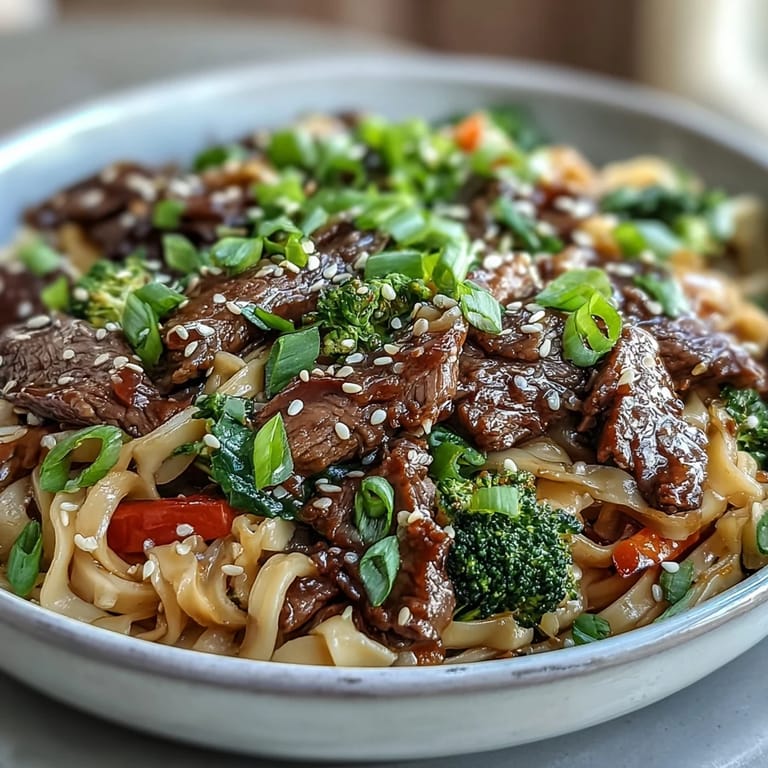
 My cousin brought her kids over one weekend, and the youngest one refused to eat anything green until I handed her a bowl of this with the broccoli buried under noodles. She picked around it at first, then tentatively tried a floret coated in sauce and asked for seconds. Her mom looked at me like I'd performed a minor miracle, but really it was just proof that a good glaze can make anyone curious.
Customizing Your Bowl
This recipe is forgiving enough to handle whatever vegetables you have on hand. I've tossed in snap peas, zucchini ribbons, and even thinly sliced cabbage with great results. If you want heat, stir a spoonful of gochujang or sriracha into the sauce before you pour it over the beef. The sweet brown sugar balances the spice beautifully, and the whole dish takes on a deeper, more complex flavor that lingers on your tongue.
Storing and Reheating
Leftovers keep in an airtight container in the fridge for up to three days, and they actually taste better the next day after the noodles have soaked up more of the sauce. Reheat gently in a skillet with a splash of water to loosen everything up, or microwave in short bursts, stirring in between. The noodles might soften a bit more, but the flavors will be just as bold and the beef will still be tender.
Swapping the Protein
If you don't have flank steak, chicken thighs or firm tofu work just as well. Slice the chicken thin and cook it the same way you would the beef, and press the tofu to remove excess moisture before cubing and searing it until golden. I've even made this with leftover rotisserie chicken, shredding it and tossing it in at the end just to warm through.
- Chicken thighs stay juicier than breasts and pick up the sauce beautifully.
- Extra firm tofu gets crispy edges if you give it enough time in the hot oil.
- Shrimp cooks in minutes and adds a sweet, briny contrast to the savory glaze.
 Pin It
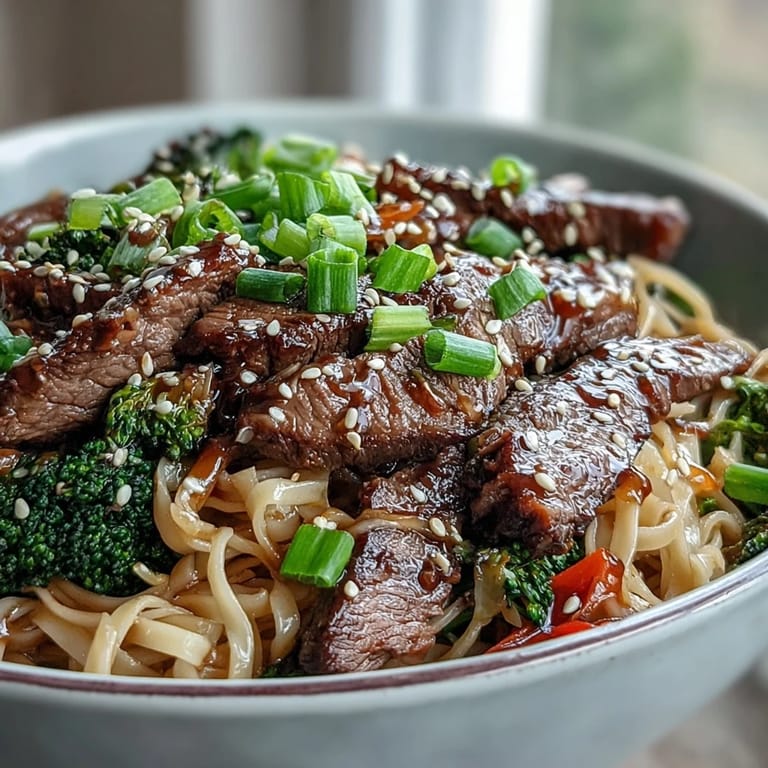
 This dish has become my go to whenever I need something fast, satisfying, and impressive enough to serve to guests without breaking a sweat. It reminds me that the best cooking happens when you trust your instincts and let the ingredients speak for themselves.
Recipe Questions & Answers
- → Can I use a different cut of beef?
Yes, sirloin or ribeye work well. Slice thinly against the grain for tenderness. Chicken or tofu are also excellent alternatives.
- → What type of noodles should I use?
Rice noodles are traditional, but you can substitute with udon, soba, or even regular spaghetti if needed.
- → How can I make this spicier?
Add gochujang or sriracha to the sauce, or sprinkle red pepper flakes while stir-frying for extra heat.
- → Can I prep ingredients ahead of time?
Absolutely. Slice the beef and vegetables, and mix the sauce up to 24 hours in advance. Store separately in the refrigerator.
- → How do I store leftovers?
Keep in an airtight container in the refrigerator for up to 3 days. Reheat gently in a skillet or microwave with a splash of water.
- → Is this dish gluten-free?
It can be. Use tamari or gluten-free soy sauce and ensure your rice noodles are certified gluten-free.