 Pin It
 I discovered this salad on a sweltering afternoon when my kitchen felt too hot for anything cooked. A friend had brought a jar of natural peanut butter to a potluck, and I suddenly remembered how those nutty noodles could carry so much flavor without any heaviness. The first time I tossed everything together, the kitchen filled with the smell of ginger and sesame, and I knew I'd found something that would become a regular rotation. Now it's my go-to when I need something that feels both nourishing and exciting.
I made this for a group of friends who were skeptical about vegan food, and watching them ask for seconds told me everything I needed to know. One person said the dressing reminded them of their favorite Thai takeout spot, except it felt fresher and less heavy. That moment shifted how I thought about plant-based cooking—it's not about replacing anything, it's about standing proudly on its own.
Ingredients
- Soba noodles: These buckwheat noodles have a subtle, earthy flavor that pairs beautifully with bold dressings; look for 100% buckwheat if you want truly gluten-free.
- Red and green cabbage: The color contrast is beautiful, and each adds different notes—red cabbage is sweeter while green brings a peppery bite.
- Carrot and bell pepper: These provide natural sweetness and crunch that balances the spicy dressing perfectly.
- Scallions and cilantro: Fresh herbs are what make this taste alive; don't skip them or use dried substitutes.
- Natural peanut butter: Use the kind with just peanuts and maybe salt—the added oils in conventional brands can make the dressing greasy.
- Soy sauce or tamari: This adds umami depth that ties all the flavors together; tamari works seamlessly if you need gluten-free.
- Rice vinegar: The acidity brightens everything without overpowering the peanut flavor.
- Maple syrup: A touch of sweetness cuts through the heat and balances the savory elements.
- Toasted sesame oil: Use the dark variety for maximum flavor; a little goes a long way because it's potent.
- Sriracha: Start with 1 teaspoon and taste as you go—different brands vary wildly in heat level.
- Garlic and ginger: These warm spices give the dressing its soul; fresh is non-negotiable here.
Tired of Takeout? 🥡
Get 10 meals you can make faster than delivery arrives. Seriously.
One email. No spam. Unsubscribe anytime.
Instructions
- Bring water to a boil and cook the noodles:
- Follow the package timing—usually just 4 or 5 minutes—because soba noodles go from perfectly al dente to mushy faster than you'd expect. Drain them into a colander and run cold water over them, stirring gently, until they stop steaming and feel cool to the touch.
- Build your slaw in a large bowl:
- Slice the cabbage as thin as you can manage without a mandoline—the thinner it is, the more it softens slightly from the dressing without losing its snap. Toss in the carrots, bell pepper, scallions, and cilantro, and set it aside while you tackle the dressing.
- Whisk together the dressing components:
- Start with the peanut butter, soy sauce, vinegar, maple syrup, and sesame oil in a medium bowl, and whisk until you have a thick paste. Add the sriracha, garlic, and ginger, then slowly drizzle in warm water one tablespoon at a time, whisking constantly, until the dressing reaches a pourable consistency that's still glossy and cling to the back of a spoon.
- Combine everything and coat thoroughly:
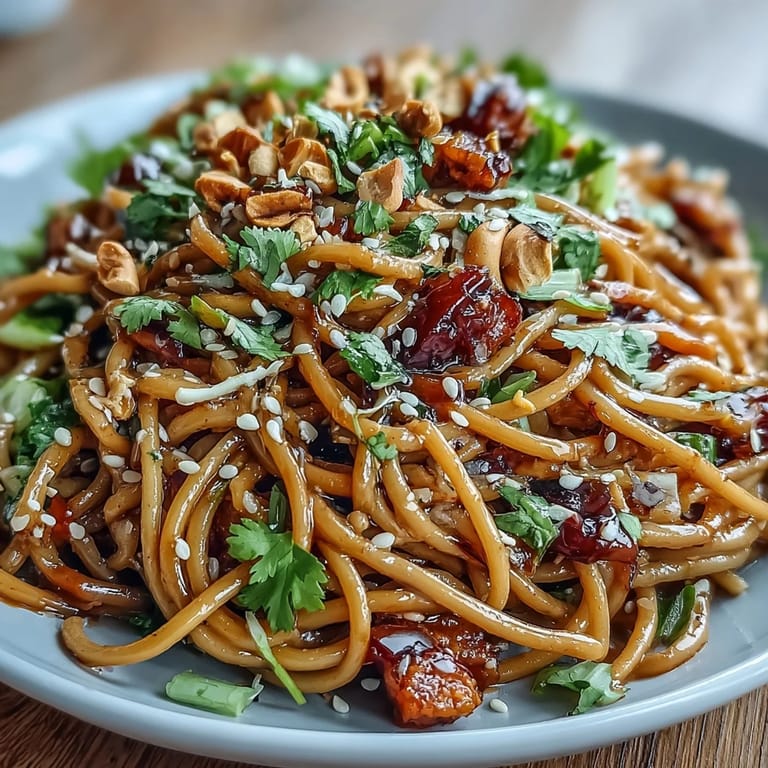
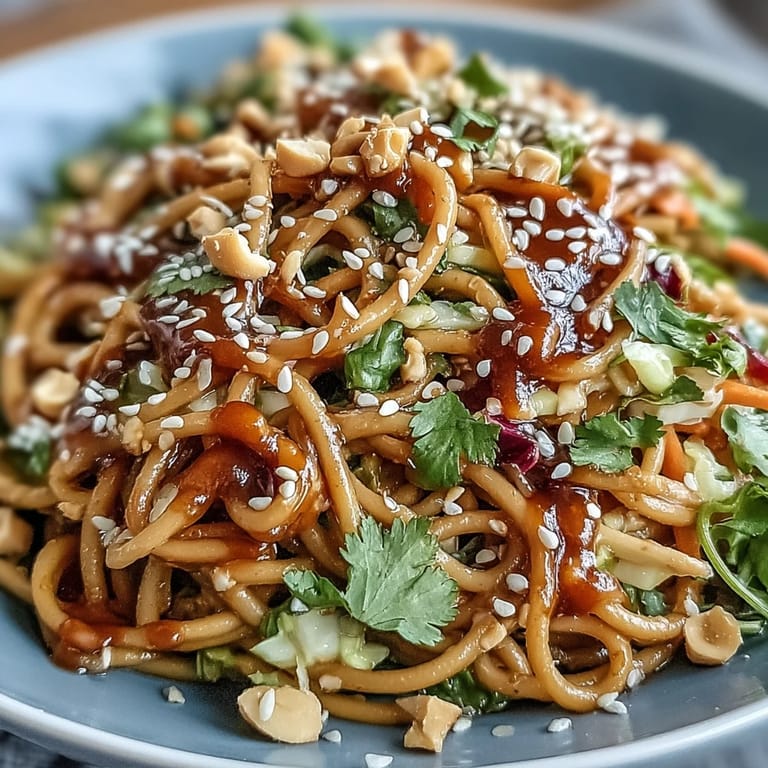
- Add the cooled noodles to the slaw bowl and pour the dressing over top, then toss with your hands or two spoons until every strand is coated and every vegetable shimmers with dressing. This is where the magic happens—the heat from the noodles slightly softens the cabbage while keeping its crunch.
- Plate and garnish with intention:
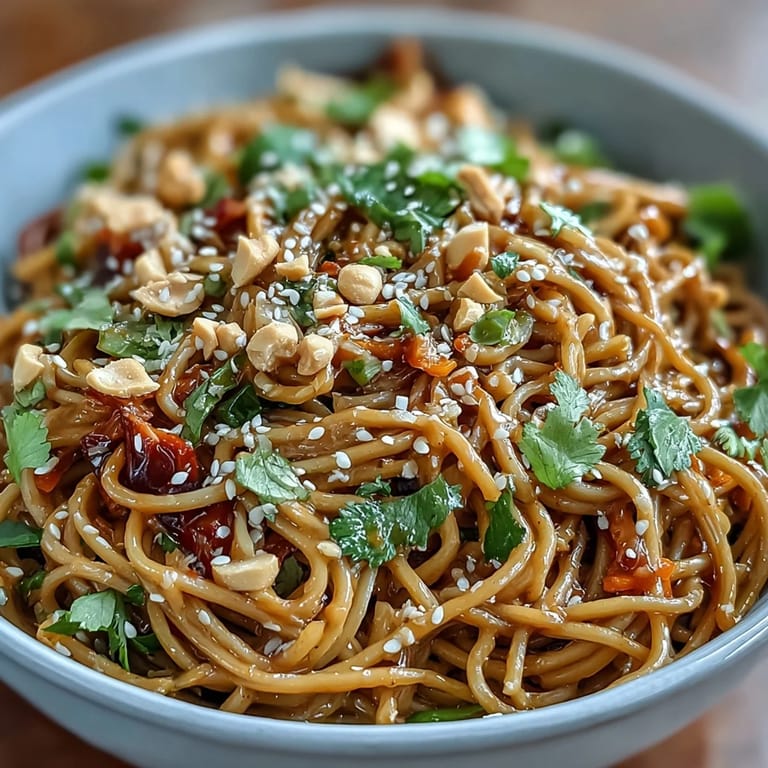
- Divide among bowls and scatter peanuts and sesame seeds over each serving while the dressing is still glistening. A squeeze of fresh lime just before eating brightens everything up and adds a final layer of complexity.
 Pin It
 There's something about serving this salad that makes people slow down and actually taste their food instead of rushing through it. The combination of textures and temperatures—hot undertones from the sriracha, cool noodles, crispy vegetables—creates this conversation between your taste buds that feels special.
The Secret to a Perfect Dressing
The dressing is where this salad earns its reputation, and it's worth paying attention to the order of operations. Whisking the peanut butter with liquid ingredients first prevents lumps and creates an emulsion that clings beautifully to the noodles rather than pooling at the bottom of the bowl. I learned this the hard way after making a batch that separated and looked oily—now I understand that patience and technique matter as much as ingredients.
Why Cold Water Matters for Noodles
After cooking, those noodles are still cooking themselves with residual heat, and you have maybe two minutes to interrupt that process before they start sticking together. Running them under cold water isn't just about temperature—it stops the starch from breaking down further, which is what keeps them tender but separate. I used to skip this step thinking it was fussy, and every single time the noodles clumped into something closer to noodle porridge than a salad.
Making This Meal Your Own
The beautiful thing about this salad is how flexible it is once you understand the base formula. I've swapped in shredded daikon, added cucumber, thrown in fresh mint instead of just cilantro, and it always works because the dressing is bold enough to anchor everything. One evening I added some crispy baked tofu for protein and suddenly it felt like a complete meal that could stand on its own as dinner instead of a side.
- If you want extra protein, baked tofu or edamame both add substance without changing the flavor profile.
- The salad actually tastes better the next day as the flavors meld, though the slaw loses some crispness if it sits longer than 24 hours.
- Make the dressing a day ahead if you want to save time—it keeps in the fridge and actually develops deeper flavor overnight.
 Pin It
 This salad has become my answer to the question of what to eat when the weather is warm and your appetite wants something vibrant and alive. It reminds me that vegan cooking isn't about sacrifice—it's about abundance.
Recipe Questions & Answers
- → How do I cook soba noodles for best texture?
Boil noodles according to package instructions, then rinse under cold water to stop cooking and remove excess starch for a firm, non-sticky texture.
- → Can I adjust the spiciness level?
Yes, modify the amount of sriracha in the dressing to suit your preferred spice intensity, from mild to extra spicy.
- → What alternatives can I use for peanut butter?
You can try almond or cashew butter, but note that flavor and consistency may vary slightly from the original spicy dressing.
- → How can I make this dish gluten-free?
Use gluten-free soba noodles and tamari in place of soy sauce to ensure a gluten-free version.
- → What garnishes work best with this dish?
Roasted peanuts, sesame seeds, and fresh lime wedges add crunch, nuttiness, and a bright citrus note to finish.