 Pin It
 I stumbled upon these bowls on a Tuesday when my fridge felt emptier than my willpower, and I had half a roasted red pepper sitting in a container wondering about its purpose. Blending it into hummus felt like discovering a secret, and suddenly that ordinary lunch transformed into something I couldn't stop making. The first time I assembled one, I realized this wasn't just food—it was a canvas where every vegetable got to shine without apology. Now, whenever someone asks what I eat on busy weekdays, these bowls are the honest answer.
My roommate walked into the kitchen one afternoon while I was layering this bowl and asked if I was making "that fancy restaurant thing" at home. When she tasted it, she went quiet for a moment, then asked for the recipe. That's when I knew this wasn't just lunch anymore—it was something worth sharing.
Ingredients
- Canned chickpeas: Drain and rinse them well, this tiny step makes the hummus silky instead of gritty.
- Roasted red pepper: If roasting fresh feels ambitious, jarred is honestly just as good and saves you a step.
- Tahini: This is the secret that makes hummus taste like hummus, don't skip it or swap it for peanut butter.
- Fresh lemon juice: Bottled works, but fresh makes you taste the brightness immediately.
- Garlic: One small clove is enough, garlic hummus can overpower if you're heavy-handed.
- Extra virgin olive oil: Worth using the good stuff here since it's a star ingredient, not hiding in the background.
- Cumin and smoked paprika: These spices whisper warmth and depth without shouting, they're essential to the flavor profile.
- Quinoa: Cook it ahead if you can, it's forgiving and flexible as a base.
- Fresh vegetables: Cherry tomatoes, cucumber, cabbage, spinach, avocado, carrots, and olives—use what you have, skip what you don't.
- Pumpkin seeds: Toasted versions add a nutty crunch that changes everything.
Tired of Takeout? 🥡
Get 10 meals you can make faster than delivery arrives. Seriously.
One email. No spam. Unsubscribe anytime.
Instructions
- Blend the hummus magic:
- Combine chickpeas, roasted red pepper, tahini, lemon juice, minced garlic, olive oil, cumin, smoked paprika, and salt in your food processor. Pulse until the mixture starts coming together, then stream in cold water one tablespoon at a time while the blade keeps spinning until you reach that creamy, cloud-like texture.
- Cook your grains:
- If you haven't already, get your quinoa simmering so it's fluffy and ready by the time everything else is prepped. This is the foundation where all the colors and flavors rest.
- Prep the vegetables:
- Dice your cucumber into neat pieces, halve those cherry tomatoes, shred your cabbage into wispy threads, and slice your avocado right before assembly so it doesn't oxidize. Everything tastes better when it looks intentional, even if you're rushing.
- Assemble your bowl:
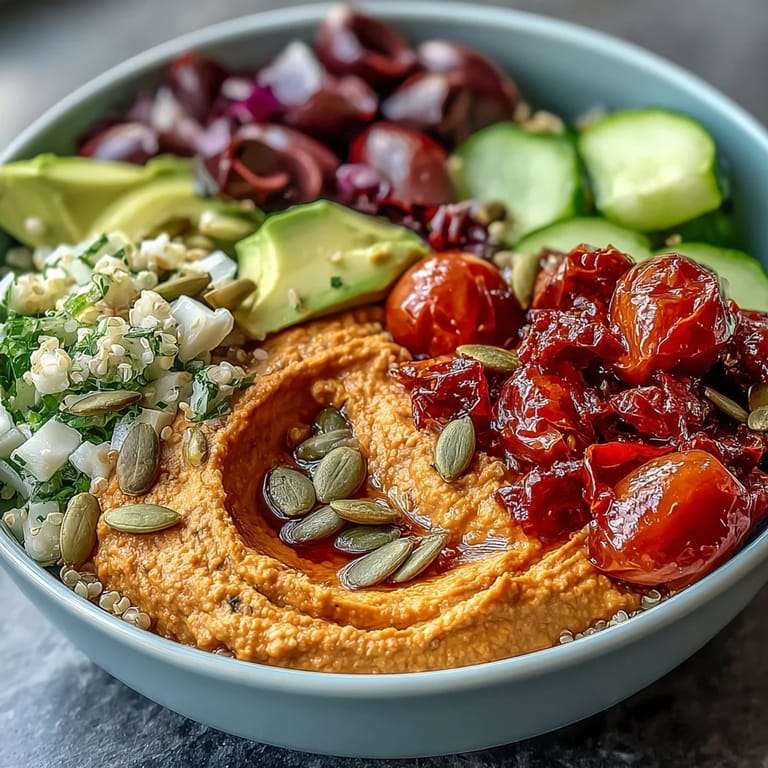
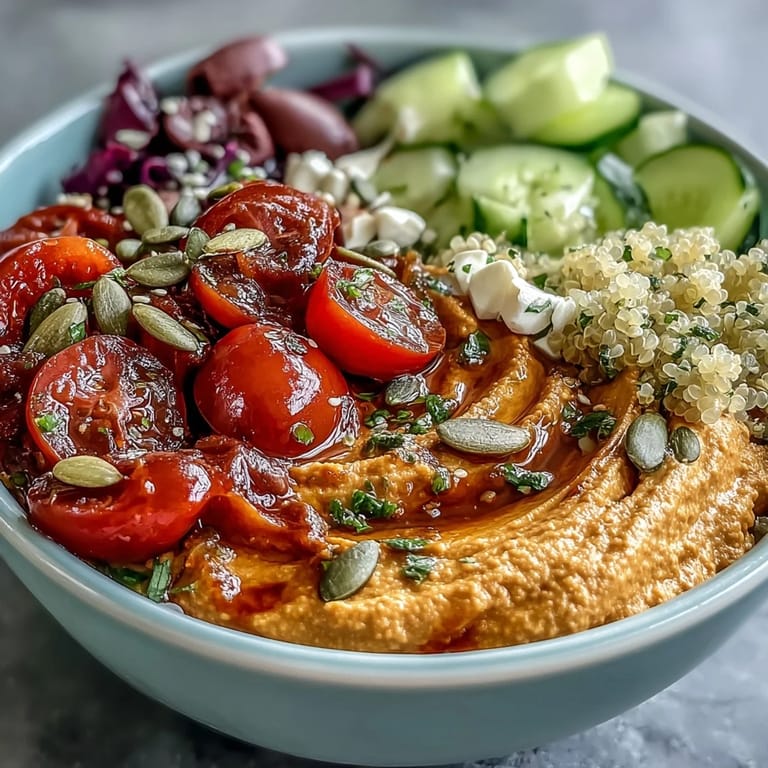
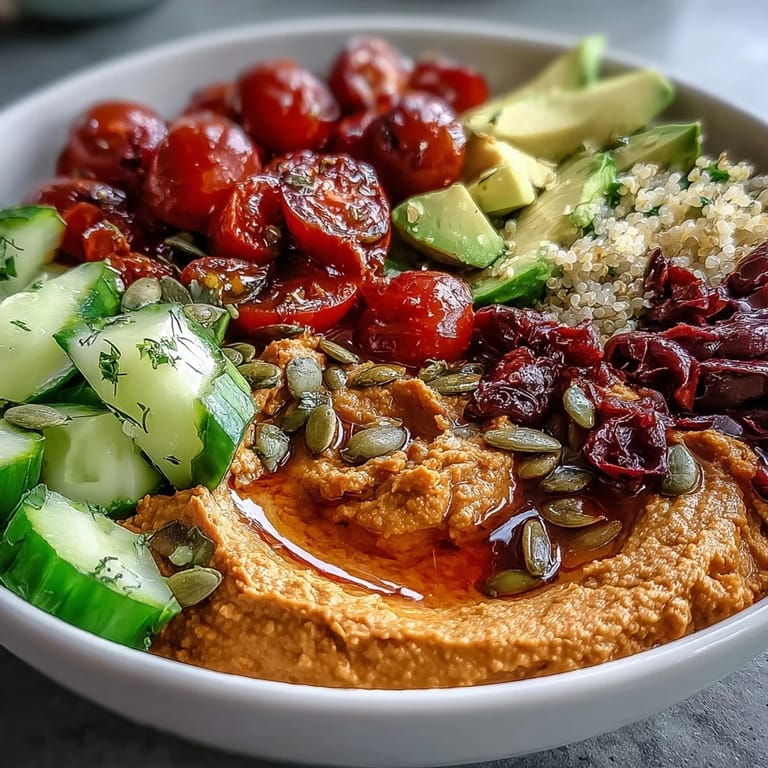
- Start with a bed of quinoa or your grain of choice, then arrange each vegetable like you're creating something beautiful, because you are. Dollop that roasted red pepper hummus right in the center where it becomes the heart of the bowl.
- Add your finishing touches:
- Scatter pumpkin seeds across the top for crunch, drizzle with a simple lemon-olive oil dressing if you want, then tear some fresh parsley or cilantro over everything. Serve right away so nothing gets soggy and everything stays vibrant.
 Pin It
 These bowls taught me something quiet but important: that plant-based eating doesn't mean sacrifice, it means abundance. Every time I sit down with one, I'm reminded that nourishing yourself can also feel like celebration.
Making the Hummus Ahead
The hummus actually tastes better the next day when the flavors have time to know each other. I keep it in a glass container, smooth surface covered with a thin layer of olive oil to keep it from drying out, and it stays fresh for about five days. This means you can make it on Sunday and have it waiting for quick weeknight bowls, which honestly changed my meal prep game entirely.
Grain Alternatives and Swaps
Quinoa is my default because it's fluffy and holds up well, but brown rice, millet, farro, or even wild rice work beautifully here. I've even used cooked lentils when I wanted extra protein, and they nestle into the bowl like they belong. The key is using something that won't get soggy and can stand up to the brightness of all those fresh vegetables and tangy hummus.
Customizing Your Bowl
The beauty of a Buddha bowl is that it's forgiving and personal, you build it around what's in your kitchen and what makes your taste buds happy. Some days I add roasted chickpeas for crunch and extra protein, other times I top mine with marinated tofu if I'm leaning into something richer. Keep a few principles in mind and let the rest be intuitive.
- Roast extra chickpeas with paprika and garlic powder for a protein-packed topping that stays crispy.
- Swap any vegetable that's past its prime with something fresh, the bowl adapts gracefully.
- A drizzle of tahini dressing mixed with lemon and garlic makes the whole thing taste even more connected.
 Pin It
 These bowls have become my quiet ritual, proof that a meal can be simple and still feel special. Every time you make one, you're choosing to feed yourself well.
Recipe Questions & Answers
- → How do I roast red peppers for the hummus?
Roast red bell peppers over an open flame or in an oven until the skin blisters and chars. Let them cool, then peel off the skin before chopping for the hummus.
- → Can I substitute quinoa with another grain?
Yes, feel free to use brown rice, millet, or any other cooked grain of your choice as the base for the bowl.
- → What gives the hummus its smoky flavor?
Smoked paprika adds a subtle smoky note that enhances the roasted red pepper and complements the tahini and spices.
- → Is the hummus suitable for a gluten-free diet?
Yes, the hummus and grains can be gluten-free if you use certified gluten-free grains like quinoa or millet.
- → How can I add more protein to this dish?
Adding roasted chickpeas or tofu on top can boost protein content while keeping the bowl plant-based and nutritious.
- → What fresh herbs work best for garnish?
Parsley or cilantro add a fresh aroma and bright flavor that complement the hummus and vegetable mix well.