 Pin It
 There's something about the smell of butter and onions hitting a hot pot that makes you pause and just breathe it in. One ordinary Tuesday evening, I was standing in my kitchen feeling uninspired about dinner when I remembered how my mom used to doctor up simple soups with whatever herbs she had on hand. That's when the ranch chicken soup idea struck me, not as nostalgia exactly, but as permission to make comfort food my own way. This creamy, herb-forward chowder came together almost by accident that night, and now it's become the soup I make when I want something that feels both effortless and intentional.
I made this soup for my sister when she was going through a rough week, and I watched her take that first spoonful and just exhale like the tension left her shoulders. She asked for the recipe before she even finished the bowl. That's when I knew this wasn't just another soup to rotate through—it was the kind of dish that shows up when someone needs both nourishment and a small gesture of care.
Ingredients
- Boneless, skinless chicken breasts (2 large, about 500 g): These cook gently in the broth and shred into tender pieces that melt into the soup without getting tough, which is the whole point of not rushing the simmer.
- Olive oil (1 tablespoon): Just enough to get a light golden sear on the chicken, which builds flavor without needing a heavy hand.
- Salt and black pepper: Season the chicken before searing so it tastes like something from the start, not an afterthought.
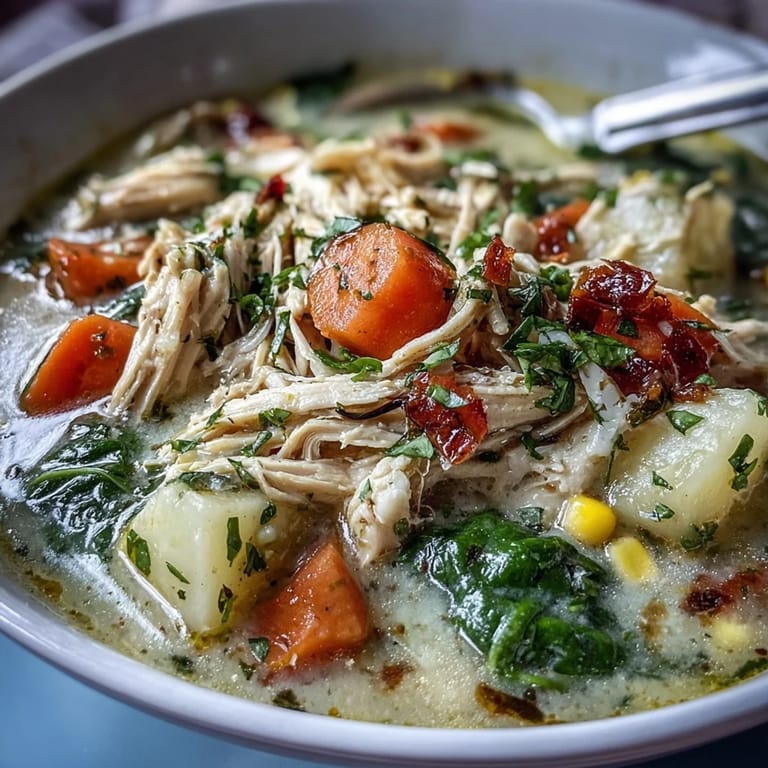
- Yellow onion, carrots, celery, and bell pepper: This is your aromatic base, and dicing them roughly the same size helps them cook evenly and gives the soup visual texture.
- Potatoes (2 medium): They thicken the soup naturally as they break down slightly and add that hearty, stick-to-your-ribs quality.
- Corn kernels (2 cups): Frozen works just as well as fresh here, and honestly, sometimes frozen corn is sweeter than what's sitting in the produce section.
- Baby spinach (3 cups): It wilts into almost nothing, which sounds like a loss until you realize it adds iron and earthiness without changing the soup's character.
- Garlic cloves (3, minced): Garlic cooked in butter becomes sweet and mellow, the opposite of harsh—this is where patience in cooking really shows.
- Low-sodium chicken broth (5 cups): Low-sodium matters because the ranch seasoning has salt built in, and you want control over the final flavor.
- Half-and-half or whole milk (1 cup): Half-and-half gives you creaminess without being heavy, though I've made this with whole milk on a budget and honestly couldn't tell the difference.
- Unsalted butter and all-purpose flour (2 tablespoons each): This roux is your secret—it thickens the soup to that perfect consistency and takes away any watery feeling.
- Dry ranch seasoning mix (2 tablespoons): This is the backbone of the whole thing, the flavor that makes people ask what you did differently, so don't skip it or reduce it.
- Dried thyme and smoked paprika: Thyme adds an herbal depth and paprika brings a whisper of smokiness that makes the soup taste like it's been simmering for hours.
- Fresh parsley and chives: These finish the bowl with brightness and a gentle onion note that reminds you this is a soup made with fresh ingredients, not just broth and cream.
Tired of Takeout? 🥡
Get 10 meals you can make faster than delivery arrives. Seriously.
One email. No spam. Unsubscribe anytime.
Instructions
- Sear the chicken gently:
- Heat oil in your pot until it shimmers, then lay the seasoned chicken breasts in carefully and don't move them around—let them develop that light golden color on each side for about three to four minutes. They won't be cooked through yet, and that's intentional; they'll finish cooking right in the broth where they stay tender.
- Build your flavor base:
- Melt butter into the same pot and add all your chopped vegetables at once, stirring them around until they start to soften and release their juices, which takes about five minutes. Once the garlic hits the butter, you'll smell something that makes you understand why people become obsessed with cooking.
- Make a proper roux:
- Sprinkle flour over the vegetables and stir it constantly for a minute or two to cook out that raw flour taste, which is the step most home cooks rush and then wonder why their soup tastes slightly off. The flour is coating everything in a light paste, and that paste is what will catch the broth and turn it creamy.
- Add the broth gradually:
- Pour the chicken broth in slowly while stirring so you don't end up with lumps floating around, then add the potatoes, corn, ranch seasoning, thyme, and paprika all at once. Return the chicken breasts to the pot, nestling them into the vegetables so they're mostly submerged.
- Simmer until everything is tender:
- Bring the soup to a gentle boil, then lower the heat, cover it, and let it bubble softly for eighteen to twenty minutes until the chicken is cooked through and the potatoes are fork-tender. You'll know it's ready when a knife slides through the potato with no resistance.
- Shred and finish:
- Remove the chicken breasts carefully, shred them with two forks on a cutting board, and return the shredded pieces to the pot where they'll get even more flavorful. Stir in the half-and-half and spinach, then simmer for just three to five more minutes until the spinach wilts and the soup becomes silky, being careful not to let it boil hard or the dairy will get grainy.
- Taste and adjust:
- This is the moment where you taste the soup and decide if it needs more salt, pepper, or even a whisper more ranch seasoning—trust yourself here because your palate knows what it wants.
 Pin It
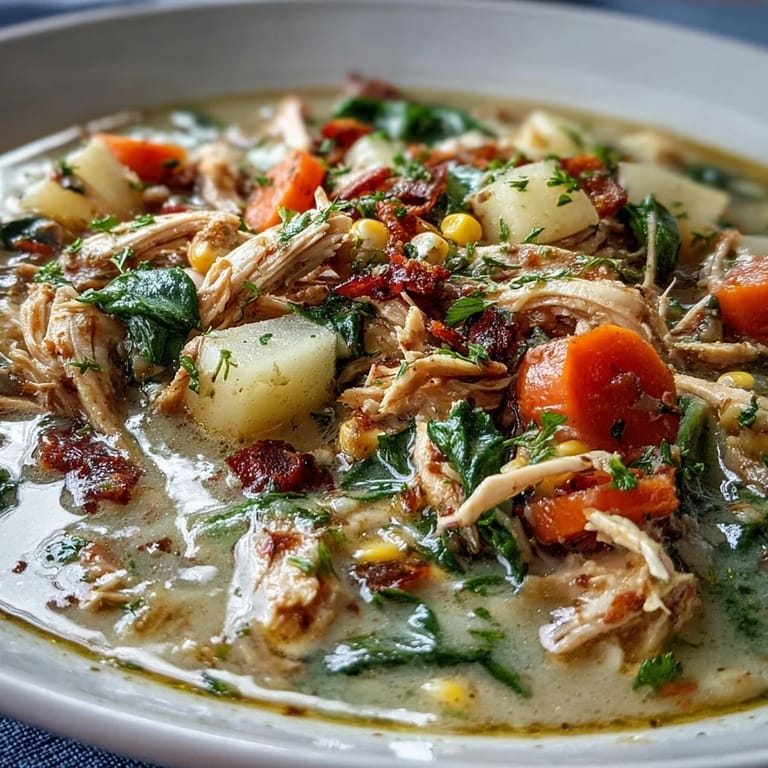
 There's a moment right after you ladle this soup into a bowl and the steam rises up, carrying that herb-forward smell, where you understand why people make soup from scratch. It stops being a recipe and becomes a reason to slow down.
The Alchemy of Ranch in Broth
When I first made this, I was skeptical that ranch seasoning could anchor an entire soup, but what I discovered is that ranch is really just dried herbs that people use to flavor everything else—buttermilk, sour cream, mayo—so putting it straight into broth means every element picks up that familiar, comforting flavor. It's like the soup tastes like something you've known forever, even though you made it thirty minutes ago. Once you understand that logic, you realize you can build entire dishes around powdered seasonings in ways that feel intentional, not lazy.
Making This Soup Yours
The beauty of this formula is that it absorbs additions without complaining—add zucchini or green beans if that's what's in your crisper drawer, swap the corn for peas, even use roasted chicken if you're starting with leftovers instead of raw breasts. I once added a handful of diced mushrooms because that's what I had, and it made the soup taste more substantial in a way that felt accidental and perfect. The ranch seasoning is strong enough that small substitutions and additions just become variations on the same theme, which is freeing if you're the kind of cook who gets tired of following recipes exactly.
Serving and Storage Wisdom
Serve this soup in wide, shallow bowls rather than mugs so you can see all the vegetables and shredded chicken, and always have crusty bread nearby because the soup deserves to be sopped up, not abandoned in the bowl. This soup keeps beautifully in the refrigerator for four days and actually tastes better the next day once all the flavors have settled into each other, though if you're freezing it, wait until you've added the spinach and dairy because they can get weird in the freezer.
- If the soup gets too thick after sitting, thin it with a splash of chicken broth or milk when you reheat it.
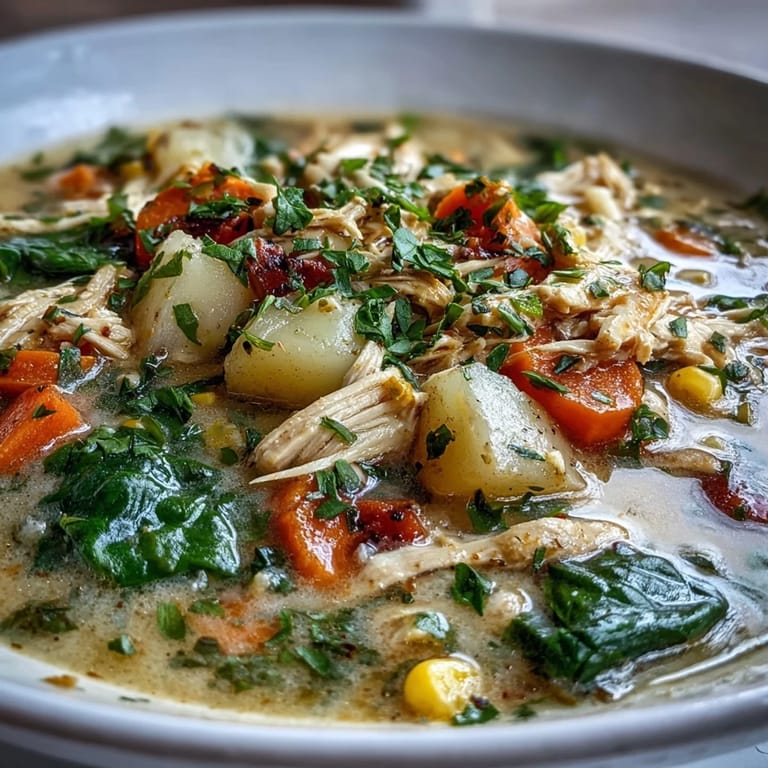
- Fresh herbs scattered on top right before serving make a bigger impact than you'd think—they give you one more reason to pause and notice what you're eating.
- This soup is naturally gluten-free if you use gluten-free flour and check your ranch seasoning label, which matters more than it used to.
 Pin It
 This soup has become the one I make when I want to prove to someone that home cooking doesn't require fancy techniques or hard-to-find ingredients—just butter, broth, and the willingness to let things simmer gently until they taste like care. That's all it ever was.
Recipe Questions & Answers
- → What kind of chicken works best?
Boneless, skinless chicken breasts are ideal for shredding and absorbing ranch flavors evenly.
- → Can I substitute dairy in this chowder?
Yes, you can use plant-based milk or cream alternatives for a different creamy texture.
- → How do I make homemade ranch seasoning?
Combine dried dill, parsley, garlic powder, onion powder, dried chives, salt, and black pepper for a simple mix.
- → Which vegetables can I add for extra flavor?
Zucchini, green beans, or extra potatoes complement the existing vegetable medley well.
- → How long should I simmer the chowder?
Simmer gently for 18-20 minutes so vegetables soften and chicken fully cooks before shredding.