 Pin It
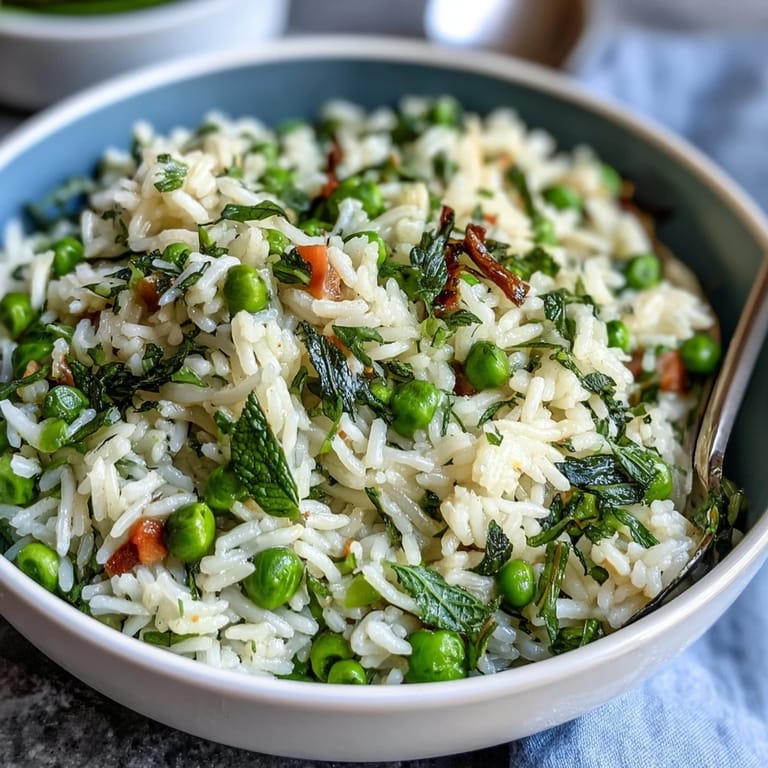
 My neighbor dropped off a bunch of fresh mint from her garden one April afternoon, and I found myself standing at the kitchen counter with far more leaves than any tea could handle. That's when I decided to throw together this spring pea and mint rice pilaf, and honestly, it became the side dish I reach for whenever I need something that tastes like the season itself. The combination of sweet peas, bright mint, and buttery rice is so simple it almost feels like cheating, but somehow it works every single time.
I made this for Easter dinner last year when my sister insisted on bringing the ham, and I volunteered sides. Watching everyone go back for seconds of the rice while barely touching the other vegetables was oddly satisfying, and my brother-in-law actually asked for the recipe, which almost never happens. That's when I knew I'd stumbled onto something worth keeping close.
Ingredients
- Long-grain white rice (basmati or jasmine): The long grains stay separate and fluffy rather than clumping together, and they actually absorb the broth flavor instead of becoming mushy.
- Low-sodium vegetable broth: This is your foundation, so using quality broth makes a noticeable difference, and the low-sodium version lets you control the salt level.
- Fresh or frozen spring peas: If you can find fresh peas at the farmers market, use them, but frozen ones are honestly just as good and skip the shelling step entirely.
- Yellow onion and garlic: These two aromatics are doing the heavy lifting flavor-wise, and mincing them finely means they distribute evenly throughout the rice.
- Unsalted butter: This lets you season to taste without worrying about hidden salt, and it creates that silky texture that makes the rice feel special.
- Fresh mint leaves: Add these after cooking so they don't lose their brightness and punch, which is the whole point of having them in there.
- Lemon zest: Just a teaspoon brings an almost magical brightness that ties everything together without making it taste sour.
- Salt and freshly ground black pepper: Taste as you go because every broth brand is different, and you want the seasoning to be just right for your palate.
Tired of Takeout? 🥡
Get 10 meals you can make faster than delivery arrives. Seriously.
One email. No spam. Unsubscribe anytime.
Instructions
- Rinse the rice properly:
- Run it under cold water while stirring gently with your fingers until the water comes out clear and not cloudy. This removes excess starch so your grains stay separate and light instead of sticky.
- Build your aromatics base:
- Melt the butter and cook the onion until it's soft and you can see through it, then add the garlic and listen for that sizzle. This whole step takes about three minutes and fills your kitchen with the smell of spring.
- Toast the rice briefly:
- Stir the rinsed rice into the butter and aromatics so every grain gets coated, and you'll hear a subtle toasting sound that means something good is about to happen. This step is small but crucial for texture.
- Add broth and bring to a boil:
- Pour in the vegetable broth, season with salt and pepper, and watch the liquid come to a rolling boil. Once it's bubbling, you know the rice is ready to absorb all that flavor.
- Simmer low and covered:
- Reduce the heat to low, cover the pot, and set a timer for 15 minutes without peeking. The steam does all the work here, and lifting the lid just releases that precious moisture.
- Add the peas in the final stretch:
- Stir in the peas (straight from the freezer if they're frozen, or raw if they're fresh) and cover again for 5 more minutes. The residual heat will warm them through perfectly without turning them to mush.
- Rest and fluff:
- Turn off the heat, keep the lid on for 5 minutes, then use a fork to gently separate the grains. This resting period lets everything settle into its final texture.
- Finish with fresh herbs and zest:
- Stir in the mint, parsley if using, and lemon zest right before serving so they taste bright and alive. Taste and adjust salt and pepper because this is your last chance to make it perfect.
 Pin It
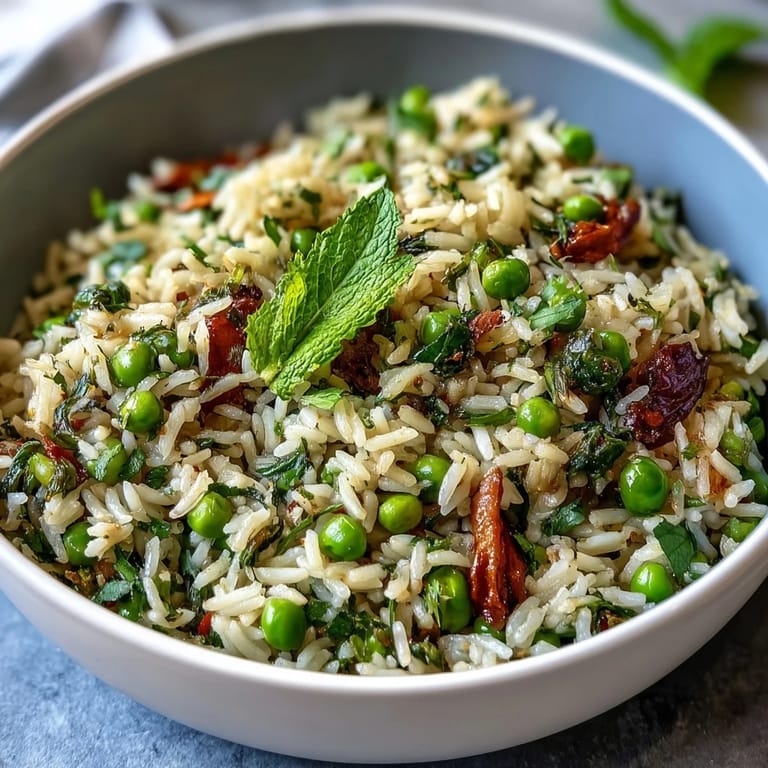
 There's something about serving this pilaf alongside a honey-glazed ham that made my dining table feel more intentional, like spring was actually welcome at dinner. My kids, who normally push vegetables to the side of their plates, started asking for more of the rice because of the mint, and suddenly vegetables didn't feel like the enemy anymore.
Why This Works as a Side Dish
This pilaf doesn't try to steal the show from your main protein, but it's confident enough to stand on its own if you want to make it the star. The combination of butter, peas, and fresh herbs is elegant without being fussy, and it pairs beautifully with everything from holiday ham to simple roasted chicken to grilled fish. It's light enough for spring and early summer, but substantial enough to feel satisfying.
Making It Ahead and Storing
You can absolutely make this pilaf a few hours in advance, and it reheats gently without losing its charm. Store it covered in the refrigerator, and when you're ready to serve, warm it gently in a saucepan over low heat with a splash of broth to restore any moisture that evaporated. The mint will lose some of its punch if you add it before storing, so always stir it in fresh right before serving.
Variations to Keep Things Interesting
Once you get comfortable with the basic recipe, it's easy to play around and make it your own. I've added chopped scallions instead of some of the mint for a milder onion note, swapped half the butter for good olive oil for a slightly different richness, and even thrown in a handful of toasted pine nuts for texture. The core technique stays the same, so you can experiment without worrying about messing it up.
- Try substituting half the vegetable broth with chicken broth for a deeper, more savory flavor profile.
- Stir in a handful of toasted pine nuts or sliced almonds after fluffing for added crunch and richness.
- Add a pinch of saffron to the broth before cooking if you want to make it feel more special and luxurious.
 Pin It
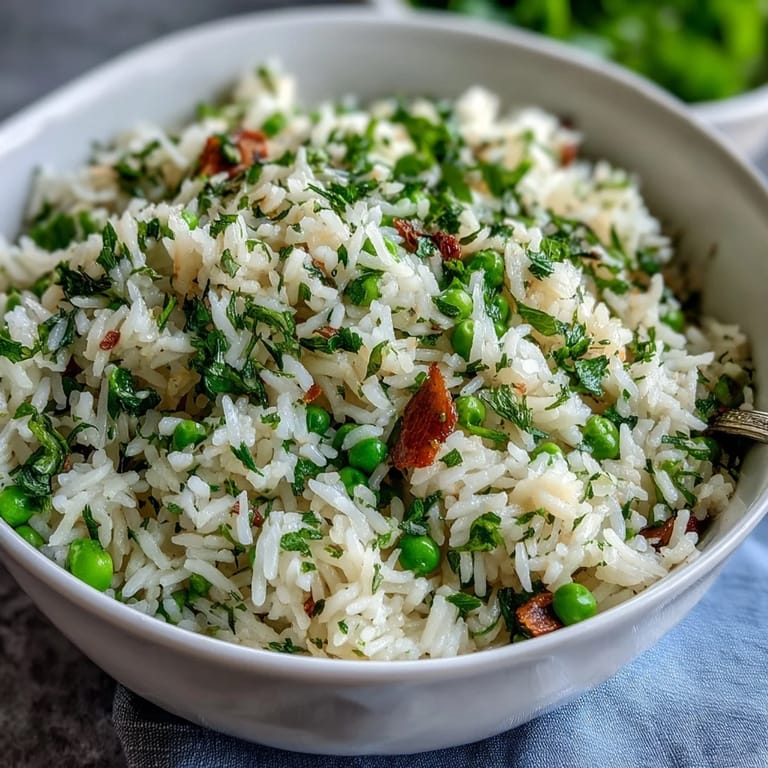
 This pilaf reminds me that the best side dishes are the ones that make people feel like you actually put thought into dinner. It's become my go-to proof that simple food, made with attention and fresh ingredients, is always worth the small effort it takes.
Recipe Questions & Answers
- → Can frozen peas be used instead of fresh?
Yes, frozen peas work well and can be added directly from the freezer during the final cooking stage without thawing.
- → How can I make this dish vegan?
Substitute the butter with plant-based butter or olive oil to keep the pilaf rich and flavorful while maintaining a vegan profile.
- → What type of rice is best for this pilaf?
Long-grain varieties like basmati or jasmine are ideal, as they remain fluffy and separate after cooking.
- → Is it necessary to rinse the rice before cooking?
Rinsing removes excess starch, resulting in fluffier, less sticky grains, which is preferred for this pilaf.
- → Can this dish be prepared ahead of time?
Yes, it can be made in advance and gently reheated with a splash of broth to retain moisture and flavor.
- → What herbs complement the flavors best?
Fresh mint is essential for its bright note, while optional flat-leaf parsley adds a subtle herbal depth. Lemon zest also enhances the aroma.