 Pin It
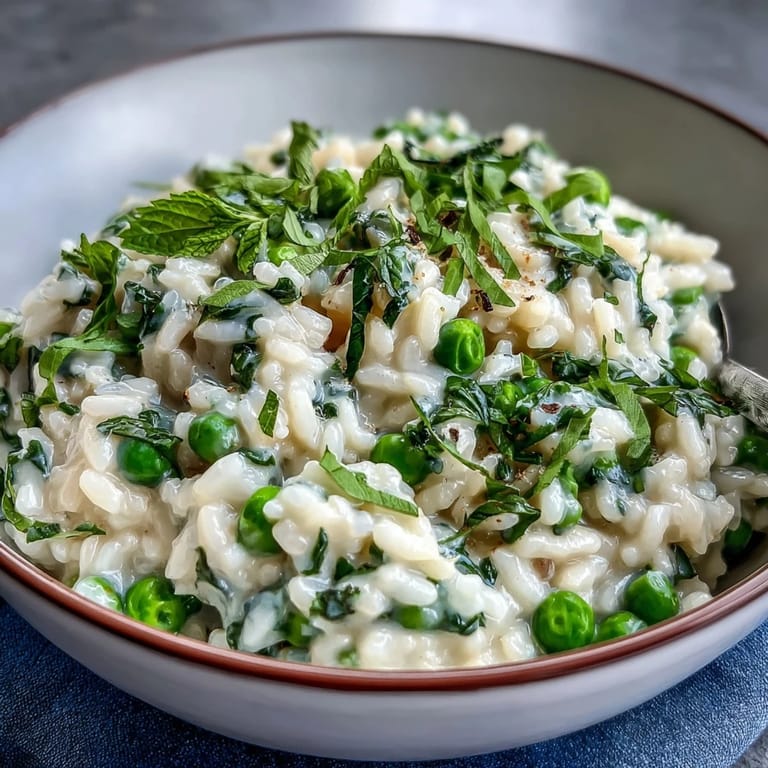
 Last spring, I found myself in the kitchen on an afternoon when the light turned everything golden, stirring a pot of risotto while my kitchen filled with the smell of mint and butter. There's something about that moment, right when the peas go in and turn impossibly bright against the creamy rice, that made me understand why people actually enjoy spending time at the stove. This dish became my answer to those dinner parties where you want to feel like you've done something special without the stress completely taking over.
I made this for the first time when a friend mentioned she'd never had risotto that wasn't from a restaurant, and I thought, why not? Watching her face as she took the first bite, the way she paused to really taste it, reminded me that home cooking doesn't need to be complicated to be impressive. Sometimes it just needs warm stock, patience, and the good sense to add mint at the end.
Ingredients
- Fresh or frozen green peas (1 cup/150 g): These stay vibrant only if you add them late in cooking, so resist the urge to throw them in early even though it seems logical.
- Small onion, finely chopped (1): The size matters here because you want it to disappear into the rice and add sweetness, not compete for attention.
- Garlic cloves, minced (2): Mince these small and add them quickly after the onion softens so they don't turn bitter.
- Arborio rice (1 1/2 cups/300 g): This specific rice has the starch that makes risotto creamy, so don't substitute it with long grain or jasmine rice.
- Vegetable stock, kept warm (4 cups/1 L): Warm stock means the rice cooks evenly, and you won't shock the grains with cold liquid.
- Dry white wine (1/2 cup/120 ml): The acidity brightens everything and the alcohol burns off, leaving only flavor behind.
- Unsalted butter, divided (3 tbsp): Use real butter here because it's what gives risotto that glossy, luxurious finish that margarine just can't match.
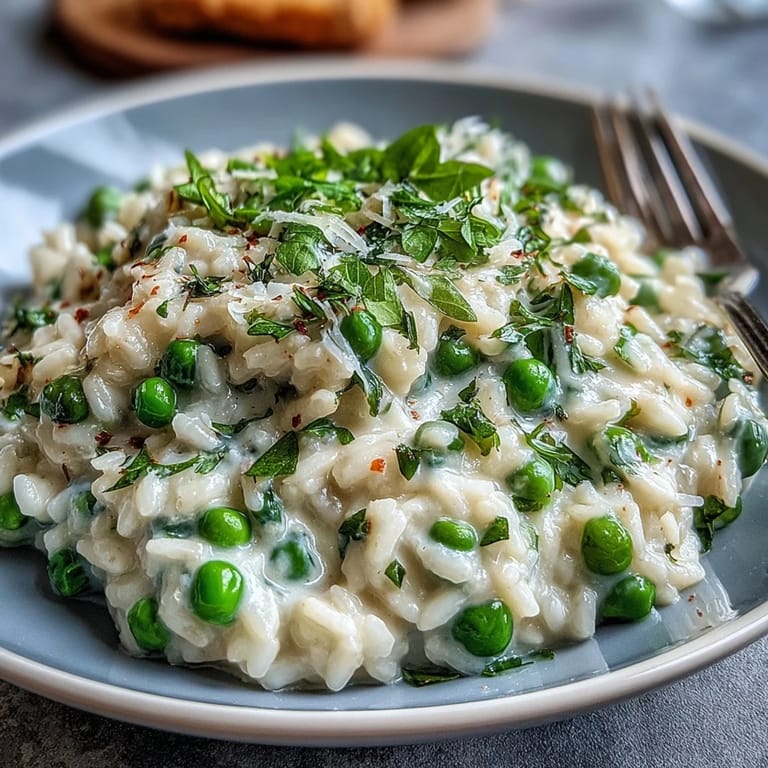
- Freshly grated Parmesan cheese (1/2 cup/40 g, plus extra for serving): Grate it yourself right before cooking because pre-grated cheese has additives that prevent it from melting smoothly into the rice.
- Fresh mint leaves, finely chopped (1/4 cup/10 g): Mint is the secret that makes this taste like spring, so use real fresh mint and chop it just before serving.
- Fresh flat-leaf parsley, chopped (2 tbsp, optional): Parsley adds color and a grassy note that rounds out the mint's brightness.
- Salt and freshly ground black pepper: Taste as you go because you'll need more seasoning than you'd expect.
- Lemon zest (from 1 lemon): This tiny bit of brightness is what people taste first and wonder about, and it's what makes the dish feel finished rather than heavy.
Tired of Takeout? 🥡
Get 10 meals you can make faster than delivery arrives. Seriously.
One email. No spam. Unsubscribe anytime.
Instructions
- Melt the butter and soften the onion:
- Put your butter in the pan over medium heat and watch it foam up, then add your chopped onion. Stir occasionally and let it turn translucent and sweet, about 4 minutes. You'll know it's right when you can almost see through the pieces.
- Toast the rice in butter:
- Add your Arborio rice and stir it constantly for about 2 minutes until each grain looks coated and slightly nutty smelling. This toasting step prevents the rice from turning mushy later, so don't skip it even though it feels unnecessary.
- Add the wine and let it disappear:
- Pour in your white wine and keep stirring until the rice absorbs it almost completely. You'll smell the alcohol evaporate, which is exactly what you want.
- Add stock gradually and keep stirring:
- Using a ladle, add one ladleful of warm stock at a time, stirring often and waiting until most of it disappears into the rice before adding more. This takes about 18 to 20 minutes total, and yes, you do need to stay near the pan.
- Slip in the peas at the end:
- About 5 minutes before the rice finishes cooking, stir in your peas and let them warm through. This timing keeps them bright green and tender rather than faded and mushy.
- Finish with butter, cheese, and herbs:
- Remove from heat and stir in your remaining butter, grated Parmesan, chopped mint, parsley if using, and lemon zest. The rice should look creamy and flow slightly on the plate, not clumped together.
- Taste and serve immediately:
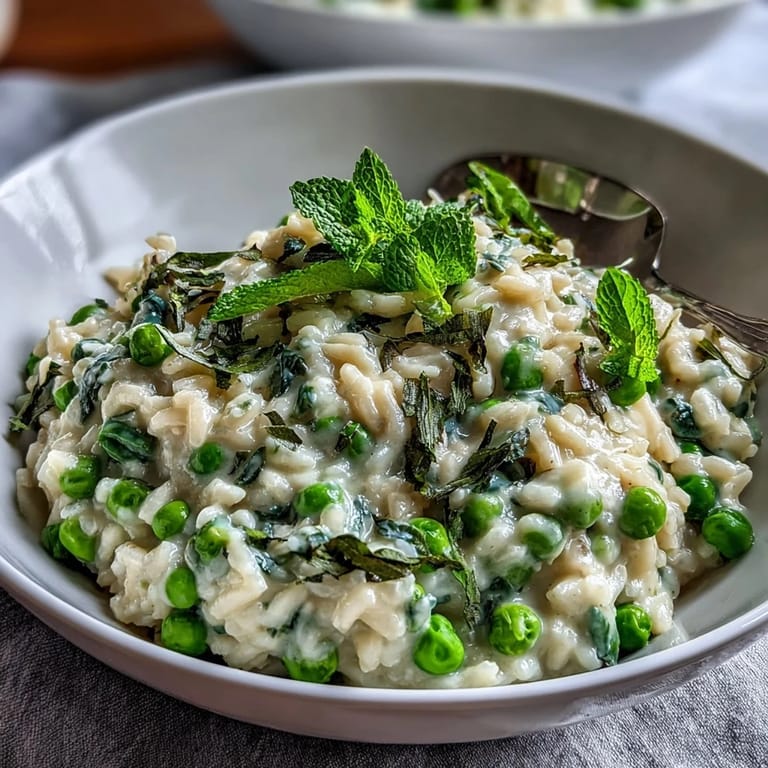
- Taste for salt and pepper and adjust, then serve right away while it's hot and creamy. Each serving gets a shower of extra Parmesan and a few fresh mint leaves on top.
 Pin It
 There was this moment during my second attempt at this dish when my neighbor stopped by, took one smell from my kitchen, and asked to stay for dinner. We ended up talking through most of the cooking process, and somehow that made the whole thing feel less like a performance and more like an actual conversation. That's when I realized this risotto works because it demands your presence without demanding perfection.
Why the Constant Stirring Actually Matters
I used to think the stirring instruction was just traditional nonsense until I tried making risotto while only stirring occasionally. The rice turned out uneven, some grains mushy and others still chalky, and the whole thing lacked that silky, cohesive texture that makes risotto special. The stirring keeps the starch from settling unevenly and ensures every grain cooks at the same pace, which is why it's not optional even if it feels tedious.
The Temperature Game with Your Stock
Cold stock will shock your rice and cool the pan down, disrupting the cooking process and potentially creating inconsistent results. I learned this the hard way when I grabbed stock straight from the fridge during a dinner party and ended up with risotto that took forever to finish cooking and never quite reached that perfect al dente texture. Now I keep a small pot of stock simmering nearby the entire time, and the difference is remarkable.
Making It Shine: Timing and Finishing Touches
The magic of this dish happens in the last minute, when you're adding the butter, cheese, and fresh herbs while the risotto is still hot enough to make them meld into the rice rather than sit on top. The lemon zest is the detail that separates this from a thousand other risottos, so don't skip it even though it seems small. Fresh mint added right at the end stays bright and fragrant, which is completely different from mint added earlier that would turn dull and disappear.
- Grate your Parmesan fresh and hold back a handful for serving, because the cheese you add at the end will be sharper and more interesting than what you stirred in earlier.
- If you're feeling fancy, drizzle a tiny bit of good olive oil over each bowl just before serving, which adds richness and a whisper of fruitiness.
- Serve in warm bowls if you have them, because risotto cools faster than you'd expect and lukewarm risotto loses its appeal.
 Pin It
 This risotto has become my answer to the question of what to cook when I want to feel proud of dinner without spending all day in the kitchen. It's the kind of dish that turns an ordinary Tuesday into something worth remembering.
Recipe Questions & Answers
- → How do I keep peas bright and tender in risotto?
Add the peas during the last 5 minutes of cooking to preserve their color and texture without overcooking.
- → Can I substitute white wine in this dish?
Yes, you can use additional vegetable stock or a splash of lemon juice as a substitute for white wine.
- → What type of rice works best here?
Arborio rice is recommended for its creamy texture and ability to absorb liquids well.
- → How do I achieve a creamy texture without cream?
Slowly adding warm stock while stirring releases starch from the rice, creating a naturally creamy consistency.
- → Can fresh herbs be substituted or omitted?
Fresh mint adds a bright note, but you can substitute with parsley or omit if needed, adjusting seasoning accordingly.