 Pin It
 One spring evening, my neighbor knocked on my door with a basket of fresh lemons and herbs from her garden, insisting I make something special for the weekend. That's when I discovered how a simple roasted chicken could transform into something extraordinary—golden, fragrant, and so tender it practically fell off the bone. The combination of bright lemon, earthy rosemary, and soft roasted potatoes became the dish I'd reach for whenever I wanted to feel like I was cooking in a sun-soaked Mediterranean kitchen.
I'll never forget cooking this for my sister's engagement dinner—the kitchen filled with such an incredible aroma that guests started arriving early, drawn by the smell alone. Watching everyone dig into those herbs-stuffed chicken quarters and perfectly roasted potatoes confirmed what I'd been suspecting: this dish has that rare magic of looking impressive while being totally achievable.
Ingredients
- 1 whole chicken (about 4 lbs / 1.8 kg): Buy one that feels plump and fresh, and make sure to remove the giblets from inside before you start working with it.
- Olive oil: Use good quality here since it's doing heavy lifting in both the marinade and vegetable coating, and it really affects the final taste.
- Lemons (2 total): One gets zested and juiced for the marinade, while the other is sliced and stuffed inside the cavity to perfume the meat from within.
- Fresh rosemary and thyme (2 tablespoons each): These are non-negotiable, and freshly chopped makes an enormous difference compared to dried herbs.
- Garlic cloves (4, minced): Don't skip the mincing step because whole cloves won't distribute the flavor evenly through the marinade.
- Baby potatoes (2 lbs / 900 g): Halving them ensures they cook through at the same pace as the chicken, and they crisp up beautifully in those pan juices.
- Yellow onion (1 large): Cut into generous wedges so they don't fall apart during roasting and can cradle the chicken nicely.
- Sea salt and freshly ground black pepper: Taste as you layer these in—they build the foundation of all your flavors.
Tired of Takeout? 🥡
Get 10 meals you can make faster than delivery arrives. Seriously.
One email. No spam. Unsubscribe anytime.
Instructions
- Prep your oven and marinade:
- Heat the oven to 425°F and whisk together olive oil, lemon zest, lemon juice, minced garlic, rosemary, thyme, parsley, salt, and pepper in a small bowl until it looks loose and fragrant. This mixture is your golden ticket to flavor.
- Dry and dress the chicken:
- Pat your chicken completely dry with paper towels because moisture is the enemy of crispy skin. Rub that herb marinade all over the outside and generously inside the cavity, then stuff with lemon slices and any extra herb sprigs you'd like.
- Arrange your vegetables:
- Toss the halved potatoes and onion wedges with olive oil, salt, and pepper, then spread them in an even layer across your roasting pan. These will cushion the chicken and catch all those precious drippings.
- Position and tie:
- Set the chicken breast side up on top of the vegetables and tie the legs together with kitchen twine so it cooks evenly. This small step really does make a difference in how the meat cooks.
- Roast until golden:
- Slide the pan into the oven for 65 to 75 minutes, checking that the juices run clear and a thermometer reads 165°F in the thickest part of the thigh. The skin should be mahogany-brown and the kitchen should smell absolutely incredible.
- Rest and serve:
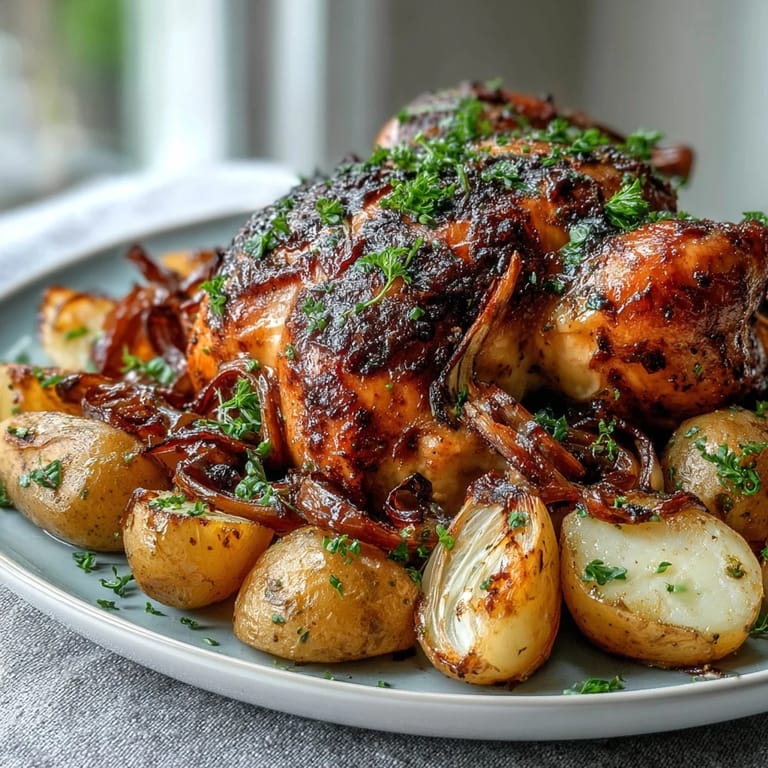
- Let the chicken rest for 10 minutes out of the oven—this keeps it incredibly juicy when you carve. Scatter fresh parsley over everything and serve with lemon wedges on the side for squeezing.
 Pin It
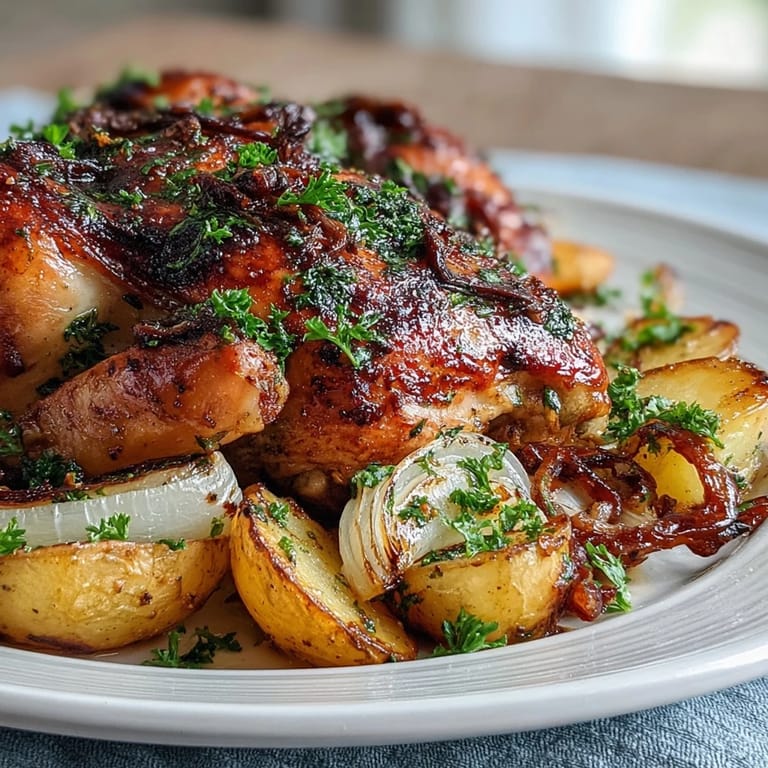
 There's something about carving a whole roasted chicken at the table that makes everyone feel like they're at a proper dinner, not just eating at home. That moment when someone takes a bite and their eyes light up because the meat is so juicy and the flavors are so bright—that's when you realize why this dish keeps coming back to my table again and again.
The Secret of Herb Infusion
The magic happens when you use both fresh herbs inside the marinade and stuffed into the cavity because they're working on the chicken from multiple directions. The herbs in the marinade create a flavor barrier on the skin, while the cavity stuffing gently perfumes the meat as it roasts, creating complexity you can't achieve any other way. I've experimented with adding herbs during the last 10 minutes of roasting and it never compares to the depth you get from that full hour and change of infusion.
Making It Your Own
Once you feel comfortable with this basic formula, you can absolutely play with variations that match what's in your garden or market. I've added carrots and parsnips for extra earthiness, swapped thyme for oregano when I wanted a more Mediterranean vibe, and even thrown in some fresh sage for a different kind of elegance. The structure stays the same but the flavors shift, which means this dish never gets boring even after you've made it dozens of times.
Wine and Table Pairing Wisdom
Serving this with a crisp Sauvignon Blanc or Chardonnay feels natural because the bright acidity cuts through the richness of the roasted chicken and its skin. I've found that the herbal notes in a good white wine echo the rosemary and thyme, creating this beautiful conversation between the glass and the plate. The lemon wedges on the side give guests control over how bright they want their bite to be, which is a nice touch of autonomy at the table.
- Squeeze lemon over everything just before eating to wake up all the flavors even more.
- If you prep the marinade the night before, the chicken will taste even more complex and herbaceous.
- Leftover chicken makes incredible sandwiches the next day with mayo, fresh herbs, and crispy pan-roasted potatoes.
 Pin It
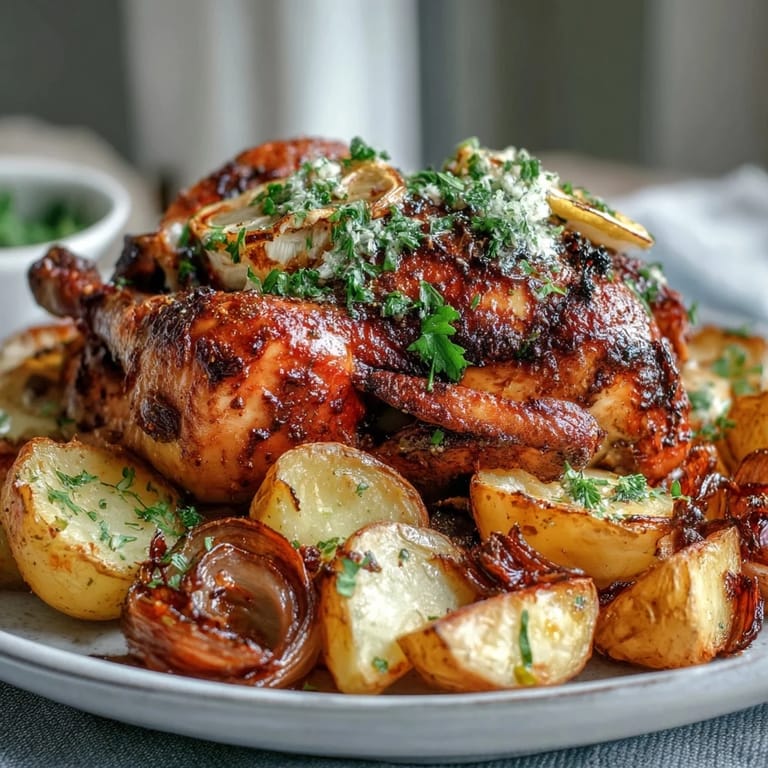
 This dish has become my go-to when I want to cook something that feels special without spending all day in the kitchen. It's the kind of recipe that reminds you why roasted chicken has been a centerpiece at tables for generations—simple, honest, and absolutely delicious.
Recipe Questions & Answers
- → How do I ensure the chicken stays juicy?
Marinate the chicken for several hours to infuse moisture and flavor. Roasting at a high temperature seals the juices, and resting the chicken after cooking redistributes them evenly.
- → Can I use other herbs besides rosemary and thyme?
Yes, parsley is included and works well; you can also add sage or oregano for different herbal notes depending on preference.
- → What is the best way to check if the chicken is cooked?
Use a meat thermometer inserted into the thickest part of the thigh. It should read 165°F (74°C) when fully cooked.
- → Can the potatoes be swapped for other vegetables?
Absolutely, root vegetables like carrots or parsnips complement the dish well and roast similarly alongside the chicken.
- → How does lemon enhance the dish?
Lemon adds bright acidity that balances the richness of the chicken and herbs, elevating the overall flavor profile.