 Pin It
 Last summer, my farmer's market haul was getting out of hand—arugula everywhere, quinoa in the pantry, and zucchini piling up faster than I could eat it. Standing in my kitchen with my hands full of peppery greens, I wondered what would happen if I stopped fighting to use everything separately and just threw it all into one bowl with a homemade pesto that actually tasted like the arugula itself, sharp and alive. That bowl changed how I think about grain bowls entirely.
I made this for a picnic where someone brought store-bought hummus and I wanted to quietly prove that homemade pesto was worth the three minutes it takes. Everyone went back for seconds and asked for the recipe, which felt like winning something I didn't know I was competing in.
Ingredients
- Quinoa (1 cup uncooked): Rinse it under cold water first—this removes the bitter coating that nobody warns you about until you've made it once without rinsing and wondered why it tasted slightly off.
- Water (2 cups) and salt (½ teaspoon): The ratio is simple, but don't skip the salt in the cooking liquid because it seasons the grain from the inside out.
- Cherry tomatoes (1 cup, halved): Halving them lets them caramelize on the cut side and actually intensify in flavor rather than just shrivel.
- Zucchini (1 medium, sliced): Cut them about a quarter-inch thick so they get tender without turning into mush in the oven.
- Red bell pepper (1 medium, chopped): The color matters here—it makes the bowl look alive, and the sweetness balances the peppery arugula perfectly.
- Olive oil (¾ cup total): Use good olive oil, especially for the pesto where you can actually taste it.
- Fresh arugula (2 cups packed for pesto, 2 cups more for assembly): This is the soul of the recipe, so taste it first and make sure it's peppery and fresh.
- Walnuts or pine nuts (¼ cup for pesto): Walnuts are earthier and more budget-friendly; pine nuts are buttery and elegant—choose based on your mood and wallet.
- Garlic (1 clove): One clove is all you need because this pesto should taste like arugula first, garlic second.
- Parmesan cheese (½ cup grated plus ¼ cup shaved): Grate it fresh if you can because pre-grated has cellulose that makes the pesto feel grainy.
- Lemon juice (1 tablespoon): This brightens everything and keeps the pesto from tasting one-note.
- Black pepper (to taste): Add it at the end so you can control how much bite you want.
Tired of Takeout? 🥡
Get 10 meals you can make faster than delivery arrives. Seriously.
One email. No spam. Unsubscribe anytime.
Instructions
- Get your oven ready and start the quinoa:
- Preheat to 400°F while you rinse the quinoa under cold water in a fine-mesh strainer, running your fingers through it gently. Combine it in a saucepan with the 2 cups of water and salt, bring it to a boil, then drop the heat down low, cover it, and let it sit for exactly 15 minutes without peeking.
- Prep and roast the vegetables:
- While the quinoa is cooking, toss your halved cherry tomatoes, sliced zucchini, and chopped bell pepper with a tablespoon of olive oil and a quarter-teaspoon of black pepper, then spread them on a baking sheet and slide them into that 400°F oven for 18 to 20 minutes until the edges are lightly caramelized and everything is tender. You'll know they're done when the tomatoes start to collapse slightly and the zucchini turns golden on the edges.
- Make the pesto while everything cooks:
- Put your 2 cups of packed fresh arugula, walnuts or pine nuts, that single garlic clove, and your grated Parmesan into a food processor and pulse until it's broken down. With the motor running, drizzle in the half-cup of olive oil slowly while the mixture turns into something smooth and creamy, then add the lemon juice and salt and taste it—this is where you decide if it needs more lemon or less garlic.
- Combine everything warm:
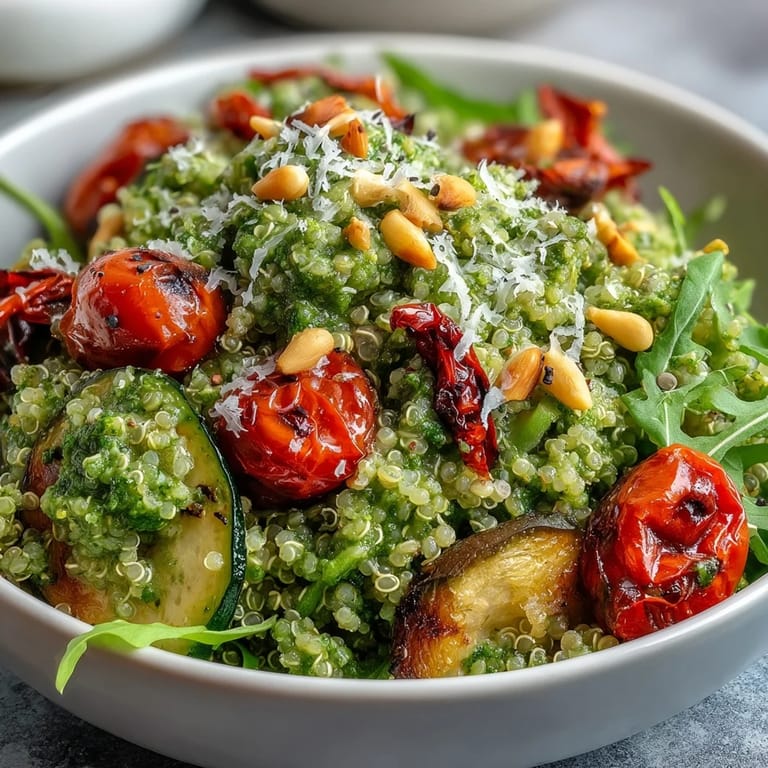
- Fluff the quinoa with a fork once the 15 minutes are up, then dump it into a large bowl with the roasted vegetables and half of your pesto, tossing gently so everything gets coated without mashing anything up. The heat will help the pesto cling to the warm grains in a way that feels almost luxurious.
- Assemble and serve:
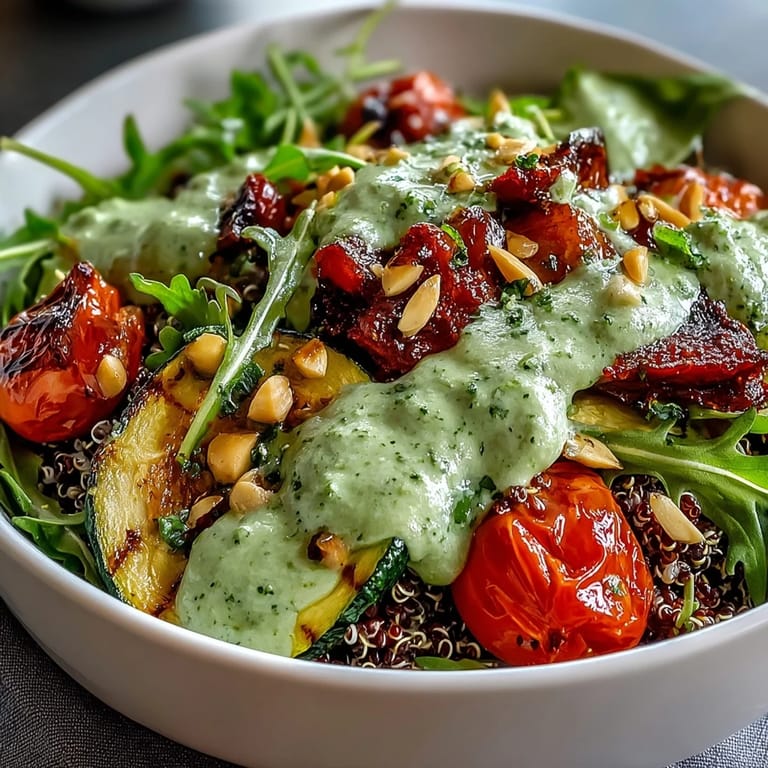
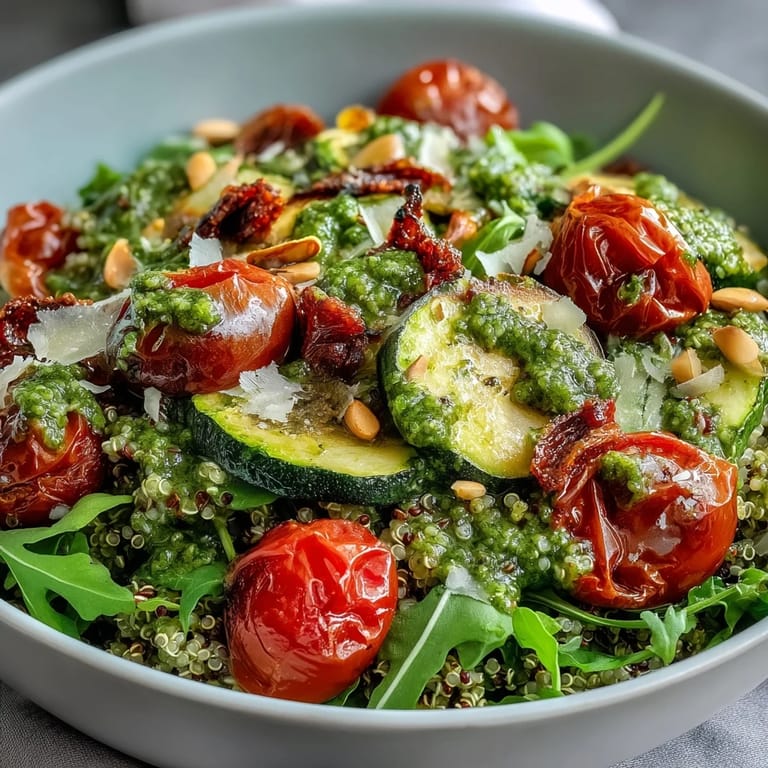
- Divide the fresh arugula among your serving bowls to create a bed, then top each one with a generous portion of the quinoa mixture, a drizzle of the remaining pesto, shaved Parmesan, toasted pine nuts if you're feeling fancy, and a crack of fresh black pepper. Serve immediately while everything still has some warmth to it.
 Pin It
 The moment someone realized they could take this bowl to work and eat it cold the next day—with the pesto actually improving because the flavors had melded overnight—this recipe became more than just lunch. It became a gateway to understanding that a real meal doesn't need to be complicated or time-consuming to feel intentional.
Making This Bowl Your Own
The beauty of this recipe is that it's a blueprint rather than a rigid instruction. I've made it with farro instead of quinoa on nights when my pantry felt chaotic, and the nuttiness actually complemented the pesto in a different but equally delicious way. Brown rice works too, as does couscous if you're in a hurry—the arugula pesto is flexible and forgiving as long as you're starting with fresh greens.
Protein Additions That Work
If you want to turn this into something more substantial, grilled chicken breast is the obvious choice, but I've had better luck with crispy chickpeas tossed in the same roasting pan as the vegetables for the last five minutes—they get crunchy and actually add texture rather than just taking up space. Crumbled tofu that's been pressed and pan-fried until it's golden works beautifully too, and for a vegan version, just swap nutritional yeast for the Parmesan and the whole thing feels less like you're missing something and more like you're eating something intentional.
The Small Details That Matter
I learned early on that taste-testing the arugula before you start makes a real difference—sometimes it's peppery and alive, sometimes it's mild and watery, and you want to know what you're working with. The pesto should taste like it owns a room when you taste a tiny bit on your finger. The roasted vegetables should have actual color on them, not just be soft and pale, because that color is caramelization and caramelization is flavor.
- If you're making this ahead, keep the assembled components separate and combine them just before eating so the greens don't wilt into the warm quinoa.
- A crack of fleur de sel right at the end, after everything is assembled, gives you a little burst of salt that makes people ask what you did differently.
- Leftover pesto lasts about four days in the fridge and tastes incredible on roasted chicken, stirred into yogurt, or spread on toast.
 Pin It
 This bowl taught me that the best meals are often the ones that come together without much fuss but taste like you spent the afternoon thinking about them. Make it once and it becomes yours to reinvent forever.
Recipe Questions & Answers
- → Can I make the arugula pesto ahead of time?
Yes, prepare the pesto up to 5 days in advance and store in an airtight container in the refrigerator. The flavors often develop and improve after a day or two.
- → What grains work best as a quinoa substitute?
Farro, brown rice, couscous, or even bulgur wheat make excellent alternatives. Adjust cooking times accordingly—brown rice may need 45 minutes while couscous cooks in just 5 minutes.
- → How do I make this bowl vegan?
Replace the Parmesan cheese in both the pesto and garnish with nutritional yeast or a vegan Parmesan alternative. The pesto will still be creamy and flavorful without dairy.
- → Can I add protein to this bowl?
Grilled chicken breast, baked tofu, or roasted chickpeas all complement the flavors beautifully. Add about 4-6 ounces of cooked protein per serving for a more substantial meal.
- → How should I store leftovers?
Keep components separate in airtight containers for up to 4 days. Store the pesto in a jar with a thin layer of olive oil on top to prevent oxidation. Reheat grains and vegetables gently, then toss with fresh arugula before serving.
- → What other vegetables can I roast?
Try roasted sweet potatoes, Brussels sprouts, red onions, or eggplant. Root vegetables like carrots and beets also work well—just adjust roasting time to 25-30 minutes for denser vegetables.